Since April 12, the "Loh Collection" has been showing a special exhibition of Grand Prix racing cars from the first automobile world championship in 1950 to the Formula 1 of today. Visitors can expect to see a unique collection of extremely high-class and historically relevant vehicles.
On display are original racing cars from world stars such as Louis Chiron, Rudolf Caracciola, Tazio Nuvolari, Juan Manuel Fangio, James Hunt, Niki Lauda, Ayrton Senna, Mika Häkkinen, Michael Schumacher, Kimi Räikkönen and Lewis Hamilton.

The spectrum ranges from Gordon Bennett racing cars from the beginning of the 20th century to vehicles from the interwar period - including technology carriers from the early Grand Prix years and monoposti from the Silver Arrow era - to a well-selected cross-section from the 75 years of Formula 1 history.

One outstanding exhibit in the exhibition, whose beautiful patina is hard to get enough of, is also the collector's favorite: the unrestored Bugatti 35 B, in which William Grover-Williams won the first Monaco Grand Prix in 1929.

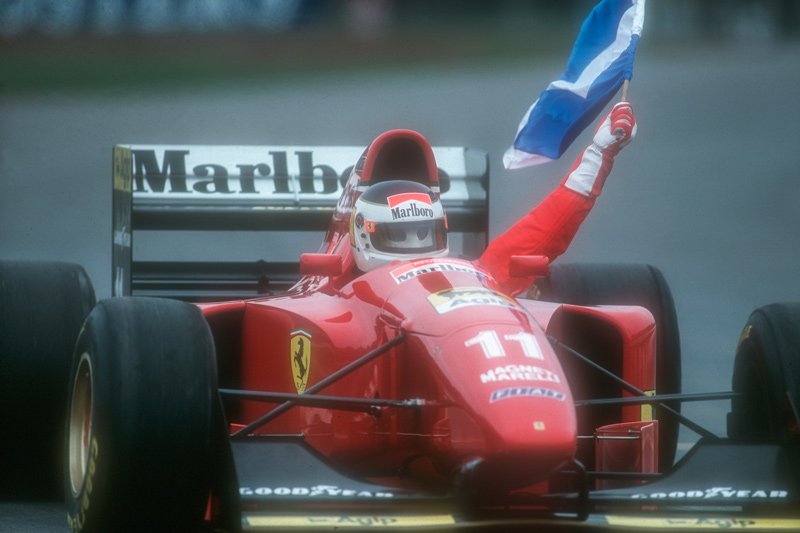
Another of the exhibits is the most successful Formula 1 Ferrari of all time: the F2004, which Michael Schumacher drove to victory eight times in the 2004 season.

The Alfa Romeo Tipo B, with which Tazio Nuvolari outdid the Silver Arrows at their home race at the Nürburgring in 1935, can also be seen, as can the only surviving Alfa Romeo 16C Bimotore and two pre-war Silver Arrows: Auto Union Type D and Mercedes-Benz W154. The German pairing is a world premiere: they have never been exhibited together in public before.

Formula 1
The Formula 1 exhibits include the Maserati 250F, in which Juan Manuel Fangio secured his fifth world championship title at the Nürburgring in 1957. The world champion cars of James Hunt, Mika Häkkinen, Michael Schumacher, Kimi Räikkönen and Lewis Hamilton can also be admired.

"The premier class of motorsport has always marked the pinnacle of what is possible. That's what makes it so fascinating," says museum founder Prof. Dr. Ing. h.c. Friedhelm Loh. "This is the reason why Grand Prix racing has captivated a huge audience worldwide for more than 120 years. Even races long gone are still present today - that is also part of the magic of Grand Prix racing. It is very important to us to give visitors to the National Motor Museum an understanding of history and the stories of people and technology. Because it is only through the exciting combination of people and technology that the achievements of this outstanding chapter in automotive history can be understood."

On the one hand, there are filigree V12s with a displacement of just 1.5 liters and the three-liter V8s that have been used in Formula 1 for decades, through to the modern 1.6-liter turbo six-cylinder with energy recovery systems and electric assistance. The technical highlights include large-volume four-cylinder engines (with a displacement of 16.3 liters) as well as early twelve-cylinder or supercharged cars from the pre-war era, some of which even had two engines.

In addition to the victorious cars adorned with world championship titles, vehicles such as the Tyrrell 012 from 1984 or Niki Lauda's "company car" round off the exhibition. With the lightweight Tyrrell, the young German talent Stefan Bellof once left a lasting impression in the premier class. Two vehicles from three-time Formula 1 world champion Niki Lauda are part of the special exhibition at the National Motor Museum: the Austrian laid the foundations for his later world championship titles with the Ferrari 312 B3-74.

His BMW M1 draws attention to an interesting sideline in Formula 1 history: in the Procar series at the end of the 1970s, numerous Formula 1 drivers were able to compete with other well-known racing drivers in European Grand Prix events. Lauda not only won the first Procar championship title with the Marlboro-decorated racing car; the vehicle also became a decisive career step for the later McLaren team boss Ron Dennis.
The book accompanying the exhibition
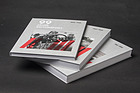
In cooperation with Motorbuch-Verlag, a book has also been produced to accompany the special exhibition. In "Grand Prix - Icons of the premier class", renowned author and motorsport expert Jörg Walz spans the arc from the pioneering days of motorsport to the most recent Formula 1 past. The volume shows the exhibition vehicles in detail and offers readers comprehensive information on numerous aspects of motorsport's premier class.

About the National Motor Museum The Loh Collection
As one of the most exciting car collections in the world, The Loh Collection National Car Museum in Dietzhölztal-Ewersbach, Hesse, displays around 150 spectacular vehicles from 1886 to the present day. The exhibition, which has only been open to the public since July 2023, extends over 7500 square meters in a network of eleven halls and museum rooms on a former industrial site. On display are numerous individual pieces, prototypes and milestones in automotive history from the collection of museum founder Prof. Dr. Friedhelm Loh.

The aim is to document the historical, technical and economic development of the automobile and to awaken a fascination for it. The comprehensive portfolio and professional curation also make the National Automobile Museum interesting for research and teaching. The "Hochschulcampus Nationales Automuseum" is affiliated to the "Business and Law" faculty of the Nürtingen-Geislingen University of Applied Sciences (HfWU) and also offers a wide range of educational opportunities for schools and universities. A museum store, a cinema, catering facilities and event areas for up to 500 people are also available.
Further information about The Loh Collection National Car Museum can be found on its website.

We were guided through the special exhibition and later also the museum by co-curator, workshop man and automotive expert Uwe Schüler, who has accompanied the Loh Collection for many years and identifies with it just as enthusiastically, as well as the managing directors Tobias Reich and Florian Urbitsch.
During the visit to the exhibition, we were also able to speak with the collector and founder of the National Automobile Museum, Prof. Friedhelm Loh. We will publish the interview shortly.