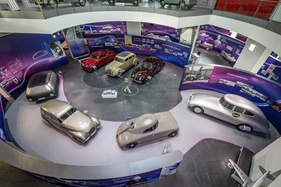


The theme of the new special exhibition at the Audi museum mobile could hardly be more topical, as electric mobility has once again brought aerodynamics more into the focus of vehicle development.

Audi Tradition is now taking all those interested in technology on a journey through the history of aerodynamics and showing the beginnings of aerodynamic concepts in automotive engineering up to 1945 in the "Windschnittig" exhibition at the Audi museum mobile. From December 1, the August-Horch-Museum in Zwickau will follow suit with the "Form vollendet" section, continuing the arc of aerodynamic development right up to the present day. Both exhibitions will be on display until June 2024.
Pioneers of aerodynamics
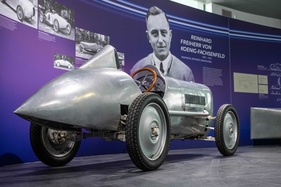
Edmund Rumpler, Paul Jaray and Baron Reinhard von Koenig-Fachsenfeld - anyone who studies the history of aerodynamics cannot ignore them. Shortly after 1900, these three pioneers of aerodynamics began to adapt the body shapes of motor cars to the air flow.

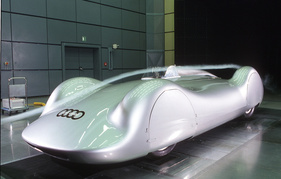
Astonishing ideas emerge, encouraged by the generally growing enthusiasm for aviation at the time and often inspired by patterns from nature: wing and drop shapes are key sources of ideas for inventors. However, it was initially anything but easy for the engineers to gain acceptance for their ideas. Their aerodynamically designed car bodies, based on scientific findings, deviated too much from what customers and manufacturers wanted an automobile to look like. However, a rethink is beginning - and new research and design methods, such as wind tunnel research, are contributing to this development.
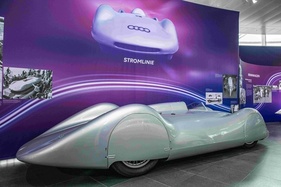
An aerodynamic concept, tried and tested in racing: "the streamline"
The streamline is a term used in fluid mechanics. Especially between the two world wars, this special shape captivated aerodynamics researchers. The aim of the engineers was to reduce the air resistance of vehicle bodies, cut fuel consumption and make cars more suitable for long distances. The ideal testing ground for manufacturers is motorsport.

The racing department of Auto Union AG, for example, began developing a full streamlined car based on the Auto Union Type C at the beginning of 1937. The engine and chassis remained virtually unchanged. The design of the streamlined body was largely based on the work of Josef Mickl, the aerodynamicist at the Porsche design office. The streamlined car had its first outing at the AVUS race in 1937 and achieved record speeds of over 400 km/h in numerous record-breaking runs.

The new special exhibition "Windschnittig" at the Audi museum mobile presents not only research and development, but also the driving personalities and the fundamental aerodynamic concepts of the period up to 1945. Rare and unique vehicles are also on display - more than a dozen large exhibits in total. They document the special combination of efficiency, sustainability and design in the field of aerodynamics.
Highlight of the exhibition
Until now, experts had assumed that Paul Jaray's car was based on an Audi Type K at the time. During the preparations for the special exhibition, the exhibition team's research proved that the basis of this vehicle must have been an Audi Type C.

Anyone interested in finding out how aerodynamics continued to develop after 1945 can immerse themselves in the post-war history of aerodynamics at the August-Horch-Museum Zwickau from December 1. Museum visitors can look forward to almost two dozen large exhibits and other models in the follow-up exhibition "Form completed".
From July 2024, the second part of the "Form completed" exhibition will then be on display at the Audi museum mobile Ingolstadt.