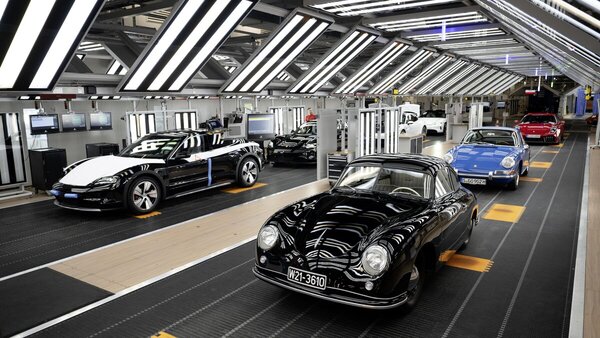

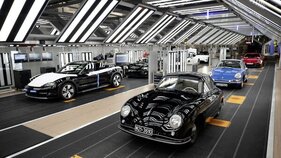
A success story began in Zuffenhausen 75 years ago with the start of series production of the Porsche 356. The plant stands for pioneering spirit, state-of-the-art production technologies and manufacturing quality, and its development shows how Porsche has transformed itself from a small sports car manufacturer into one of the world's leading companies for exclusive vehicles.
The path to in-house production
Initially a design office, Porsche has been based in Zuffenhausen since 1938. The company's own vehicle production under the Porsche brand name only began after the Second World War. On June 8, 1948, the Porsche 356 "No. 1" Roadster received its general operating license. The first 52 examples of the 356 are built by hand in Austria between 1948 and 1950 with an aluminum body and serve as a model for the later 356 from Stuttgart.

As Porsche's own factory is occupied by the Allies after the return to Swabia, Porsche is housed in Reutter Plant II for the production of engines and assembly. The body plant also receives the order to build the finished, painted and fully equipped bodies, which are then produced at Reutter Plant I until 1953.
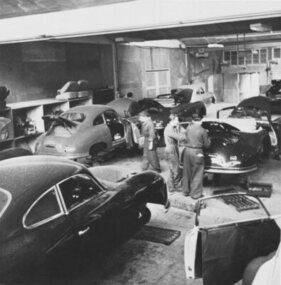
On April 6, 1950, the first Porsche 356 is completed in Zuffenhausen. By the end of 1950, Porsche had built 317 vehicles. Due to the early successes in races and the enormous demand in export markets, the 356 quickly develops into a great success for the brand. As the handover of Plant 1 was delayed by the US military administration, Porsche commissioned the renowned Stuttgart architect Rolf Gutbrod to design Plant 2. This assembly hall, built on land sold to Porsche by Reutter, was put into operation in 1952 and expanded as early as 1954.
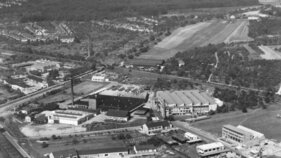
At the end of 1955, Porsche also returned to its own buildings at Plant 1 in Zuffenhausen. The design department, the commercial staff, the repair department for company cars and customer vehicles as well as the test and development department for racing cars move in there. Production, sales and spare parts supply remain in Plant 2. Engine construction starts in Plant 3 in 1960.
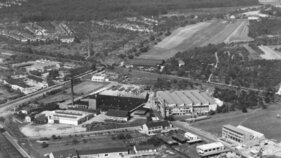
On December 1, 1963, Porsche acquires the Reutter body plant with its extensive know-how and almost 1000 employees. This also enables Porsche to secure the Zuffenhausen site. In the same year, the first 911, then still known as the 901, rolled off the production line in Zuffenhausen. By the end of production in 1965, the sports car manufacturer had produced around 78,000 units of the 356.
Growth and expansion
Building 41, a multi-storey production building for final assembly, was built in 1969. In 1973, around 4,000 people were employed at Porsche, and by the end of the 1980s this figure had more than doubled. Over the next few decades, the Zuffenhausen site grew successively as production figures increased. In the 1970s and 1980s, front-engine models such as the 928, 944 and 968 were also assembled and manufactured at the site alongside the 911.

In the 1980s, body production in Zuffenhausen again reached its capacity limits, so that Plant 5, designed for highly flexible body production, was built in 1988. A visible symbol of this new production logic is the conveyor bridge, which from then on takes the manufactured bodies directly to final assembly in Plant 2 opposite at a height of around 35 meters.
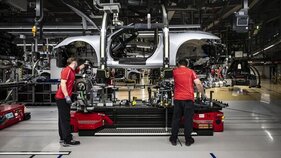
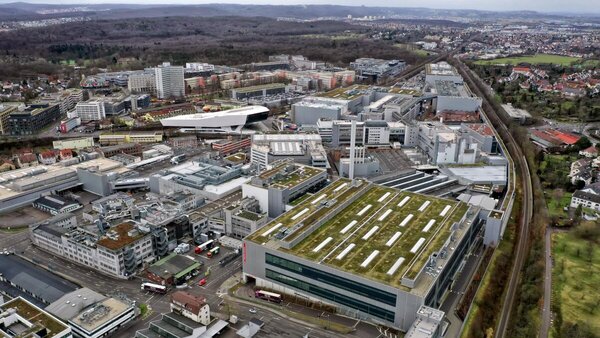
Another major change in the history of the plant is the preparation for the start of production of the all-electric Taycan, which will go into series production in 2019. A new body shop is being built in Plant 5, while a modern paint shop is being realized in Plant 1 and a modern assembly building with a modular line structure is being built in Plant 2 - all tailored to the requirements of electromobility.
Where Porsche combines high-tech and craftsmanship
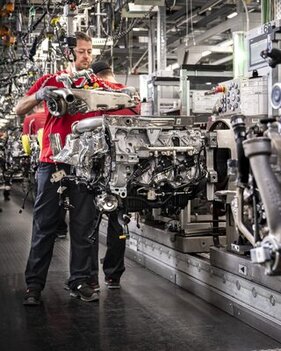
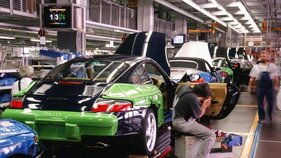
Zuffenhausen stands for precision, innovation and perfect craftsmanship and is the production center for the 911 and the all-electric Taycan. In addition, the boxer engines for the sports cars, the V8 engines for the four-door combustion models and the electric motors for the Taycan and Macan electric are manufactured in two engine plants on the site in the north of Stuttgart.
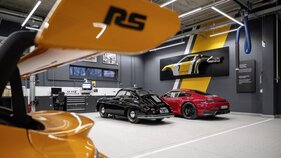
The site is also home to a total of three factories: the Porsche Exclusive Manufaktur, where customer vehicles are extensively customized, the special request area, where one-offs are created, and the CFRP Manufaktur, where the exterior body parts of sports car models with a particularly lightweight design, such as the 911 S/T or the 911 GT3 RS, are assembled by hand away from the regular production line.

An anniversary that writes the future
"Zuffenhausen is and remains the home of our sports cars," says Albrecht Reimold, Member of the Executive Board for Production and Logistics at Porsche AG.
With this anniversary, Porsche is not only celebrating its impressive past, but also looking to the future: the Zuffenhausen site stands for pioneering technologies, manufacturing quality and Porsche's aspiration to come ever closer to the ideal of a perfect sports car.