Fans of endurance racing are eagerly awaiting the coming weekend: On Saturday, September 19, 2020, the starting flag for the 24 Hours of Le Mans, the largest and most traditional motorsport event in the world, will be raised at 2:30 pm.
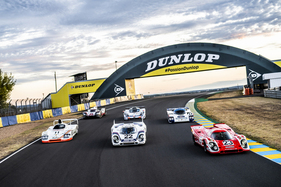
Porsche is the most successful brand in the almost 100-year history of Le Mans. For more than six decades, the sports car manufacturer from Zuffenhausen has been associated with a total of 19 overall victories, countless class wins and indescribable emotions at the 24 Hours of Le Mans.
First overall victory in 1970
50 years ago, on June 14, 1970, Porsche achieved its first overall victory there with the 580 hp 917 KH sports car, which is one of Porsche's most important successes in motorsport.

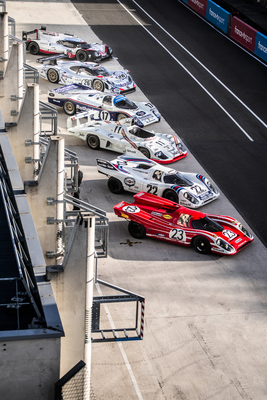
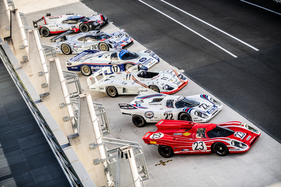
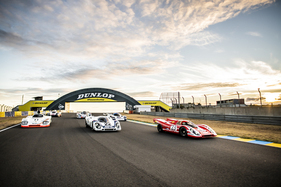
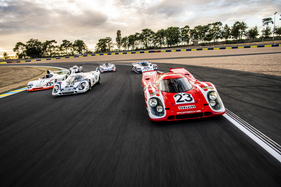
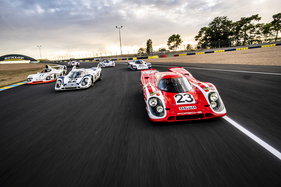
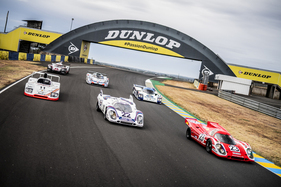
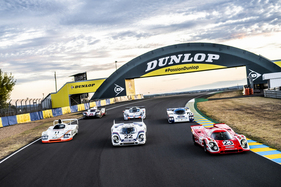
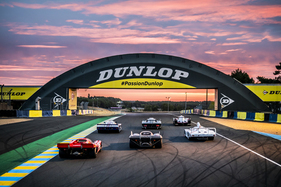
To mark the occasion, the Porsche Museum brought the first winning car and five other first-place finishers back to the original site in France. Together with the 917 KH from 1970, the 917 KH from 1971, the 936/81 Spyder from 1981, the 962 C from 1987, the 911 GT1 '98 and the last overall winner, the 919 Hybrid from 2017, drove along the straights and curves of Le Mans and through iconic elements such as the Dunlop arch.
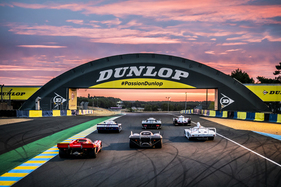
917 against 919
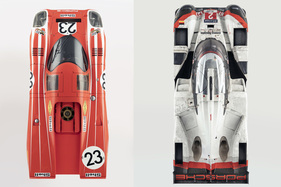
In addition, two giants and two protagonists from the past came together for the first time: Hans Herrmann, who together with Richard Attwood brought the first overall victory to Zuffenhausen in 1970, and his original car from back then, met Timo Bernhard, the last Porsche Le Mans overall winner and the Porsche 919 Hybrid from 2017. At the 85th edition of the 24 Hours of Le Mans three years ago, Timo Bernhard, together with his team-mates Earl Bamber and Brendon Hartley, drove the Porsche 919 Hybrid to the finish line in first place after a dramatic race.
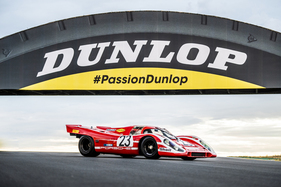
Both racing cars unmistakably illustrate the progress made over the decades: the 917 KH with starting number 23, driven under the Porsche Salzburg entry, weighed just 800 kilograms and was powered by a 4.5-liter twelve-cylinder engine that drove the rear wheels with 580 hp. The engine only had to warm up for around ten minutes before the car was ready to race. The synthetic resin skin is only 1.2 millimeters thick. The interior is so tight that the driver's helmet can hit the roof.
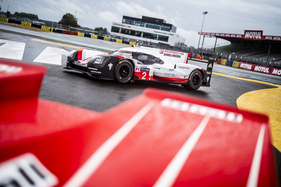
Opposite it is the much larger and massive-looking 919 Hybrid, which takes two technicians and a race engineer around two hours to prepare for its race outing. The record-breaking winner was a rolling test laboratory for Porsche's future technologies: a two-liter V4 turbo gasoline engine with 368 kW (almost 500 hp) for the rear wheels, plus an electric motor with 294 kW (over 400 hp) for the front axle - making the hybrid Porsche an all-wheel-drive vehicle. The electric motor is powered by a lithium-ion battery, which in turn is fed by braking energy from the front axle and exhaust gas energy. The pilot doesn't really have much space here either, but he is incomparably better protected.
Taking part again in 2020
Porsche is starting the upcoming edition of the endurance classic on September 19 and 20 with special vehicle designs. The two 911 RSRs of the Porsche GT Team will compete in the highly competitive GTE Pro category and will roll onto the grid in red and white and black and white - a tribute to the first of 19 overall victories at the 24 Hours of Le Mans 50 years ago. The race on the 13.626-kilometer Circuit des 24 Heures is the annual highlight of the FIA WEC (World Endurance Championship). Contrary to the original plans, the classic race will take place in September this year without spectators due to the coronavirus pandemic.