
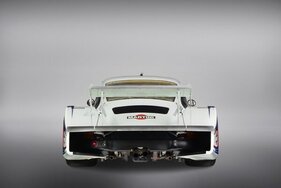
Porsche’s Special Requests department is known for its ability to fulfill even seemingly impossible customer requests. For particularly time-consuming projects, the customer is even issued a factory ID card and, as a semi-official employee, can monitor the progress on their car at any time. Such was the case here, when a customer requested that his 2018 911 GT2 RS (Type 991.2) be converted into a low-slung version. It sounds more dramatic than it is, because Porsche has already offered this exact 911 model with such a conversion as a limited-edition “935 Clubsport.”
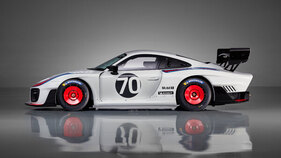
New 935 from 2018
As part of the Racing Reunion VI at Laguna Seca Raceway (USA), Porsche unveiled a “new 935” in 2018: a 911 GT2 RS whose bodywork was reminiscent of the 935/78. A limited series of 77 units of the 700 PS race car was produced, each priced at 700,000 euros (net). As with its historic predecessor, large sections of the body were replaced or supplemented with carbon-fiber composite (CFRP) components. A race car not approved for road use.
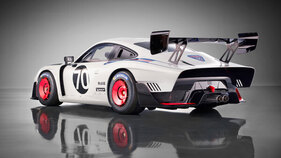
Low-profile design as early as the 930
Porsche already offered the “Flachbau” concept—featuring modified fenders and pop-up headlights—for the 911 Turbo (Type 930) in the 1980s. Between 1982 and 1989, 948 units of this version were sold. Curiosity in the sports car scene grew all the more when it became known that Porsche had registered the model names “Flachbau” and “Flachbau RS” with the European Patent Office in May 2025. Now we know why—a special-order model. The result is an uncompromising, one-of-a-kind factory-built car with street legality that brings the concept of the “Flachbau” into the present.
935 “Moby Dick” in a Special Exhibition
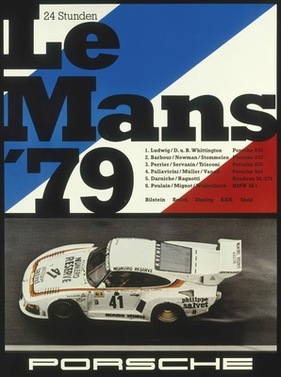
The Porsche 935/78 is one of the icons of Zuffenhausen’s racing history. As part of the current exhibition “75 Years of Porsche Motorsport” and the YouTube series “Porsche Heritage Moments,” Le Mans winner Timo Bernhard and former project manager Norbert Singer delve into the history of the 935 in detail for the first time: the homologated base model from 1976, the further-developed 935/77, the radical 935/78 “Moby Dick,” the 935 “Baby,” and an in-house test car.
The Crowning Achievement of a Concept
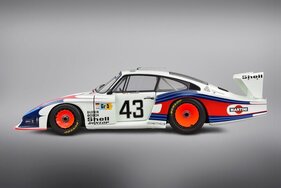
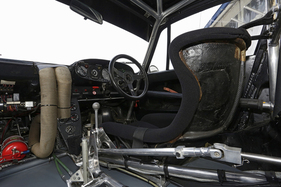
The 935/78, later dubbed “Moby Dick,” made its public debut in 1978. Even during practice for the 6-Hour Race at Silverstone, it was two seconds faster than the rest of the field and went on to win the World Championship race by a clear margin. At its heart: a 3.2-liter twin-turbocharged six-cylinder boxer engine. Up to 845 PS is available for sprint and World Championship races; at Le Mans, the power is intentionally reduced. Its production run was limited to just two cars, but “Moby Dick” remains unforgettable: “It was the crowning achievement of it all,” says Singer.
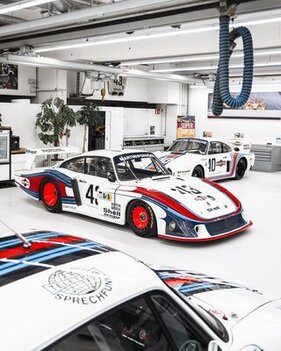
White and long = Moby Dick
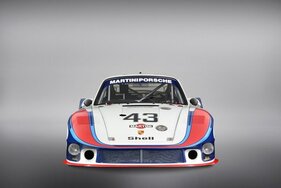
Porsche won the Manufacturers’ World Championship four times in a row with it. It dominated the 12 Hours of Sebring on multiple occasions, as well as the 24 Hours of Daytona. At Le Mans, it emerged as the class winner. Few other production-based race cars have achieved so many successes. It was primarily its elongated, aerodynamic shape that earned the 935/78 Le Mans race car the nickname “Moby Dick.”

Three Years for a Custom Model
However, the actual conversion wasn’t exactly straightforward. For nearly three years, a team of experts from Sonderwunsch, Style Porsche, development engineers from Weissach, Porsche Motorsport, and Manthey worked on the project. “Converting it into a low-slung model proved to be very challenging, even though we left the powertrain unchanged in consultation with the customer.
Our goal was to reinterpret the iconic look of the 935 without compromising on safety, technology, or street legality,” explains Alexander Fabig, Head of Product & Customization at Porsche.

Headlight Cascade
Grant Larson, who designed the first Boxster at Porsche, among other models, was responsible for the design of this special-order project. His involvement was a particularly fortunate turn of events: After all, he had also designed the modern interpretation of the 935 that Porsche unveiled in 2018 to mark its 70th anniversary. “The new low-slung RS is a modern, harmonious reinterpretation of the iconic 935 ‘Moby Dick’ design,” says Larson. “A key element, alongside the flatter fenders, is the headlight cascade with its terraced, very narrow LED units.”

Grand Prix White with Matte Black
“A key design element, alongside the flatter fenders, is the headlight cascade with its terraced, very narrow LED units.”The color scheme also deliberately plays with tradition and reinterpretation: “We’ve combined Grand Prix White with matte black painted sections and areas featuring exposed carbon fiber,” Larson continued. “This creates visual tension, and the U-shaped contrasting element at the front echoes a design feature of the 935/78 in the Martini livery—the famous ‘Moby Dick.’”

Flaps by Manthey
The exterior reinterprets the legendary low-slung design of the 935. The fenders now have a flatter shape and feature slit-shaped air outlets. These so-called “louvers” ventilate the wheel wells and reduce aerodynamic drag. Due to the new contour of the fenders, the fuel filler cap and the underlying kinematic system also had to be modified. The front bumper was completely redesigned. Subtle black flaps from Manthey enhance the aerodynamic performance of the front end.
Three Prototypes
A total of three test vehicles were built to conduct further validation tests in facilities such as the lighting and wind tunnels, as well as during road tests. Numerous test drives at Mendig Airfield, including 50 laps on the Nürburgring Nordschleife alone, as well as endurance tests in Weissach, added up to a level of stress equivalent to approximately 150,000 kilometers of use by a customer for the rear wing.

Nordschleife Guarantee
“On the Nordschleife, it becomes immediately clear just how well an aerodynamic concept works,” says Porsche test driver Lars Kern, who drove the sports car at the Nürburgring. “The low-slung RS remains extremely stable and precise even at very high speeds. This is exactly the kind of feedback needed to validate such a radically redesigned body concept.”