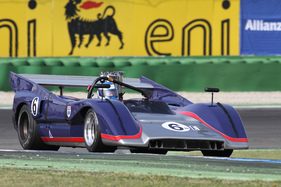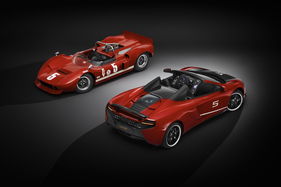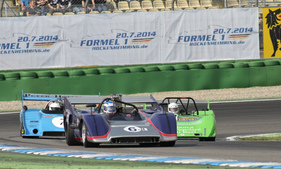
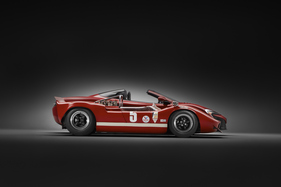
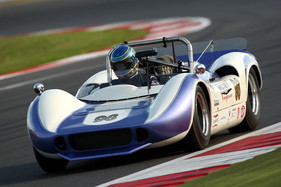
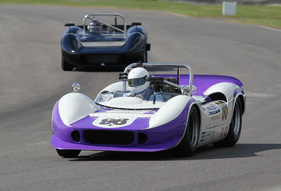
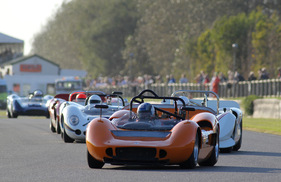
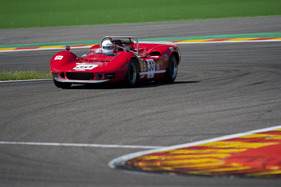
McLaren established itself as a world power in one of the most extreme series in motorsport, the Can-Am, during the 1960s and 1970s, winning five consecutive championships between 1967 and 1971. In honor of the 50th anniversary of the inaugural 1966 season, McLaren Special Operations (MSO) has designed the limited edition 650S Can-Am inspired by the race cars of this golden age of motorsport. There will only be 50 examples worldwide, all visually reminiscent of the McLaren MB1 from back then.
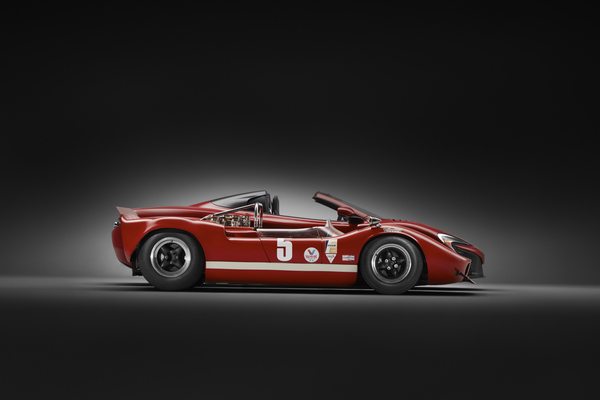
The Can-Am series, or Canadian-American Challenge Cup, was a "no taboo" contest of power and speed on some of the most legendary race tracks in North America and Canada. It attracted the best racing drivers of the time, including Graham Hill, John Surtees, Jackie Stewart and, of course, Bruce McLaren. The championship started in 1966, just one year after Bruce McLaren Motor Racing was founded. Through this series, the young New Zealander became one of the most successful names in motorsport.
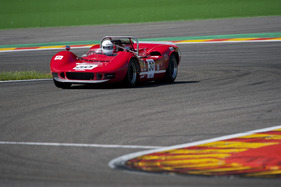
Unique elements of the M1B
The key to the success of the McLaren Can-Am race cars was the use of the latest technologies and materials. Lightweight materials such as aluminum and composite fiber were used in the construction of the race cars of the time.
The modern 650S Can-Am is not only reminiscent of the 50-year-old Can-Am sports car in terms of its innovative features, there are also other unique elements that hark back to the legendary Can-Am race cars, including the slotted carbon fiber front wing and a new shiny stainless steel exhaust with four tailpipes. The vents are designed to reduce air build-up over the front tires and increase downforce, while the four circular tailpipes at the rear, which feature a new rear grille in visible carbon fiber, echo the aggressive and auspicious intake trumpets of the historic models. The 650S Can-Am also offers a unique sound with this solution.

Like the M1B, the limited-edition model has impressive performance figures: acceleration from 0 to 100 km/h takes just over 3 seconds and the top speed is 329 km/h.
Tragic end
However, the fledgling McLaren company soon found out in a very tragic way what great risks high speeds entail. On June 2, 1970, McLaren had an accident during the test drive of the McLaren M8D Can-Am racing car, just two weeks before the start of the season. It was a disaster that many other teams would not have survived. But despite being instructed to stay at home, every single McLaren employee came to work the day after McLaren's death and shortly afterwards the M8D was ready for the first race.