Since its opening in 2008, the Pantheon Basel, Forum for Classic Cars, has regularly hosted special exhibitions. Over the years, they have developed into popular and well-attended attractions. As part of the Museum of Mobility, they are always shown in the upper exhibition area, with around thirty vehicles on display in each special exhibition.
The focus is on individual car brands, coachbuilders such as Zagato, institutions from the classic car world, such as the Klausen Race, and important eras of individual mobility.
The titles of past special exhibitions have included "When cars learned to drive", "The history of two-wheelers", "Barn finds", "Specials", "Gotthard", "Swiss cars", "Swiss coachbuilders" and "From handcart to delivery van". Each exhibition is accompanied by a lavishly illustrated brochure with information on the topic in text and pictures and with descriptions of the individual exhibits.
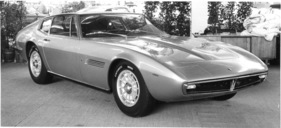
The brand with the trident
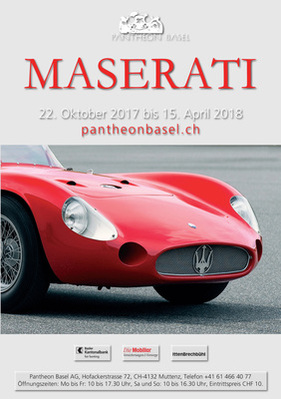
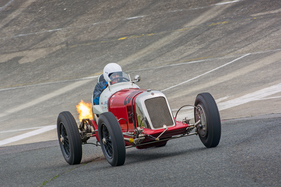
The next special exhibition at the Pantheon Basel is an Italian family affair. The father is a train driver, the mother a housewife, they live in the Lombardy province and have seven sons. One dies in childbirth, one becomes an artist and five of them dedicate themselves to working in factories from an early age. They are passionate about working on bicycles, engines and car bodies and, as it turns out, they are highly talented. The fourth-born, Alfieri, founded the family company Maserati in Bologna in 1914 with two of his brothers. A third brother would join them later. They built racing cars and drove them successfully on all of Italy's major circuits. - Maserati on Maserati.
The Fratelli Maserati are themselves part of the magic that was the beginning of the automotive industry. But they also had to experience the bitter side of the pioneering era. Time turned against them, money became scarce, they had to give up their independence and were taken over by an investor. In return, they had to sell their name and undertake, firstly, never to manufacture cars bearing the Maserati name again and, secondly, to remain in the business as consultants for ten years after the takeover. It kept its name and was relocated from Bologna to Modena. This all happened in 1937, on the eve of the Second World War.
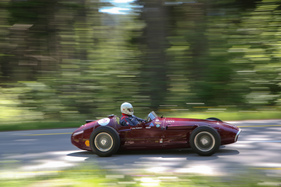
At the end of these ten years, three Maserati founded the OSCA car factory in Bologna. Despite successes in motor racing, their new brand was never really able to establish itself. Maserati was quite different. In the 1950s, Juan Manuel Fangio won the drivers' world championship in a factory Maserati. Maserati put a lot of pressure on Ferrari and the other competitors at the time, and not just on the racetracks.
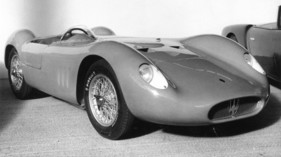
Vehicles that had become legendary hit the roads, and the brand had gained a great reputation worldwide.
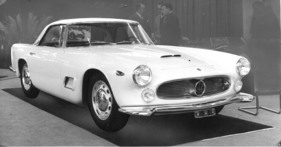
The oil crisis of the 1970s sucked Maserati into its wake, Citroën stepped in and took over the brand for a few years, then the sports car manufacturer De Tomaso bought in. He turned the factory in Modena upside down, focused on large-scale production and launched the Maserati Biturbo, a mass product. Initially much to the delight of all involved, but soon to their regret, as the car had considerable quality defects and soon cost more than it brought in. Fiat had to step in to save the trident again in 1993, and the Fiat-Chrysler Group still holds a majority stake in Maserati today.
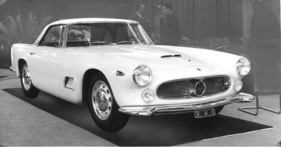
The Maserati exhibition in the Pantheon shows around 30 contemporary witnesses who have contributed to this history. They are all character cars, sports cars that radiate dynamism, power and elegance. They also include Maserati motorcycles, which are not actually Maserati motorcycles at all. Find out more in the company history in the exhibition brochure.
Further information can be found on the Pantheon Basel website.