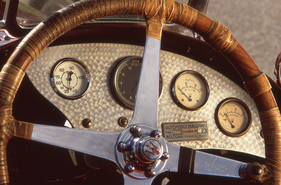
The Maserati brand owes its international fame to the design, style and performance of its unique vehicles. With an unparalleled history of tradition and numerous successes on racetracks around the world, the victories of Maserati cars are the purveyors of Italian engineering. In fact, the race track is the real home of Maserati: because it was here, in competition, that the legend began.
The two consecutive victories in one of the most important races in the world, the Indianapolis 500, on May 30, 1939 and May 30, 1940, with Warren Wilbur Shaw at the wheel, helped the brand achieve its breakthrough both in the USA and internationally.
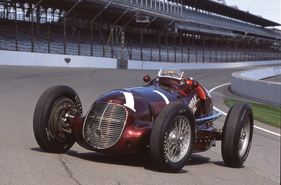
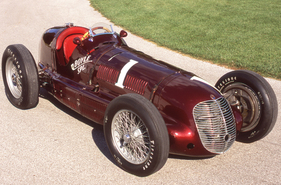
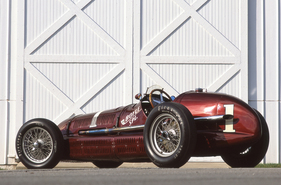
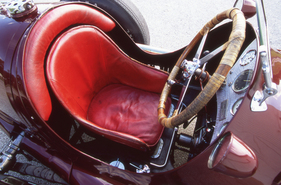
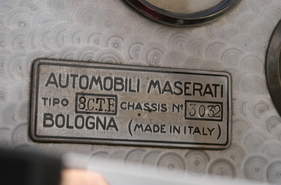
Maserati 8CTF
It was Ernesto Maserati himself who provided the design template for the 8CTF as early as 1938, with the support of the Modena-based Orsi family, who had taken over the business in 1937. The defining element of this design was the 8-cylinder monobloc engine made from a single casting (hence the name "8CTF" or 8-cylinder "testa fissa" - fixed cylinder head), with which Maserati wanted to regain its competitive edge over the other European manufacturers.

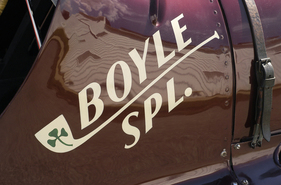
The car, which won the Indianapolis 500 in 1939 and 1940, started for the Chicago Boyle Racing Headquarters racing team and its owner Michael Joseph "Mike" Boyle, which is why it was registered for the race as the "Boyle Special".

Just short of a hat-trick
After the first two victories, everything looked set for a historic hat-trick for Shaw, but only a puncture prevented a third consecutive win on the American race track. However, after an interruption due to the Second World War, it was the same 8CTF that Shaw had driven that finished third at Indianapolis in 1946, this time with Ted Horne at the wheel.
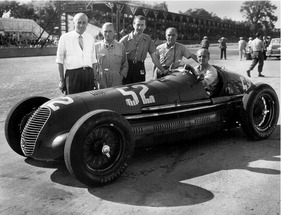
He was followed by another 8CTF, which was driven by Emil Andres. Horne was able to defend his third place in 1947 and finished fourth in 1948. This impressive series of successes was a clear confirmation of the longevity of Ernesto Maserati's original design from 1938, whose competitiveness also endured in sporting competition for over a decade.
An Italian living the American Dream
The great performances at the races in Indianapolis laid the foundations for the birth of an Italian legend in the USA. Such was its reputation that in 2014, the Historical Vehicle Association (HVA) ensured that the 8CTF became the first non-US-produced vehicle to be given a permanent place in the annals of the US Library of Congress. The design documents have been added to the National Historic Vehicle Register (NHVR) and the Historic American Engineering Record (HAER), both of which are subject to the Secretary of the Interior's Standards for Heritage Documentation.
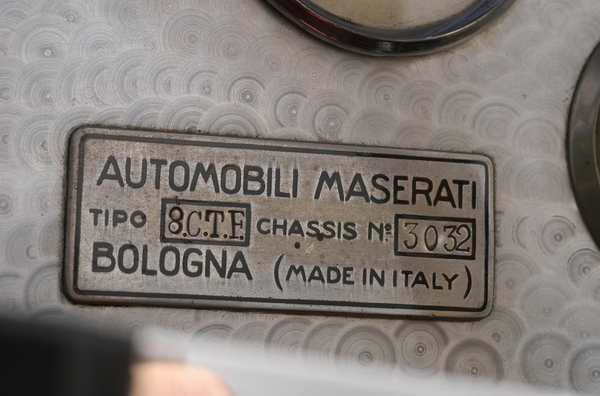
But that's not all: one of the three cars produced, namely the one in which Wilbur Shaw won the Indianapolis 500 in 1939 and 1940, can be admired today in the Indianapolis Speedway Museum in a faithfully restored livery.
However, the sporting successes of the 8CTF are not limited to the traditional American race tracks. The Maserati racer also won another famous race, Pikes Peak in the mountainous state of Colorado, in 1946 and 1947 with driver Luis Unser at the wheel. The uphill race covers a distance of 20 kilometers, mainly on unpaved roads.
With 156 tight bends, this is an endurance test for both the driver and his vehicle, as there is a total altitude difference of 2,860 meters to overcome between the start at an altitude of 1,440 meters and the finish at 4,300 meters. The results speak for themselves and are impressive proof of the extraordinary competitiveness of the Maserati 8CTF, even in completely different racing disciplines.