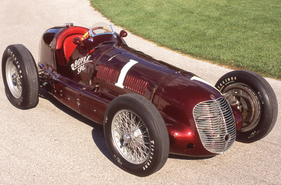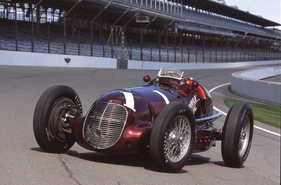
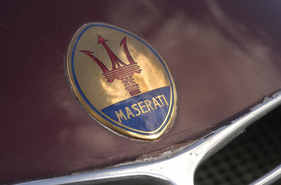
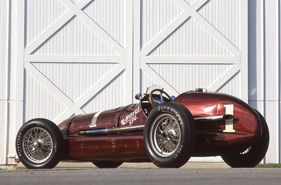
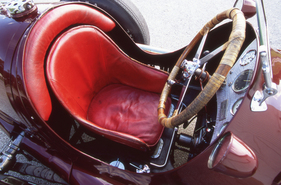
On May 30, Maserati celebrated the 80th anniversary of the fantastic victory of the Maserati 8CTF at the famous "Indy 500". On May 30, 1939, the racing car of 27-year-old Warren Wilbur Shaw was the first to cross the finish line. It took him 4:20 hours to complete the 500-mile race and reached an average speed of over 185 km/h. Shaw, who was born in Indiana, is still one of the five most successful drivers in the history of the prestigious race with three victories (1937, 1939 and 1940) and three second places (1933, 1935 and 1938) in a total of 13 participations.
Alfieri Maserati had already been invited to a number of races in America by the organizers in the early 1930s. The sale of the company shares to the Orsi Group in May 1937 enabled the Maserati brothers to concentrate on the development of new racing cars. At this time, the international racing authorities had decided to change the technical rules for Grand Prix cars. From 1938, stricter restrictions were to be introduced, with the engine capacity no longer being unlimited, but limited in relation to the vehicle weight. Turbocharged engines were restricted to a displacement of 3.0 liters. Ernesto Maserati promoted the development and construction of a new car called the 8CTF.
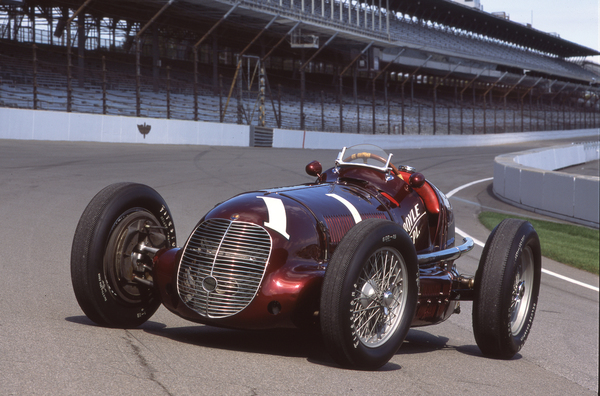
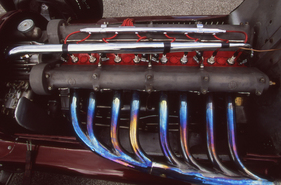
The new monoposto with two steel profile rails and cross members focused on the engine: the eight-cylinder in-line engine consisted of two cylinder groups, each with four combustion chambers, which had a cylinder head made from a single piece. This is where the name came from: 8CTF - eight cylinders "Testa Fissa" (fixed head). The 3.0-liter engine had two carburetors and two volume compressors. The two valves per cylinder were driven by a total of two overhead camshafts.

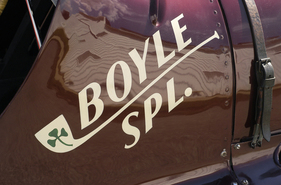
The Maserati 8CTF came to Indianapolis in 1938, having already taken part in a number of races that had shown the car's great potential. This attracted a number of new customers. Maserati sold an 8CTF to the Chicago-based team "Boyle Racing Headquarters", owned by Irishman Michael Joseph "Mike" Boyle. He had set himself the goal of winning America's most famous race, the "Indy 500", with a car financed and entered by him.

In early 1939, Boyle's team manager Harry W. "Cotton" Henning came to Bologna to buy the 8CTF. After delivery, the racing car was fitted with larger wheels and Firestone tires and repainted by Boyle Racing. It was entered for the "Indy 500" as the "Boyle Special" with Warren Wilbur Shaw at the wheel. After setting the third fastest qualifying time, Shaw won the race after a tough battle. It was a historic victory, as no European manufacturer had won in Indianapolis since 1919.
This success brought Maserati great international recognition, so that three more 8CTFs were entered in the next edition of the "Indy 500" in addition to the "Boyle Special". Wilbur Shaw won the race again in 1940. These two victories gave Maserati great prestige, which was reinforced by the fact that several 8CTFs could still be seen in various oval races in the USA in the post-war years. The impressive and long career of the 8CTF only ended in 1950 after Bill Vulcanich failed to qualify for the "Indy 500".
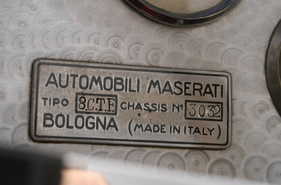
In 2014, the Maserati 8CTF was the first non-American vehicle to be included in the annals of the US Library of Congress by the US Historical Vehicle Association (HVA). It was documented in the NHVR (National Historic Vehicle Register) and the HAER (Historic American Engineering Record) in accordance with the "Standards for Heritage Documentation" of the Department of the Interior - an important formal honor for Maserati and the 8CTF. The car, frame number 3032, in which Shaw won the Indy 500 in 1939 and 1940, has been restored and is currently on display at the Indianapolis Speedway Museum.