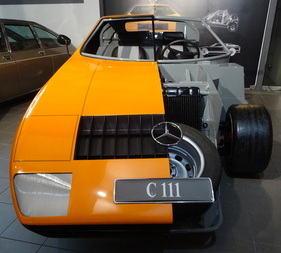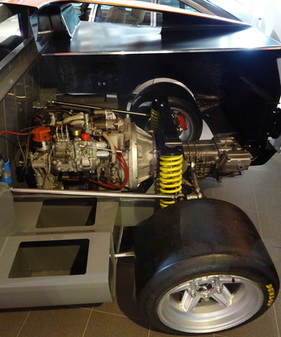



The Museum Autovision, with the world's first permanent Wankel exhibition since 2002, usually has anything but a reputation for showing "half measures". In this case, however, it was purely intentional: under the direction of museum founder Horst Schultz, the Mercedes-Benz C 111 Wankel concept car from 1969, which never went into series production, was built in its original size as a demonstration vehicle. The initial impetus was the fact that this vehicle had already been on display as an original in the Wankel exhibition at Autovision for several years, but the loan agreement with Mercedes Benz had not been extended.
As this vehicle represents a very important milestone in automotive and Wankel history, the board of trustees of the museum and technology arena in Altlussheim, Baden, decided without further ado to build a replica of the C 111 with a three-disc Wankel engine. But it was not simply to be a 1:1 replica. Horst Schultz, Chairman of the Foundation, explained: "When it was established in 2002, our foundation committed itself to showing a great deal of automotive technology in its exhibitions. Therefore, in this case it was not enough for us to simply reconstruct a spectacular gullwing car. By building a demo vehicle that is open on one side, as is familiar from international motor shows, for example, our museum visitors can now view technical details from the past that have always remained hidden until now."
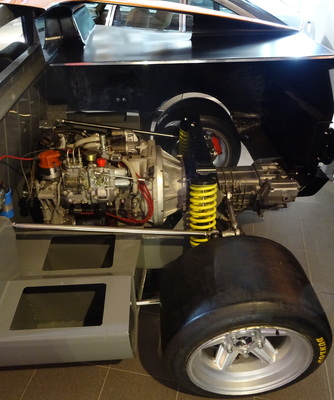
Gullwing was supposed to "inspire" back then
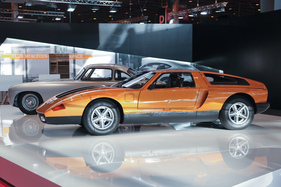
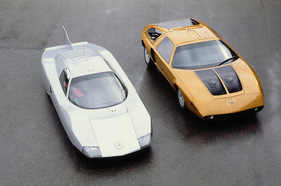
When it comes to technology, this vehicle concept, which is already over 50 years old, has a lot to offer! The development of the C 111/1 attracted a great deal of attention as early as 1969 due to the three elementary innovations in a vehicle from the brand with the star: the newly developed, powerful Wankel engine, a completely new style of design line and a plastic body.
Under the direction of engineer and then head of passenger car development Rudolf Uhlenhaut, the first Mercedes C 111 was finally launched with the aim of designing a spectacular gullwing. It was to be a kind of replacement for the Mercedes-Benz 300 SL, which had not been built for ten years anyway. Customers in this luxury class sector had been hoping for some time that Mercedes-Benz would soon have a vehicle of this type for sale again. For this reason, the Daimler-Benz management gave all the development departments involved, be it the engine, design or chassis departments, the green light and "free reign" to try out new ideas.
This motto was of course a particular incentive that led to a veritable marathon in all development departments - even though some new approaches repeatedly led to technical problems that had to be overcome. However, all the exertions of the development period were to be rewarded in September 1969. At the presentation premiere of the Mercedes-Benz C 111 at the IAA in Frankfurt, it was celebrated with great enthusiasm by the experts, not least because of its spectacular design.
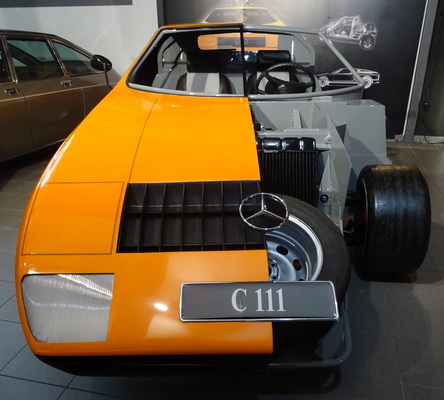
Museum celebrates double Wankel premiere
Almost in parallel with the construction of the special C-111 Wankel demo vehicle for the museum exhibition, Horst Schultz also wrote a book that presents everything worth knowing about Felix Wankel's rotary engine idea in unprecedented detail. On 520 pages with over 1200 photos, drawings and graphics, the author covers the history, present and possible future of rotary piston technology. The book entitled "Das große Wankelbuch - Chronologie einer Entwicklung" (ISBN 978-3-00-073511-0) can now be ordered directly from the Museum Autovision at a price of € 59.90 or purchased on site during regular opening hours.
Further information about the exhibition or the book can be found on the Autovision Museum website.