For Lamborghini, 2022 is the year of the V12: the legendary twelve-cylinder engine has powered iconic models in its almost 60-year history and has become a symbol of technological innovation, vision and engineering skill.
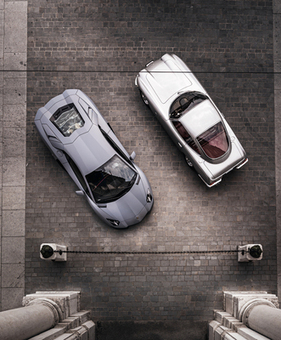
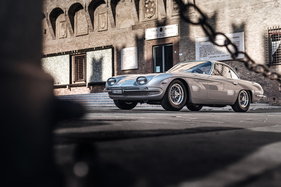
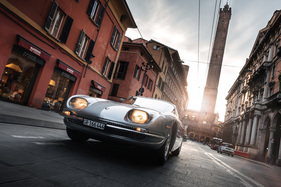
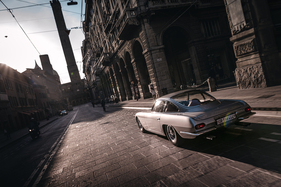
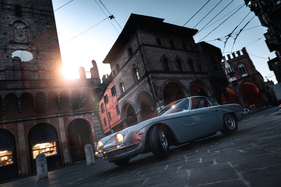
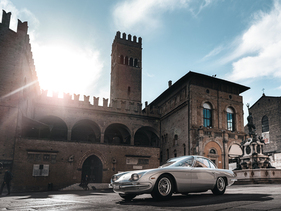
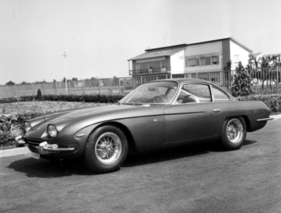
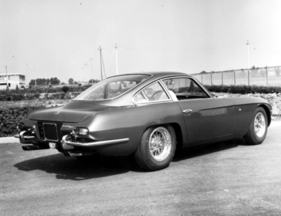
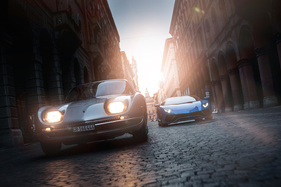
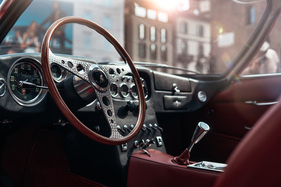
In 2023, Lamborghini will enter the hybridization phase with the arrival of the first production model with hybrid technology. Before then, the brand will pay tribute to its most memorable engine in a retrospective of the vehicles in which it was installed. The very first Lamborghini to roll off the production line at the Sant'Agata Bolognese plant in 1964 was the 350 GT. It was recently brought to the historic center of Bologna for a meet-and-greet with the brand's latest V12, the Aventador Ultimae.
The genius of Giotto Bizzarrini and a special contract
Ferruccio Lamborghini commissioned an extraordinary external consultant to develop the engine: the engineer Giotto Bizzarrini, born in Quercianella (province of Livorno) in 1926. He is still regarded today as one of the best engine developers of all time. Bizzarrini was a great motorsport fan and dreamed of developing an engine for Formula 1.
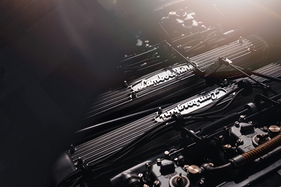
The agreement with Lamborghini was simple and laid the foundations for something extraordinary: twelve cylinders in a V-shape, 3.5 liters of displacement and lots and lots of horsepower: at least 350.
As an incentive for Bizzarrini, Lamborghini added a bonus to the contract for each additional ten horsepower. When the engine ran on the test bench for the first time in July 1963, the measured values of 360 hp at 9000 rpm were spectacular. Ferruccio Lamborghini paid his debt, but was also aware that he was in trouble. In fact, Bizzarrini had developed an engine for Formula 1 that was not suitable for road use or series production.
The arrival of Paolo Stanzani
Paolo Stanzani, one of Lamborghini's most respected engineers, was then entrusted with the task of "cultivating" the engine. His modifications maintained the engine's exceptional performance, but made it more drivable at medium and low revs. The basic technical features remained unchanged, which in many respects represented an absolute first for a series-produced vehicle. The maximum output of 280 hp at 6500 rpm was sufficient to propel the 350 GT, Lamborghini's first series-produced model from 1964, to a top speed of over 250 km/h.
The first customer from show business
The first 350 GT went to drummer Giampiero Giusti from Livorno, who was at the height of success at the time with the band "I 5 di Lucca". It later became the "Quartetto di Lucca", which is considered one of the most important jazz ensembles in Italy. Founded at the end of the 1950s, the band was characterized not only by its jazz qualities, but also by its sense of pop music. This led to their participation in the Sanremo Festival, where they recorded several cover songs by the Beach Boys and Bruno Martino and collaborated with Enzo Jannacci.
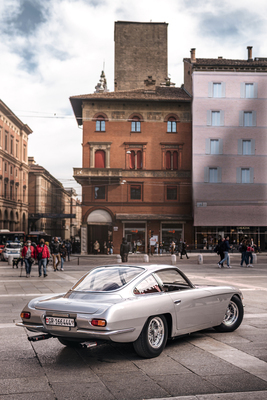
Thus began the close relationship between Lamborghini and the world of show business, with many actors and singers becoming passionate customers of the car manufacturer.
Today, that car is the oldest existing production Lamborghini, perfectly restored and certified by the Polo Storico. In 2019, it won the "Best in Show" title at the "Lamborghini & Design" competition in Trieste, which was organized by the Lamborghini Polo Storico.
Paul McCartney and his red 400 GT
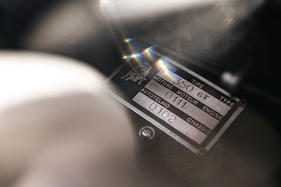
Paul McCartney, a living music legend as bassist and singer with the Beatles and as a solo artist, has been a loyal Lamborghini customer for decades. He has numerous vehicles of different models in his collection. His red 400 GT with chassis number 1141 from 1968 appeared in the video filmed on January 30, 1969 for the band's famous last concert on the roof of their home at 3 Savile Row in London. The car was also featured in numerous documentaries about the Beatles. McCartney owned the 400 GT for a good ten years.
From music to film
The 350 GT had its first film role in the 1967 Columbia Pictures film "Make me cold, I'm freezing", directed by Francesco Maselli. There it served as the vehicle for the leading couple, played by Monica Vitti and Jean Sorel.
A benchmark until the nineties
When it made its debut in 1964, the Lamborghini V12 became a benchmark thanks to its torque, elasticity, reliability and durability. The engine remained in production with minimal modifications until the 1990s. During this time, its displacement increased to up to seven liters and its output to over 500 hp before major structural modifications were made.