


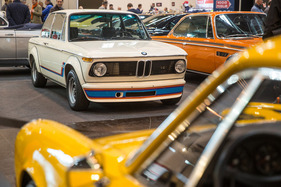


The ZDK, VDA, VDIK and BBE Automotive presented their latest industry study on the classic and vintage car market at the classic car congress of the motor vehicle industry as part of Techno-Classica.

This provides comprehensive and reliable data on the market for classic cars in Germany. Figures from the Federal Motor Transport Authority (KBA) were also analyzed. According to these figures, cars over 30 years old in Germany have a total value of around 31 billion euros, plus around 800,000 youngtimers aged between 25 and 29, which have the potential to become classic cars. 40 percent of all vehicles are worth less than 10,000 euros, 20 percent are worth between 10,000 and 50,000 euros and only one in 50 classic cars is worth more than 100,000 euros. "Getting into the classic and vintage car scene can therefore be quite affordable and the classic car hobby is not just for the well-heeled," says Gerd Heinemann, Managing Director of BBE Automotive.
Significant economic factor
Vintage and classic cars are a significant economic factor. The repair and maintenance volume for genuine vintage and classic cars amounts to 3.8 billion euros. Each vehicle costs around 1,300 to 1,600 euros a year to repair, and classic cars can also require expensive restoration work. Around 10,000 employees work in workshops that also repair classic cars. In addition, there are 50 specialized parts and vehicle dealers.
Cultural asset and object of desire
The public's attitude towards cars and classic cars is positive. 90 percent of drivers surveyed want to own a car and enjoy it. 76 percent see classic cars as a cultural asset. Almost two thirds of those surveyed can be described as classic car fans, just under a quarter are skeptical about classic cars and 14 percent are neutral. More than 70 percent are happy to see a classic car on the road and 37 percent are interested in them. Environmental protection plays only a minor role in the assessment; the average mileage of a classic car with an H license plate is 1,600 km per year, which is 0.2 percent of the total car mileage in Germany.

With age, once expensive vehicles often become affordable, the most popular brands with H license plates are Mercedes, VW, Porsche and BMW. While the Mercedes W123 and W124 are the most popular, the VW Beetle and VW Bus are the most popular. However, prices for German brands are rising by an average of 5 percent. Younger vehicles (70s and 80s) are increasing slightly more.
German classic car stock dominated by German brands
German brands dominate the stock of classic cars and youngtimers. The most frequently represented brands are Volkswagen and Mercedes-Benz. They account for over 40 percent of the German stock of vehicles over 30 years old. The top three H-plate cars are the Mercedes W123 and W124 (49,000 vehicles), followed by the VW Beetle (44,000 vehicles) and the VW Bus (33,000 vehicles). There are regional differences; classic car strongholds can still be found in areas with high purchasing power in large cities and their surrounding areas, such as Starnberg or the Rhine district of Neuss. However, Bottrop and Hameln-Pyrmont, for example, also have a comparatively high proportion of classic cars of around 4 percent (national average: 2.25 percent), showing that other regions are also strongholds for classic cars.

The stock structure here differs significantly from areas with high purchasing power where Mercedes and Porsche dominate: here, brands such as Opel, Ford and Volkswagen are more important and reinforce the strong emotional attachment to historic cultural assets. This also partly reflects the changes in the scene. Older generations are pursuing the hobby less frequently, new fans are joining the scene and with them other vehicles. As a result, a rejuvenated, internationally networked scene will also establish itself on social media, for example, alongside the traditional clubs.
Difficult search for suitable specialists
The industry's biggest problem continues to be finding suitable specialists to work on classic and vintage cars. In addition to successful ways of recruiting personnel, the study also describes other problem areas, such as the online and social media presence of companies. "There is still a need for action here," emphasizes Matthias Kemmer, Chairman of the ZDK Oldtimer Committee. "Many companies have a great deal of know-how about vehicles, but do not communicate enough with the next generation." It also makes sense for classic car companies to cooperate with specialists and vehicle clubs and build up a network.
The market study "Wirtschaftsfaktor Young- und Oldtimer 2023" was compiled by BBE Automotive GmbH in partnership with ZDK, VDA, VDIK, ADAC, Automechanika Frankfurt, Bosch, Vogtmann & Herold, FSP/ TÜV Rheinland, Württembergische Versicherung, Glasurit, Classic Data and the trade magazine Oldtimer Markt. This provides comprehensive and reliable data on the market for classic cars in Germany.


