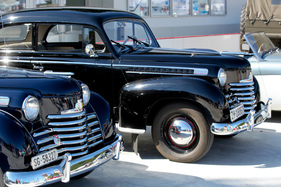
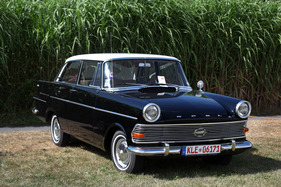
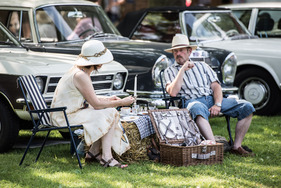
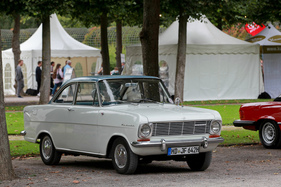
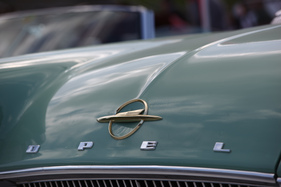
The city of Rüsselsheim has been forced to cancel the classic car rally in 2023 due to a directive from the regional council, not least just a few days before the event is due to take place.
A technical directive from the Higher Nature Conservation Authority prohibits the city of Rüsselsheim am Main from approving or tolerating the classic car rally.
In its meeting on 31.01.2023, the municipal council, as the lower nature conservation authority, issued a permit for the use of the areas and commissioned Kultur 123 to organize the classic car rally.
The classic car rally is the largest one-day classic car rally in Germany, attracting up to 3,000 cars and around 30,000 visitors to the city before coronavirus.The legal dispute relates to the inclusion of the Main meadows and the question of whether the city of Rüsselsheim am Main, as the lower nature conservation authority, rightly or wrongly granted permission for the event in this landscape conservation area.However, the inclusion of this area was mandatory for 2023 and there was no alternative, as the existing safety concept for the event could only be used after Corona. For safety reasons, the event could therefore only take place as before 2020 or not at all.
As part of urgent legal proceedings initiated by the city last week after receiving the technical directive, it was not possible to ensure that the Mainwiesen meadows were available for the classic event. The administrative court did not overturn the technical directive in summary proceedings, meaning that the city only has the option of canceling the event in an orderly manner, as the city has exhausted all legal remedies available to it.
In order to ensure that the event can be held from 2024 and for subsequent years, an alternative safety concept will now be drawn up as a purely precautionary measure, which will no longer include the Mainwiesen meadows in the event that they are permanently unavailable.
The statement of June 23, 2023 by Carsten Müller, Member of the German Bundestag and Chairman of the Parliamentary Group on Automotive Cultural Property, on this issue reads as follows
Regarding the ban imposed by the Darmstadt Regional Council as the higher nature conservation authority on the use of the Main meadows for the traditional classic car meeting in Rüsselsheim and the planned restriction of the taxation of historic vehicles by Green members of the Bundestag, the statement is as followsThe Chairman of the Parliamentary Group for Automotive Cultural Assets in the German Bundestag (PAK) and Braunschweig CDU Member of the Bundestag Carsten Müller explains:
"The Greens' obvious ignorance of the facts is hitting the classic car scene several times these days, leading to the typical and unprovoked Green ban policy. The measures are purely ideological in nature in order to push through green ideas.
In Rüsselsheim, the traditional classic car meeting, which was approved in good time by the Rüsselsheim magistrate and this year for the first time after Corona at the traditional location, on the Rüsselsheim Mainwiesen and in Verna Park, is canceled at short notice. The Darmstadt Regional Council is responsible for this, which, as the higher nature conservation authority under the leadership of the Green President of the Regional Council Lindscheid, imposed a ban on the use of the Rüsselsheim Main meadows at short notice, thus overturning the decision of the Rüsselsheim City Council. The green, purely ideological fight against the car is thus hitting a successful classic car meeting that has been taking place for decades at the historic Opel site around the Opel villas. This classic car meeting not only attracts thousands of historic vehicles from Germany and neighboring countries every year, but would also have delighted numerous people and families this weekend. The hotel and catering industry in Rüsselsheim and the surrounding area, which has been particularly hard hit by the coronavirus, is losing an important source of income.
A Green financial politician has recently announced an initiative to restrict the taxation of classic cars and referred to the erroneous report by the Federal Audit Office. I expect a financial politician to check the plausibility of the facts and statements, especially in the area of taxation. This would have quickly revealed that the report's statements are not reliable. An example cited by my colleague in the press illustrates the lack of knowledge in this context. The example used of an average '93 Volkswagen Passat, which was commercially available at the time, is even taxed more favorably in regular vehicle taxation than with the lump sum for registration with an H license plate.
These developments and statements leave me stunned and show that the Greens are only interested in the consistent implementation of their own ideas without acknowledging other views."