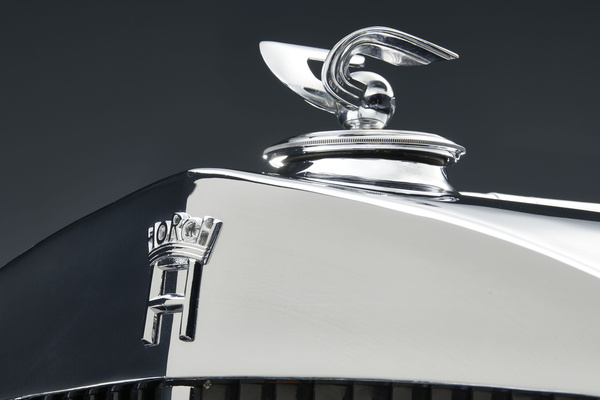
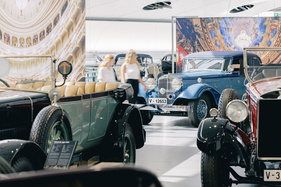
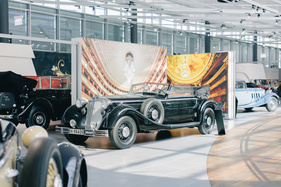
It has been 125 years since Audi founder August Horch registered the company "A. Horch & Cie." in Cologne, his first company. An occasion for Audi Tradition to celebrate this anniversary with a new special exhibition. This can be seen from June 10 to December 31 in the Audi Forum Neckarsulm and shows the noble exhibits framed by famous opera houses - hence the title: "Grand Opera - 125 Years of Horch".
Market leader in the thirties
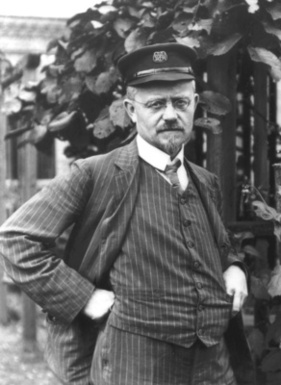
Horch is one of the most glamorous brands in German automotive history and was the market leader in the luxury class during the 1930s. It was not in the cradle of the trained blacksmith from Winningen on the Moselle that its founder August Horch would one day become one of the pioneers of automobile construction. And yet Horch, who was as eager to learn as he was enthusiastic about technology, quickly developed his vision of a perfect car after completing his engineering studies at the technical college in Mittweida, Saxony, in 1890. In his autobiography "I built cars", Horch says in retrospect: "I endeavored under all circumstances to build only large and good cars from first-class materials."
August Horch began his career at Carl Benz in Mannheim, where he stayed for three years and rose to become plant manager for motor car construction. However, he lacked the necessary freedom for his ideas there, and so 125 years ago Horch set up his own business: Together with the cloth merchant Salli Herz, he founded "A. Horch & Cie.", his first company, in Cologne-Ehrenfeld on November 14, 1899.
Pioneer August Horch: many impulses for technical innovations
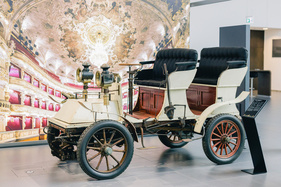
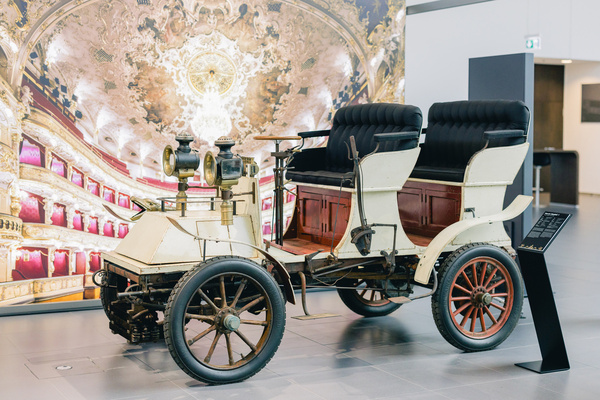
In the workshop - a former horse stable - the young entrepreneurs initially repair engines. Just over a year after the company was founded, August Horch presented his first automobile in December 1900: the Horch No. 1 with two cylinders and 4 to 5 hp.
When commercial success failed to materialize, Horch relocated his company headquarters in search of financial backers: first to Reichenbach in Vogtland, then to Zwickau in 1904. Once there, he transformed his company into a public limited company. His vehicles sold in sufficient numbers and Horch successfully took part in races, which quickly made the Horch brand famous. However, a dispute arose with the Supervisory Board in 1909 regarding the strategic direction of the company and August Horch left his company. In the same year, he founded a new company near the old headquarters. He was no longer allowed to use his family name - and so "Audi" was born, the new company name being the Latin translation of Horch.
Throughout his life, August Horch was an outstanding engineer who, with his pioneering spirit, repeatedly launched innovations. One of his first patent applications at the beginning of the 20th century was a breakaway linkage for the magneto ignition, which accelerated the starting of the engine. Horch introduces the cardan drive, uses light metal for the casting of crankcases and for the gearbox and differential housings, uses chromium-nickel steel for highly stressed gear wheels and is ultimately the first in Germany to control the fuel intake in the engine by means of overhead valves.
At the beginning of the 1930s, the difficult economic conditions lead to the Audi and Horch companies coming together again: At the instigation of the Sächsische Staatsbank, the four automobile and motorcycle brands Audi, DKW, Horch and Wanderer merged in 1932 to form Auto Union AG, the second-largest motor vehicle group in Germany at the time. The company logo of the new group shows four intertwined rings, symbolizing the indissoluble unity of the four founding companies. The new company retains the brand names Audi, DKW, Horch and Wanderer. Each of the four brands is responsible for a specific market segment within the Group: DKW is active in the motorcycle and small car segment, Wanderer builds and sells mid-range automobiles, Audi brings cars in the upper mid-range segment to the market and Horch stands for the luxury and luxury class.
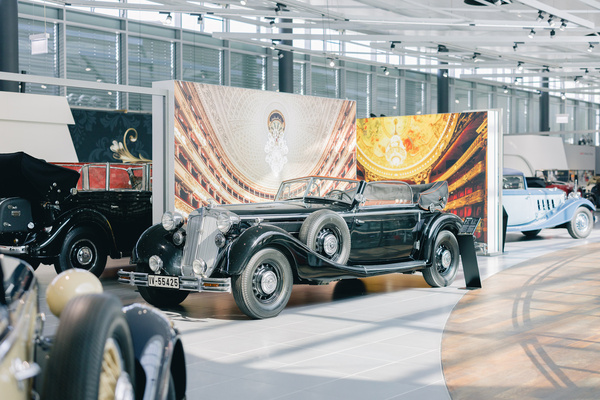
In the 1930s, the Horch brand maintained its leading position in the luxury segment. Anyone who was anyone back then drove a Horch: the writer Thomas Mann, boxing legend Max Schmeling or actor Harry Piel, to name just a few of the prominent Horch drivers. With the outbreak of the Second World War, the company had to switch to armaments production before the history of the Horch brand came to an end after the war. However, the Horch name did not disappear completely, as the Audi A8 L Horch has held a special position in the Audi model range since 2022. It will be built as the top version of the Audi A8 luxury class model for the Chinese market - in Neckarsulm. It is therefore fitting that Audi Tradition is celebrating the 125th anniversary of the eventful history of the Horch brand there.
Luxury automobiles in a luxury ambience - the grand opera
From June 10 to December 31, a unique collection of automobiles can be seen at the Audi Forum Neckarsulm in the exhibition "The grand opera - 125 years of Horch": In addition to the first Horch, a replica on the original chassis, visitors can also see the first series-produced automobile with an eight-cylinder engine sold in Germany, a Horch 8 Type 303. The Horch brand also made history with the first mass-produced twelve-cylinder automobile in Germany, the Horch 670 from 1931. This car is also part of the special exhibition, as is the long-lost "last Horch", which was finally rediscovered in Texas: the vehicle was built at Auto Union GmbH in Ingolstadt in the post-war period and came to the USA via detours until Audi Tradition finally rediscovered it in 2008.
Stefan Felber, curator of the Horch anniversary exhibition: "In order to showcase all these elegant and special automobiles appropriately, we have placed them on the world's great stages in the exhibition: All Horch exhibits stand in front of interior views of famous opera houses, taken by the internationally renowned and award-winning photographer Rafael Neff. This interaction creates a wonderful symbiosis of automotive and architectural works of art."
The Audi Forum in Neckarsulm is open from Monday to Friday, from 8 am to 4 pm. Admission is free and guided tours of the exhibition are offered. The Audi Forum Neckarsulm is closed on Saturdays, Sundays and public holidays.
Further information is available on the website of the Audi Forum Neckarsulm.