


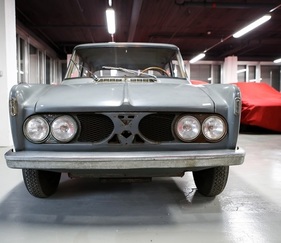
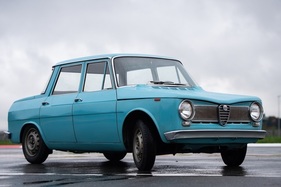

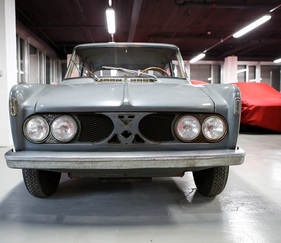
Until the end of February, 12 exhibits from the historical collection that are normally stored and therefore not accessible to the public are on display. Over the course of 2019, these pieces have been brought back to light, examined, mobilized and presented to the public.
Exclusive insights - normally withheld from the public
What happens "behind the scenes"? Over the course of 2019, the Alfa Romeo Museum in Arese scheduled a series of appointments to open to the public the part of the historic collection that is not on permanent display but is kept in storage. Once a month, one of these "objects" - cars, models, but not only - was the focus of an event called Backstage: i.e. the exhibit was displayed for a weekend and presented to the public during a background conference, supported by material provided by the Documentation Center and, where possible, by direct testimonies from former Alfa Romeo employees who worked on the project, as well as by experts and connoisseurs.
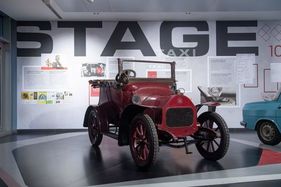
On this occasion, vehicles that had been out of service for decades were also put back into motion and in some cases brought back onto the track. Over the course of 2019, the museum has therefore covered 12 chapters of Alfa Romeo's history in detail. These chapters correspond to the same number of exhibits, which are all on display at the Alfa Romeo Museum Arese for the Backstage Parade.
Exquisite rarities
Little-known examples, such as the Alfa 6 in white, which was prepared in an armored version for Pope John Paul II's visit to Milan, will be on display until the end of February 2020. Another highlight is the 164 Q4 converted into a pick-up for the fire department and stationed in Balocco, Alfa Romeo's testing and trial center; or the 1900 M "Matta", which in 1967, together with an expedition of four Giulia Super, embarked on a 27,000 km journey through 24 countries to deliver a message of peace with the Raid of Brotherhood and Peace.
The "mother of all Giulias", i.e. the Giulia's prototype, which bears the date December 12, 1959 on its radiator, is not to be missed. Also present is the Alfa "ancestor", the Darracq 8/10 HP: it was built in the Portello factory, from which the A.L.F.A. workshops were to emerge in 1910.
New York cabs, Wankel engines and futuristic projects
It was exhibited at the MoMa. in New York and was way ahead of its time: we are talking about the New York Taxi, which was created under the direction of Giorgetto Giugiaro on the platform of the Alfa Romeo F12. Also on show is the prototype of the Tipo 103, a futuristic project for a small car of the 1950s.
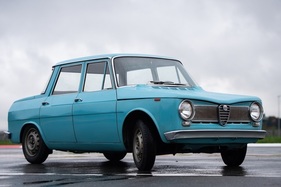
Also in the spotlight are the Wankel engine and the electronic engine control unit, a technological highlight of the 1980s, in whose application in the automotive industry Alfa Romeo was at the forefront. Also on display is the Alfetta's "elevation", which shows how all the components work, from the bodywork to the suspension, from the "twin-cam" engine to the gearbox, from the entire drive train to the braking system.
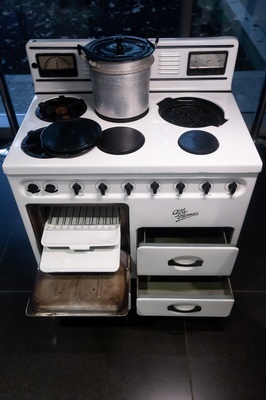
The exhibition is rounded off by a number of objects that bear witness to Alfa Romeo's sensitivity and commitment beyond the automotive sector: the pioneering prototype of a kitchen designed during the Second World War, but which was never built during the Second World War. World War II but never went into production, as well as the series of author sculptures "Alfa Romeo to its pilots", twenty trophies realized between 1963 and 1982 by the greatest Italian artists.
The backstage exhibition will remain open until the end of February 2020. After that, the exhibits from Alfa Romeo's historic collection will be the focus of the 2020 edition of Backstage.
Further information
Dates and contents of the next events can be found on the Museo Alfa Romeo website.
