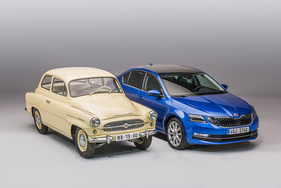
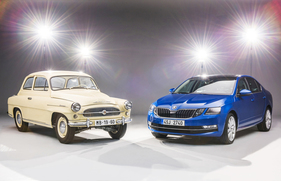
60 years ago, the illustrious name 'Octavia' was added to the Skoda brand's model range for the first time. It was no coincidence that it was derived from the Latin term 'Octavia'. It means 'the eighth', because the newcomer at the time was the brand's eighth model after the Second World War and also the eighth Skoda model with ultra-modern independent all-round suspension, which the manufacturer had introduced in 1933
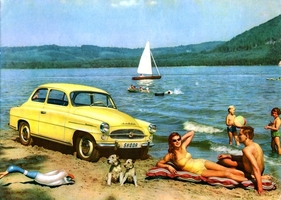
Octavia with two doors
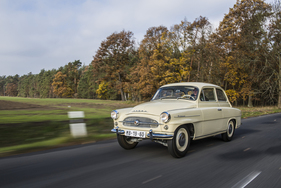
The first two-door Skoda Octavia left the main plant in Mladá Boleslav in January 1959, where they had been produced together with the predecessor models Š 440 and Š 445 for the first few weeks. Under the hood of the Octavia was a robust in-line four-cylinder engine with a displacement of 1.1 liters and an output of 29.4 kW (40 hp), which drove the rear wheels via a four-speed gearbox. The top speed was 110 km/h and the average fuel consumption was 7.7 liters per 100 kilometers. The attractive, flowing body design was just as impressive as the driving characteristics.
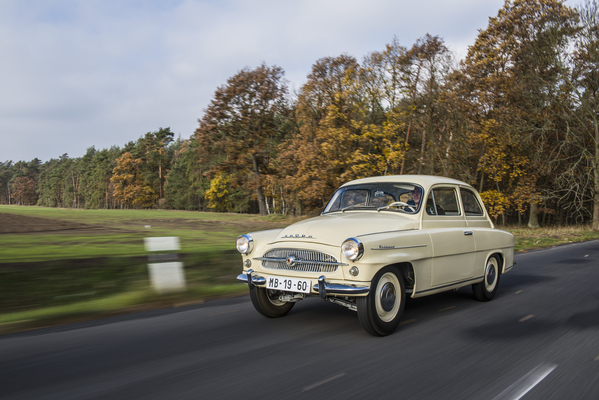
Technical innovations such as the front axle with coil springs and torsion bar stabilizer gave the Octavia a high level of ride comfort and pleasant handling. The introduction of asymmetrical headlights in the course of 1959 increased active safety. Also in 1959, Skoda introduced the Octavia Super as a more powerful variant with a 1.2-liter engine and a peak output of 33 kW (45 hp). The Octavia model series quickly became very popular at home and abroad.
The racing Octavia
On March 10, 1960, the Geneva Motor Show saw the premiere of the sporty Skoda Octavia Touring Sports (TS) version, which boasted an increased engine output of 37 kW (50 hp). Skoda applied to the FIA for homologation of the TS for races and rallies in the class of unmodified road vehicles - this cleared the way for the two-door car, which could reach speeds of up to 130 km/h, to be used in motorsport. With class victories in 1961, 1962 and 1963, the Octavia TS achieved the hat-trick at the Monte Carlo Rally.
Also a sedan
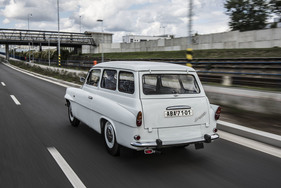
On September 11, 1960, Skoda presented the Octavia Combi with a two-part, horizontally split tailgate for the first time in Brno. Despite its compact exterior dimensions, the vehicle offered a trunk with a loading length of 0.965 meters and a volume of 690 liters up to the roof lining, even when fully loaded with five people. After folding down the rear seat backrests, it was even possible to stow up to 1050 liters of luggage.
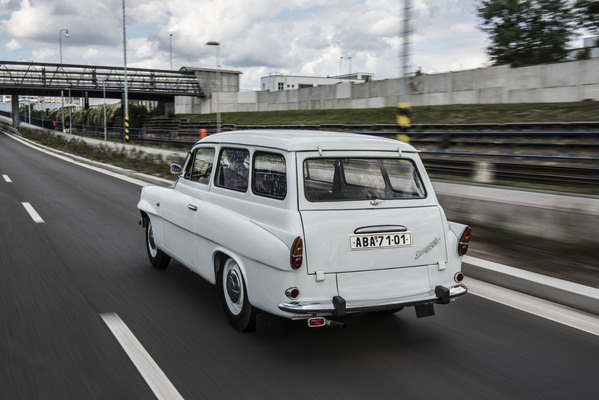
The two-door sedan was built until 1964 - the last model rolled off the production line on April 11. Its direct successor was the completely redesigned Skoda 1000/1100 MB series with a self-supporting body and rear engine. The last Octavia Combi left the Kvasiny plant on December 21, 1971. Between 1959 and 1971, a total of 360,000 Skoda Octavia were produced, including more than 54,000 estate versions.
Octavia technology at the end of the world
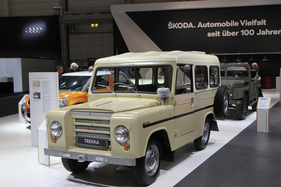
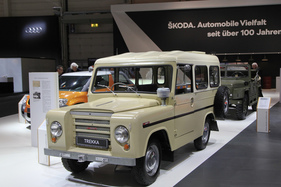
The robust and reliable Octavia also provided the technical basis for the first automobile produced in New Zealand in 1966: the Trekka was developed in close cooperation with the Czech car manufacturer and was based on the shortened chassis of the Octavia Super. The popular multi-purpose vehicle is regarded as one of the forerunners of Skoda's current SUV models.
New model in the old name
With the debut of the first Octavia of the new generation at the latest, the model name became synonymous with the entire brand. In 1992 - shortly after the integration of Skoda into the Volkswagen Group - the development of a completely new model began, which drew on the legendary model name. On a modern technical platform, the team of the then chief designer Dirk van Braeckel created a body with an unmistakable design. The Octavia saloon with a large tailgate made its debut on April 4, 1996 and immediately impressed with its high level of active and passive safety. The luggage compartment for 528 to 1328 liters of luggage formed the basis for the particularly generous amount of space. In March 1998, the even more spacious Octavia Combi body variant, which was particularly successful on the European markets, was added to the range, followed by the first all-wheel drive version in 1999. By November 2010, 970,000 saloons and more than 470,000 estate cars of the first Octavia generation had been produced.
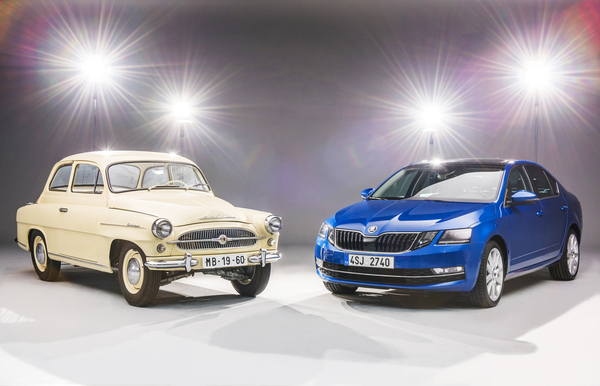
This success was topped by the second generation of the Skoda Octavia, which was built between 2004 and 2013: 1.6 million saloons and 900,000 estates found a buyer. In addition to the even higher utility value, this generation impressed with many technical innovations, above all the gasoline engines with direct injection and the automatic dual-clutch gearbox DSG. Today, the third Octavia generation forms the backbone of Skoda's model range. It has been in production since November 2012 and received a comprehensive update in February 2017. More than 2.5 million customers have already opted for this generation.