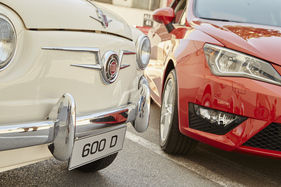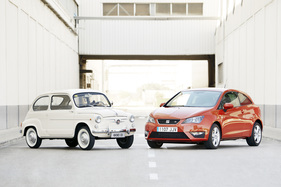
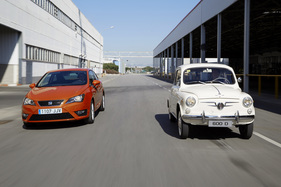
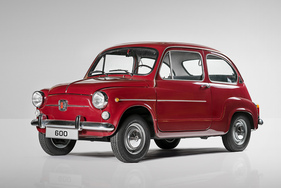
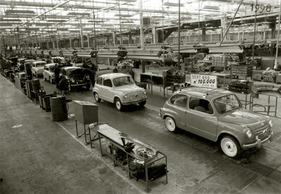
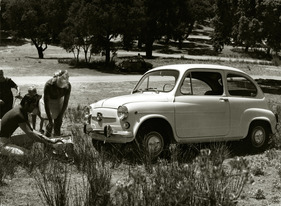
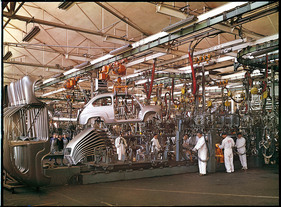
Over 50 years of automotive development have produced some remarkable safety features. Today's models have nothing in common with those of 50 or 60 years ago in terms of safety concepts. To further illustrate the enormous progress made, Seat has compared a Seat 600 from 1963 with a current Seat Ibiza FR.
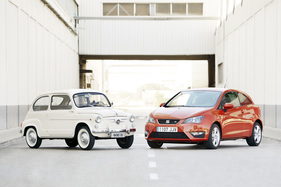
Airbags and head restraints were not always standard
Javier Luzón, Head of Passive Safety at Seat, recalls: "The Seat 600 didn't even have head restraints." The head restraints in the current Ibiza FR and all other Seat models make an important contribution to preventing whiplash injuries if the vehicle is involved in a rear-end collision at low speed.
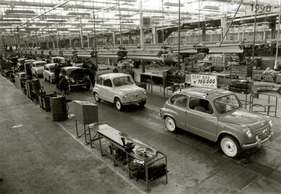
While some Seat Ibiza models have up to six airbags, the Seat 600 had none. This safety technology only became established in the 1990s.
Seat belts in the past and today
The seat belt was invented in the 1960s, but was still at the beginning of a revolutionary development. "In the past, seat belts were neither flexible nor could they automatically adapt to the car occupants," says Luzón. Today, the seat belt has proven itself as an element of passive safety that adapts automatically to the driver's body. The safety risk is minimized as the belt is firmly attached to the body and the passenger is immediately restrained in the event of an accident.
Not all brakes are the same
The braking systems of the two models also differ in terms of complexity and effectiveness. "The Seat 600 had drum brakes, whose braking power was much lower than that measured today," says Luzón.
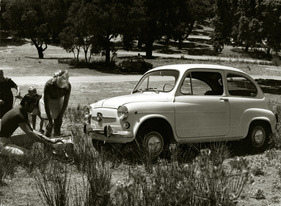
Seat now installs large-diameter disc brakes. The tires are also much wider and have a larger contact surface on the road, which ensures safe traction. Seat models also have ABS, a system that prevents the vehicle from skidding when braking.
Bodywork as an important safety element
The vehicle body has not only evolved considerably in terms of appearance and aerodynamics. It is also another key component when it comes to safety. Over the years, there has been significant further development in this area. One major difference is the width and functions of the structures. Sills and doors have changed significantly. "In the Seat Ibiza FR, the latter contain additional safety functions that offer the greatest possible protection in the event of a side impact," explains Luzón.
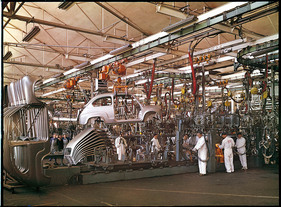
Passengers have never been as protected in a car as they are today. Safety standards are a top priority in Seat's vehicle development. "The next step in the evolution will be for the vehicle to anticipate any events that may occur and then react accordingly on its own," says Javier Luzón.
Traffic Jam Assist, Automatic Distance Control (ACC) with Front Assist or Lane Keeping Assist are just some of the driving assistance systems at Seat that are already very close to this development. However, at the time of the legendary Seat 600, these technologies were still unthinkable.
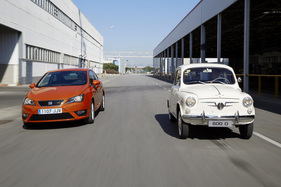
Incidentally, Seat has recently set up a virtual museum where you can "visit" the earlier models.