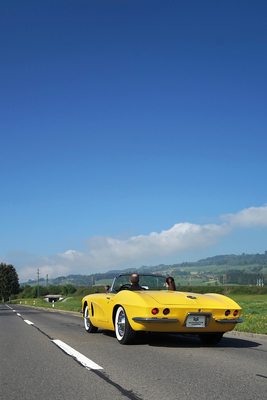
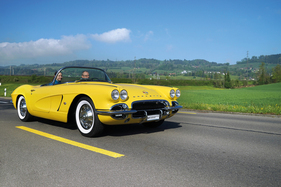
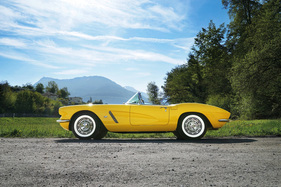
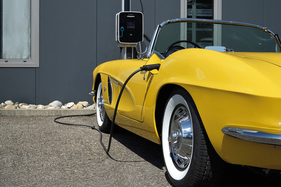
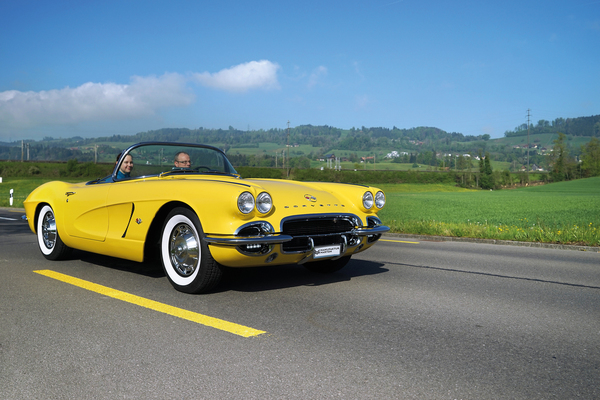
Classic cars have a reputation for being loud, vibrating and sometimes a little bitchy. Not so the '62 Corvette "Dinora" from Marton: the lovingly hand-restored vehicle is whisper-quiet. Instead of a V8 petrol engine, the vehicle is powered by an electric motor.
Polarizing
For some lovers of old American cars, it may sound heretical, as if the soul of the vehicle has been ripped out. But you could also say that the classic car has been given a new lease of life with pioneering technology.

The all-electric Corvette is polarizing. And that's a good thing.
300 km range and front-mid engine
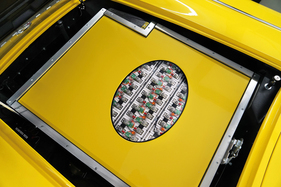
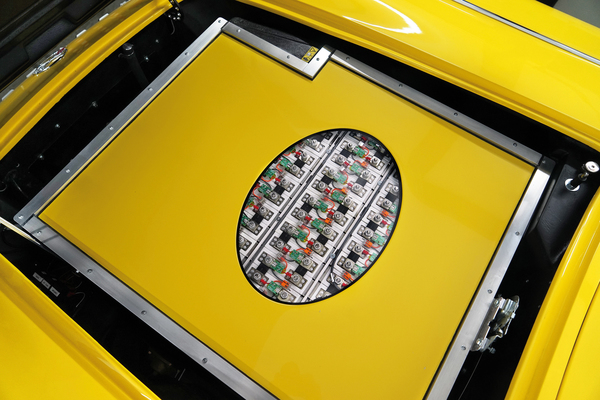
At first glance, you can't tell Dinora has been transformed. The classic has been completely restored and looks like a new car today. But if you open the hood, you won't find what you would normally see there. Instead of the engine, you get a glimpse of the battery and its cells through a viewing window. Together with the battery in the rear, the vehicle has a capacity of 68 kWh. Enough to drive at least 300 km.
The engine is now located where the vehicle's gearbox used to be. It delivers a peak output of 185 kW (252 hp) and a torque of 390 Nm.
As is usual with electric motors, this torque is available from the very first revolution. This makes the car feel much more dynamic than its counterpart with a petrol engine, sprinting from 0 to 100 km/h in 5.8 seconds.
Electric mobility made to measure
But even before you set off, you are reminded by small, custom-made details that you are not sitting in an ordinary Corvette. You will look in vain for the oil level or coolant temperature on the classic circular displays. Instead, the displays provide information about the current and average fuel consumption or the remaining range.
"It was important to us that the car looks as if it had rolled off the production line 57 years ago," says Managing Director Silvia Marton.
From ecological polluter to climate saver?
Because electric cars also leave an ecological footprint, a separate life cycle assessment is currently being drawn up for Dinora. However, it can already be said that the vehicle will pay for itself from a climate perspective after 40,000 km at the latest compared to a combustion-powered Corvette. From this point onwards, the fuel savings will be so high that the greenhouse gas emissions caused by the production of the electronic components will be offset. Provided, of course, that the vehicle is charged with green electricity, as is appropriate for electric cars.
Not for tight budgets
A total of over 2000 working hours were invested in the vehicle. The cost of the conversion is around CHF 190,000, and a considerable sum was added for the restoration. In principle, the costs for a pure conversion start at CHF 100,000, but these always depend on the vehicle, the performance expectations and the desired range.
Technical data of the electric Corvette Dinora
- Range (real range): min. 300 km
- Acceleration (0 - 100 km/h): 5.8 s
- Speed: max. 155 km/h
- Unladen weight: 1480 kg
- Battery capacity: 68 kWh
- Battery chemistry: LiNiMnCoO2
- Motor type: Hybrid Synchronous Motor
- Engine output: max. 185 kW (252 hp)
- Torque: 390 Nm
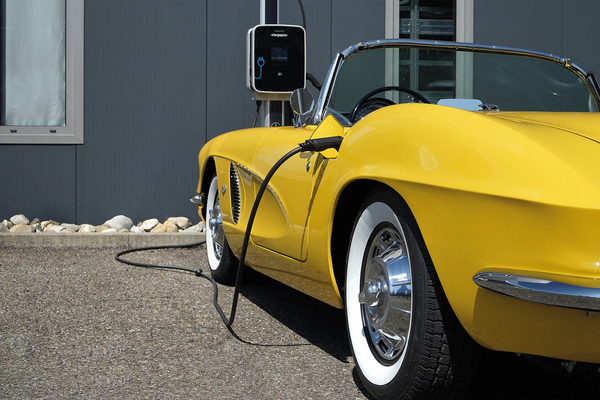
- Charging time AC Type2: 115 km per h
- Charging time DC CCS (optional): 270 km per h
Further information can be found on the Marton website.