


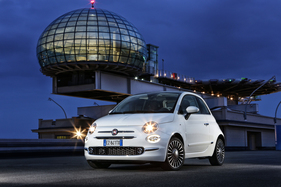
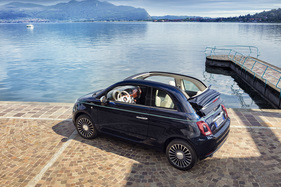
Just in time for its 60th birthday, the classic Fiat 500 has been given a place in what is probably the most famous museum in the world. The inclusion in the permanent collection of the Museum of Modern Art in New York MoMa also represents a great tribute to the icon of Italian culture, art and creativity.
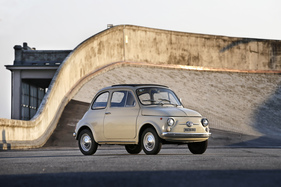
The classic Fiat 500 was presented to the world on July 4, 1957. Now the New York Museum of Modern Art is honoring the "Nuova Cinquecento" model of the time by adding it to its permanent collection. Just in time for the 60th anniversary of the legendary car, which motorized an entire generation not only in Italy and still has countless fans worldwide today, the MoMa is paying tribute to an icon of Italian culture, art and creativity.
"The Fiat 500 has undoubtedly left its mark on the history of the automobile," said Olivier François, Head of Fiat Brand and Chief Marketing Officer FCA. "But the Nuova Cinquecento has always been more than just a car. Over the past 60 years, it has become part of the collective consciousness. We consider it a great honor that the Fiat 500 has been included in MoMa's permanent collection because of its artistic and cultural significance."
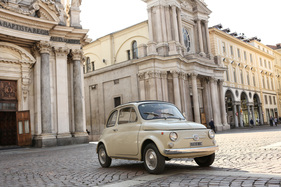
"The Fiat 500 has made history in that it has profoundly influenced the way cars are designed and manufactured in Italy," said Martino Stierli, MoMA's Philip Johnson Chief Curator of Architecture and Design, explaining the inclusion of the "Nuova Cinquecento" in the world's most famous museum. "Integrating this masterpiece of everyday art into our collection broadens MoMa's horizons when it comes to automotive design."
The Swiss architectural historian acquired a Fiat 500 from the F series, which was produced from 1965 to 1972, for the MoMa.
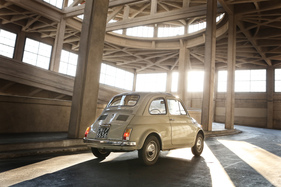
The original Cinquecento presented in 1957 had a 500 cubic centimeter engine with 18 hp in the rear, which made a top speed of 95 km/h possible. This was followed by the Fiat 500 Sport and the slightly more powerful Fiat 500 D, before the F generation set new production records. Including the last model series with the abbreviations L and R, a total of more than four million units were built by 1975.
From 1957, the Fiat 500 quickly outgrew its role as an instrument of mass motorization. It remained young for 60 years and survived the most diverse trends in fashion and lifestyle without betraying its own identity.
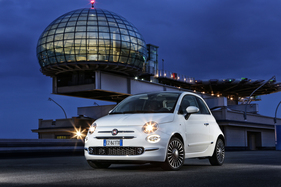
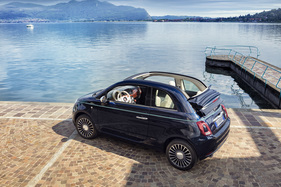
The current Fiat 500, which took over the legacy of its legendary predecessor in 2007 as a saloon and cabriolet, has continued this tradition. The modern Fiat 500 also regularly makes a name for itself with particularly cool and original special models. Examples include the Fiat 500 by Diesel, the Fiat 500 Gucci and the Fiat 500 Riva.
The commercial success proves this strategy right. Today, the Fiat 500 is one of the best-selling passenger cars in Europe in this segment. It leads the statistics in eight countries and ranks in the top three of the sales charts in a further six. Within ten years, more than two million customers have opted for the Fiat 500, which has also won numerous internationally renowned awards, including the title of "Car of the Year" and the Compasso d'Oro design prize.
Just like the current Fiat 500, the classic predecessor with its unique style has regularly inspired international artists to create particularly elegant, exclusive or sporty interpretations. Now the "Nuova Cinquecento" itself has become a work of art, side by side with other icons of Italian design and creativity at the Museum of Modern Art in New York. Happy 60th birthday, Fiat 500.
