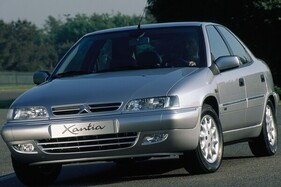
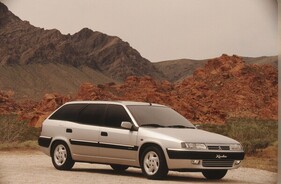
The Citroën Xantia, which was presented to the world public at the Geneva Motor Show in March 1993, is celebrating its 30th anniversary and is becoming a collector's model. The Xantia was produced from 1993 to 2002 (available in Iran until 2010) in a quantity of 1,326,259 units, mainly at the factory in Rennes-la-Janais, and has become an icon of the Citroën brand.
Daniel Abramson designed the sedan at the Citroën design center based on a proposal from the Italian design center Bertone, which became the successor to the famous BX from the 1980s. Dynamic, fluid and robust, this sedan takes up some of the lines of the XM and establishes a new shape in the Citroën range. Thanks to its unique style, the Xantia was voted COTY (Car of the Year) in 1993, the year of its launch.

Nine years of courage and innovation for comfort
In its nine years of production, the Xantia has undergone several developments. It was originally available in two versions (SX and VSX) and with three different types of drive. The top-of-the-range versions are equipped with the hydropneumatic "Hydractive II" system, an electronically controlled suspension system that makes it possible to reduce roll and improve handling without compromising comfort. In 1994, the Activa version equipped with the Hydractive II system was launched on the market. The system prevents the body roll from exceeding 0.5° and increases the number of dampers on board to ten. This innovative technology led to the development of special tires with the manufacturer Michelin. The Xantia Break was launched in 1995. The model was redesigned in 1997 and presented in 1998 with the then brand-new 2.0 HDi diesel engine.

Comfort, safety, technology and driving pleasure were the hallmarks of the new model in 1993. The special comfort was created by the upholstery, which became a real landmark of the Xantia and its successor models. In the well-equipped interior, colors and materials were in great harmony and the raised, more robust passenger compartment featured thick, pre-coated sheet metal and reinforcing bars in the doors, which ensured greater safety on board.
Absolute comfort: Hydractive II
In technical terms, it is the introduction of Hydractive II technology that combines the power of hydraulics with the speed of electronics and symbolizes the Xantia's lead. The conventional hydropneumatic suspension is equipped with additional damping per axle, which can be activated via solenoid valves in the normal circuit with one damping per suspension cylinder. This allows a flexible and a sporty state of suspension flexibility and damping to be defined. Sensors enable the computer to choose between the two modes depending on the driving situation. In both cases, this technology provides drivers and passengers with a comfortable and, above all, smoother ride.

Inspiration for advertisers
With the Xantia, the Citroën brand also took an innovative approach to advertising. This can be seen in the famous commercial from 1995 with Carl Lewis, in which the sportsman is forced to become a monk due to a bet. While it had previously not been possible for a car to drive smoothly on uneven roads, this was now possible with the Xantia thanks to its hydraulics.