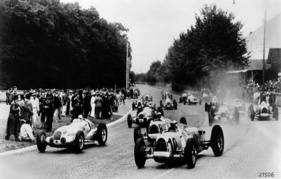
The Grand Prix Suisse, Switzerland's biggest sporting event at the time, made Bern the venue for the international motor racing scene between 1934 and 1954. The fascinating racing circus arrived in the Swiss capital every summer and caused the first traffic jams. Spectators from Switzerland and abroad - over 120,000 in the record year of 1948 - flocked to the race track in Bremgartenwald.
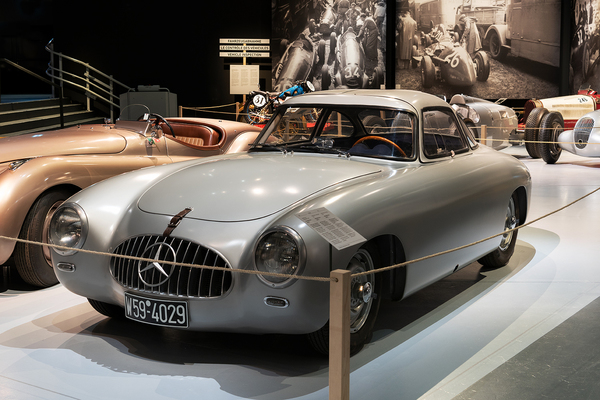
Since August 23, 2018, the Bernisches Historisches Museum has been showing the new exhibition "Grand Prix Suisse 1934-54. Bern in racing fever" and places the historical spectacle in the context of its economic, social and technical significance for Bern and Switzerland.
At the center of international racing
From 1934 to 1939 and again from 1947 to 1954, Bern became the center of international motor racing for several days each summer.
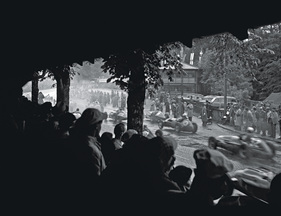
The races on the circuit in Bremgartenwald were among the great classics of motor racing, alongside those in Monte Carlo, Silverstone and the Nürburgring. The automobile races were held in various categories. From 1950, the main race was part of the newly founded Automobile World Championship, better known today as the Formula 1 World Championship. In addition to the cars, motorcycles also competed against each other in various classes.
Grand Prix Suisse - Swiss racing history
"The exhibition explores the multifaceted significance of the Grand Prix Suisse for Bern and Switzerland. We shed light on the technical progress, the impact on society and the economy as well as on Bern's everyday life. The collective enthusiasm and the rampant racing fever are brought to life, as are the challenges and dark sides of what was once Switzerland's biggest sporting event," says Jakob Messerli, Director of the Bernisches Historisches Museum.
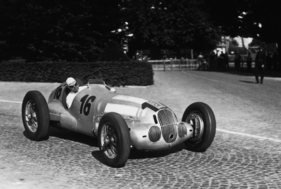
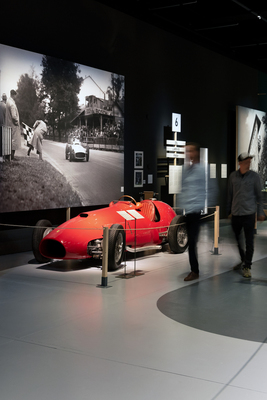
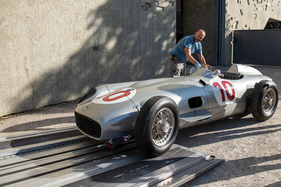
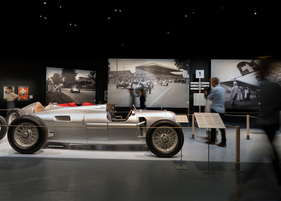
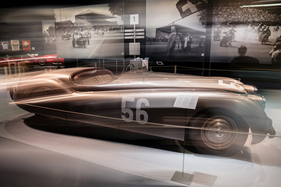
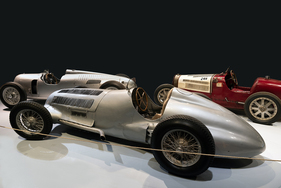
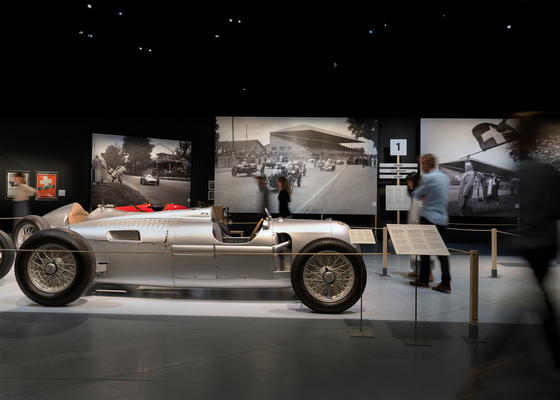
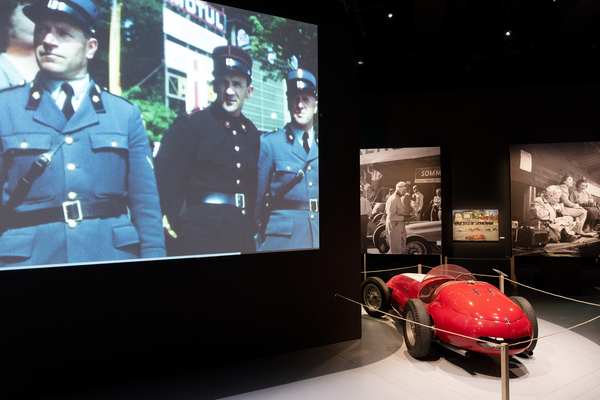
The exhibition scenography takes visitors back to the circuit in Bremgartenwald at the time. In addition to photographs, graphics and memorabilia, 20 historic racing cars and motorcycles from the 1930s to 1950s can be admired. Among the models on display are legendary Silver Arrows from Mercedes-Benz, the Alfa Romeo of Swiss racing legend Willy Daetwyler and the NSU Rennmax "Blue Whale" racing motorcycle, famous for its aerodynamic shape.
Racing fever in all sections of the population
"Before mass motorization and the construction of national roads, at a time when only a few people could afford a car, interest and enthusiasm for powerful engines and speed were immense," says curator Severin Rüegg, describing the fascination of the automobile at the time. The Grand Prix Suisse stood for top sporting performance as well as technical progress, which the public wanted to experience at first hand. The event brought glamor to Bern and the races became an experience that inspired all sections of the population.
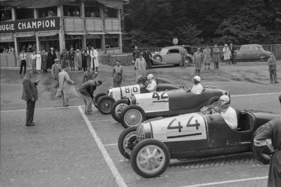
The best-attended race in 1948 attracted 126,634 visitors from Switzerland and abroad. The rush of visitors caused the city, with a population of just under 141,000 at the time, to literally vibrate and brought ringing tills to businesses and hotels. The SBB responded by running extra trains, new car parking spaces and parking facilities for bicycles were created and Bern experienced the first traffic jams in its history.
The races in the mirror of world politics
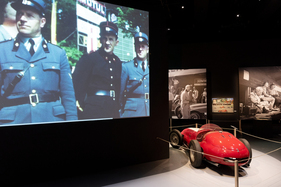
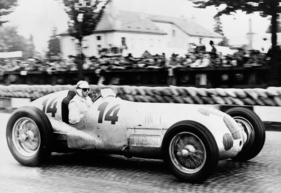
Big politics was also reflected in the Bremgartenwald: before the outbreak of the Second World War, the German duel between racing cars from the Mercedes-Benz and Auto Union AG works teams sponsored by the Nazi regime thrilled spectators. The National Socialists used the superiority of the German vehicles as a propaganda tool. The Hitler salute and swastika were used at the races in Bern.
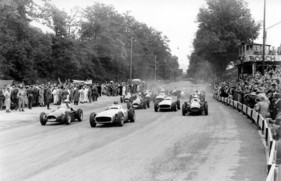
During the war years, the engines in Bern fell silent. Racing only resumed in 1947 and the drivers of the Italian works teams of Alfa Romeo and Ferrari gained the upper hand - the German works teams remained banned from Grand Prix racing until 1953.
The end of the motor racing era
The popular spectacle had been the subject of controversy since its inception: critics condemned the dangerous races, which repeatedly resulted in accidents with fatalities and serious injuries. The Grand Prix Suisse took place in all weathers, the terrain was confusing and the drivers - without seatbelts and, until 1952, without helmets - had to contend with adverse track conditions.
Inadequate safety precautions also claimed victims among the spectators. When 84 people died and more than 100 were injured in an accident at the 24-hour race in Le Mans, France, in 1955, the Grand Prix Suisse was canceled that same year and a ban on circuit races was imposed throughout Switzerland shortly afterwards. No more races were to be held in Bremgartenwald.
The cars of the Grand Prix Suisse return
On Sunday, 26 August 2018, the third edition of the "Grand Prix Suisse Berne Memorial" event, organized by the Grand Prix Suisse Berne Memorial Association, took place under the title "The legend lives on". Around 350 historic racing and sports cars will set off on demonstration drives along country roads west of the city of Bern. As a prelude, a parade of around 150 historic vehicles through Bern's old town was also organized on the day before, 25 August 2018.
With accompanying publication
To accompany the new exhibition, the Bernisches Historisches Museum, in collaboration with the "Berner Zeitschrift für Geschichte", is publishing the accompanying publication "Grand Prix Suisse 1934-54. Bern im Rennfieber". The richly illustrated publication in German is available in the museum store and online for CHF 19.00.
You can also find out more about the exhibition on the museum website.