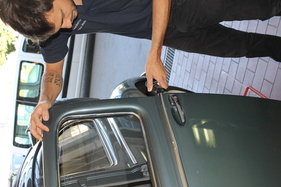
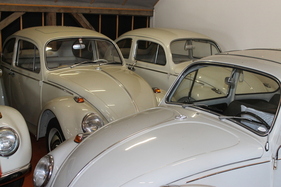
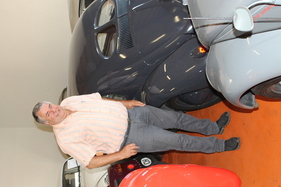
The last road trip is over and you want to prepare your classic car for the winter break? Correct storage is worthwhile, because it can quickly become expensive in the event of damage. With these ten expert tips from Urs Weibel, classic car specialist at autoweibel ag, your classic car will get through the winter safely.
10 expert tips on how to winterize your classic car properly
1) Clean and store in a dry place
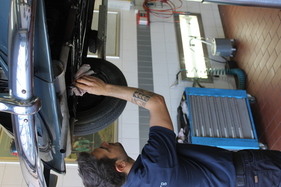
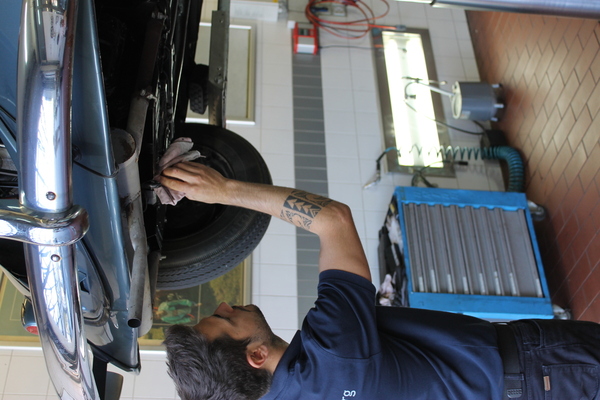
Care is the be-all and end-all for every classic car, including before winter storage. Bird droppings, insects and dirt can eat into the paintwork. Dirt on the underbody and wheel arches in particular should be removed thoroughly. It is important that you dry everything completely after cleaning. This way, your favorite vehicle is already cleaned and ready for spring.
2) Jacking up or increasing the tire pressure
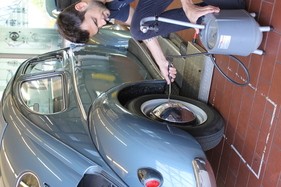
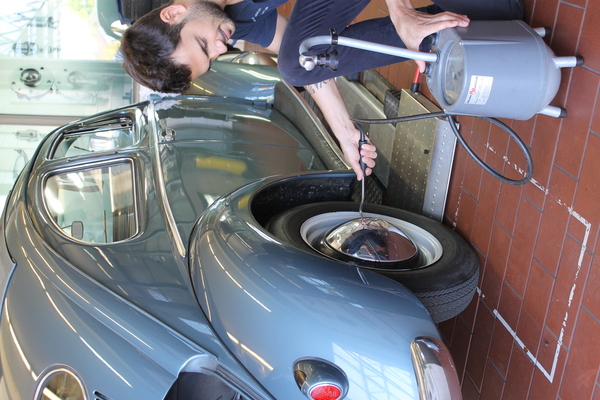
If jacking up is possible, this can of course be done. This relieves the load on the tires. Otherwise, it is important to increase the tire pressure so that there are no flat spots under the tires: This can prevent flat spots.
3) Unhook the battery
For safety reasons, the battery should be disconnected, as it discharges more quickly in the cold. In the worst case, the toxic acid could leak out of the battery and cause damage. It is therefore essential to remove the battery from the classic car, store it in a warm place and recharge it occasionally.
4) Maintain seals
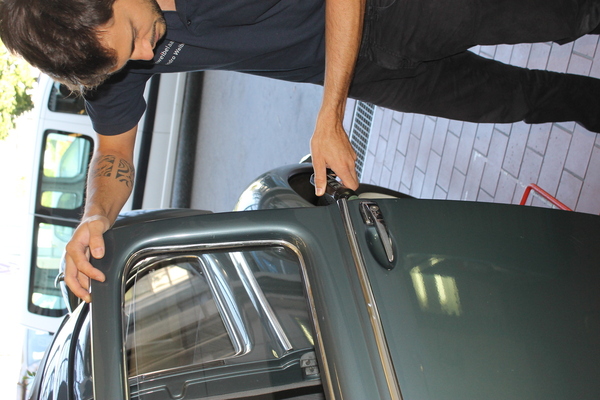
All visible rubber seals on the trunk, doors or hood should be treated with silicone to keep the rubber supple. Note: Convertibles often have additional seals on the roof.
5) Cover correctly
Covering your beloved vehicle usually does no harm. It is important that no moisture can form under the hood (see point 1 - Storing classic cars in a dry place). Covering a convertible with a fabric roof is particularly tricky, as moisture builds up quickly and can lead to irreparable damage.
6) Perfect storage space
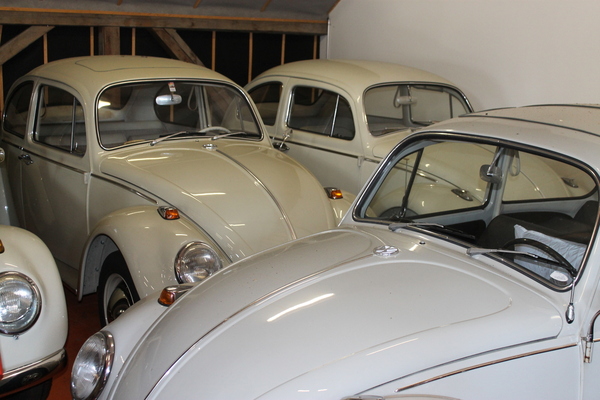
The storage location does not have to be heated. It is more important that it is dry. A shelter (open carport) will also do if the classic car is well covered and protected from snow and ice. In this case, it is important that you have enough antifreeze in the coolant at temperatures below 0 degrees.
7) Fill the tank correctly
It's all about the perfect amount. The tank should never be underfilled, otherwise condensation will form. But a tank that is too full could cause expanding gasoline to overflow.
8) Do not apply the brake
Under no circumstances should the handbrake be applied, otherwise it could "bog down". Incidentally, brakes in poor condition also tend to stick. You should therefore always check their condition before storing them. If the brakes are "squatted", the only option is a comprehensive brake overhaul. Tip: If your classic car is on a slope, secure it with a wedge.
9) Is an oil change necessary?
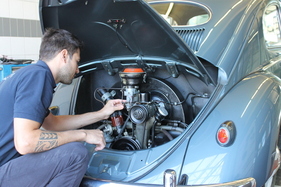
Opinions differ on this subject. Some only change the oil in spring before the first drive and leave the "old engine oil" for the winter. Others fill the engine with new oil before winterizing to prevent corrosion from condensation and acids in the oil.
10) Final check
Check again that you have followed all the points and make sure that your Bijou is not dripping anywhere. All good? Then your classic car is ready for the winter.
Is your classic car optimally protected?
AXA classic and vintage car insurance reliably protects cars, motorcycles, tractors and other commercial vehicles over 20 years old against all conceivable risks. You can even insure yourself optimally against operational damage - whether it's due to a clog or incorrect refueling. Get advice now so that you can enjoy your classic car for a long time to come.
Further information is available on the AXA website.
Real classic car specialists at autoweibel ag
autoweibel ag, which specializes in VW classic cars, is now in its third generation of management. The 60-year-old company has a corresponding amount of experience, knowledge and passion.
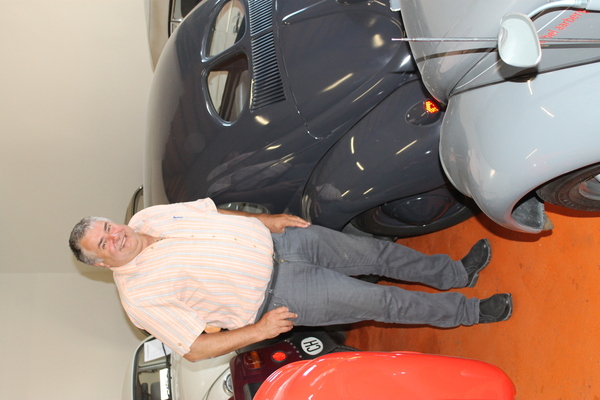
Urs Weibel and his brother Andreas continue to support the younger generation with their expertise. Because what are now classic cars were still "normal" cars when they were apprentices. Urs Weibel was bitten by the classic car bug when he bought a '48 Beetle from a colleague in 1985. Today, autoweibel has the most complete VW Beetle collection in Switzerland, with models from 1948 to 1967.