








Hardly any other brand today epitomizes model building quite like Revell. To mark its 75th anniversary, Revell is releasing five special-edition models. The centerpiece is the Porsche 356 Coupé, which, like plastic model building itself, began its triumphant rise in the 1950s as a beginner-friendly click-system model.
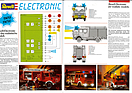
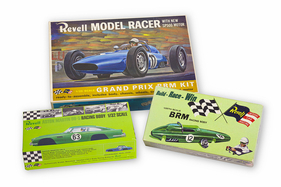
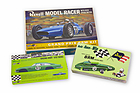
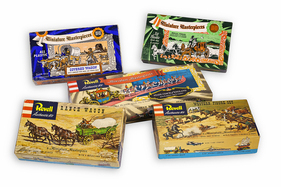
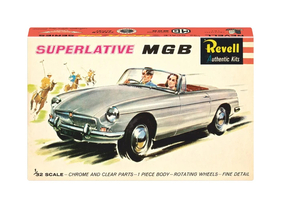
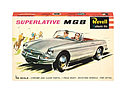
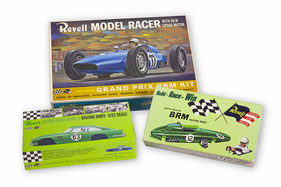
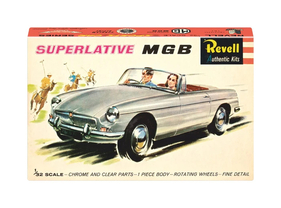
For experienced model builders and collectors, four additional classics are being released as limited editions in retro packaging and complete with the tools from their respective years of origin: the 1955 M4 Sherman, the 1957 Fokker Dr.1, the 1963 Great Eastern, and the 1964 MGB Roadster.
Founded in 1951 in California
The company was founded by Lewis H. Glaser, who began manufacturing plastic products in 1941 under the name Precision Specialties. Initially, the company primarily produced everyday items and toys made of plastic and was later renamed Revell.
The decisive turning point came in the early 1950s. At the New York Toy Fair, Revell’s plastic toys sparked great interest among model-building hobbyists. They convinced Glaser to stop offering the models exclusively as fully assembled products and instead sell them as kits for DIY assembly.
If it’s a model, it’s Revell
Glaser was initially skeptical of the idea. It wasn’t until after several discussions with model builders and the support of the department store chain Woolworth—which recognized the potential of this innovation and added the first kits to its product line—that the decision was made.
The move proved to be groundbreaking: The plastic kits were simple enough for even children to build, yet offered a level of detail that thrilled adult hobbyists. This laid the foundation for modern plastic model building, and Revell became almost a generic term. This was perfectly captured by the advertising slogan, “If it’s a model, it’s Revell.”
Airplanes and Vehicles Are in Demand
In 1953, Revell introduced its first model kit developed and produced entirely in-house: the USS Missouri. The 1:535-scale model of the famous U.S. battleship became a classic and remains a sought-after collector’s item to this day. Revell’s two most extensive model lines are airplanes and vehicles.
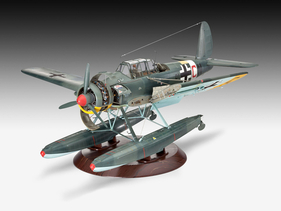
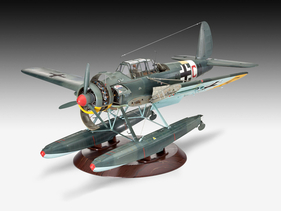
The aircraft lineup ranges from historic biplanes and legendary fighter planes like the Spitfire or Bf 109 to modern jets and commercial airliners. The vehicle lineup ranges from classic cars and sports cars to motorcycles, trucks, and military vehicles.
The Ever-Popular VW Bulli T1
Many models spanning seven decades are now considered classics. With more than two million units sold, the Titanic is the best-selling plastic model kit in the company’s history, while the Trabant, launched in 1990, is the most successful car model kit.
Other long-standing favorites include the VW T1 Bulli, the Spitfire, the Messerschmitt Bf 109, the Leopard, and the Millennium Falcon from Star Wars. Since 1995, Revell has sold more than five million model kits worldwide each year.
Fun Fact: The best-selling product in the current lineup isn’t a model kit, but the Contacta Professional. This adhesive, with its needle-thin tip, is a classic in the Revell lineup and allows for precise gluing of even the smallest parts.
From chipmunks to submarines
Revell knows virtually no limits when it comes to scale, either. The 1:350-scale Bismarck, with 659 parts, is one of the most elaborate kits; the battleship, which was originally about 251 meters long, becomes a model approximately 72 centimeters long.
Even larger is the Gato-class submarine in 1:72 scale, measuring an impressive 1.32 meters. At the other end of the spectrum is the 1:144 scale, in which even an Airbus A380 with a wingspan of nearly 73 meters shrinks to a display-case-friendly 51 centimeters.
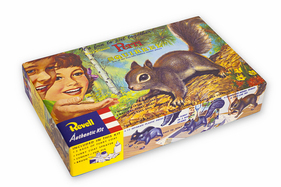
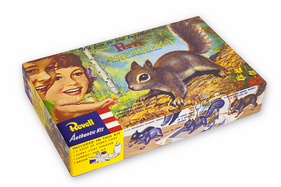
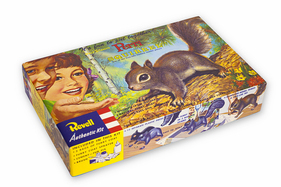
A submarine that kept the U.S. Congress busy, plastic figurines of the Beatles, a stealth fighter that didn’t even officially exist yet: Revell’s 75-year history provides plenty of material for unusual stories. As early as 1957, the first official licensed model kit was released: “Perri the Squirrel,” a chipmunk from a Disney film.
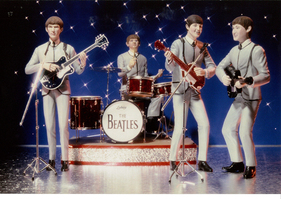
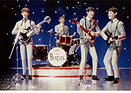
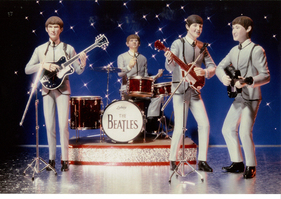
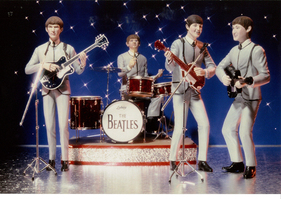
In 1965, the Beatles—John, Paul, George, and Ringo—followed as 1:8-scale figures. Due to high licensing costs, they were produced for only one year and are now sought-after collector’s items, worth up to $3,500 as a set of four.
Models as Keepers of Secrets
In 1960, the issue took a political turn: A detailed model kit of the Polaris nuclear submarine ended up at a congressional hearing. Admiral Hyman G. Rickover wanted to know how information about one of the U.S. Navy’s most advanced submarines could be available as a toy. Whether the model kit actually revealed secrets remains unproven to this day.
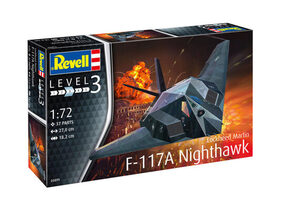
In 1983, the F-19 Stealth Fighter was released as a model, even though the actual aircraft did not officially exist. The design was based on publicly available speculation, yet even the CIA wanted to know where Revell had obtained its information.
Build, Discover, Enjoy
Today, the product line is as diverse as its history. The Click System, featuring pre-painted and printed parts, is aimed at beginners and casual hobbyists. The Tiny Adventures Book Nooks, the wooden Flowers, and the Brick System made of interlocking building blocks appeal to the growing group of “kidults” and tap into new target audiences, including an increasing number of female craft enthusiasts.
What began with “Perri the Squirrel” and the Beatles now includes licenses from many areas of pop culture, ranging from Formula 1 to Fast & Furious and Stranger Things to classics like Star Wars, Top Gun, Harry Potter, and Disney.
Even after 75 years, Lewis H. Glaser’s original idea remains relevant: People build things themselves, discover technology, history, and pop culture on a small scale, and assemble their own models from many individual parts.