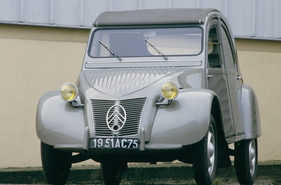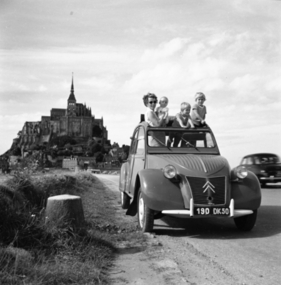
Citroën is celebrating the 75th birthday of one of its best-known models: the 2CV. It was designed at the Citroën design center in the Rue du Théâtre in Paris and further developed at the La Ferté-Vidame test center in the Eure-et-Loir region. It was presented to the public at the Paris Motor Show on October 7, 1948.
The 2CV has an extraordinary history: A total of 5,114,969 examples were produced, including 1,246,335 2CV panel vans. The very last 2CV left the Mangualde plant in Portugal at 4 p.m. on July 27, 1990, 42 years after its market launch.
The prototype before the war
The "TPV" project originated in 1936, when a minimalist small car was to be developed. The first roadworthy prototype of the TPV project was built in 1937. It weighed just 370 kilograms and had only one headlight, as legislation at the time did not require two. The vehicle could carry up to four people and 50 kilograms of luggage at a top speed of 50 km/h and also offered exceptional comfort.

250 pre-production models were to be presented at the Paris Motor Show in 1939. But the outbreak of the Second World War put paid to this. The models built were destroyed - except for four, which were kept at the Citroën test center in La Ferté-Vidame.
A legendary car
The newly developed, air-cooled two-cylinder boxer engine with an initial displacement of 375 cm3 produced 6.6 kW (9 hp) and was equipped with a four-speed gearbox as standard for the first time. When the 2CV went into production in July 1949, the small car reached a top speed of 50 km/h. Citroën revolutionized the car industry with this economical and versatile vehicle.

The unique body shape of the 2CV quickly won over a large section of the population. Its unique success was also due to its versatility, its removable seats, its lightness, maneuverability and comfort. The model was also economical in terms of fuel consumption, which made it a popular vehicle. By 1950, orders were piling up, resulting in waiting lists of up to six years.
The avant-garde spirit of the 2CV and its sophisticated technologies for the time ensured that it remained part of the automotive scene for many years. The 2CV is a timeless model that has become an icon of automotive history and continues to delight collectors from all over the world. It is still frequently seen on the roads today.

The 2CV is known throughout the world in a variety of ways and its reputation has earned it a number of nicknames. Some of the best known include "Deuche", "Döschwo" and "Ente". The multitude of pet names shows just how popular this historic and iconic model was.
Many versions worldwide
In total, there were ten special models of the 2CV that were launched in France and several other European countries. These included the Spot, the Charleston and the Cocorico. The 2CV also underwent a number of innovations, including the introduction of the 2CV Camionette (known as the 2CV AU) in 1951 and the 2CV AZ in 1954, which was equipped with a 12 hp engine and the famous centrifugal clutch.

The 2CV was also on the road all over the world thanks to various raids, such as the 16,500 km Paris-Kaboul-Paris raid in 1970, the 13,500 km Paris-Persépolis raid in 1971 and the 8,000 km Africa raid from Abidjan to Tunis in 1973, all three of which were organized by Citroën.