





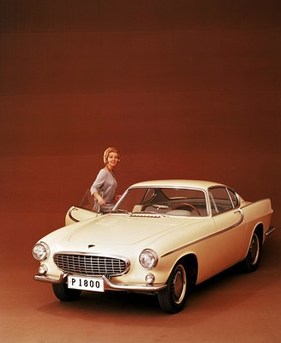
The premiere could not have been more glamorous for a Volvo that immediately established the Swedish premium brand in the club of exclusive sports coupé manufacturers. In January 1960, the Volvo P1800, designed by the Swede Pelle Petterson, became the star of the show at the Brussels Motor Show, even as a near-production prototype. The Volvo P1800 also became a global sales success thanks to its innovative safety technology and powerful, long-lasting engines from the Volvo P120 Amazon.
Brand icon with an extraordinary career
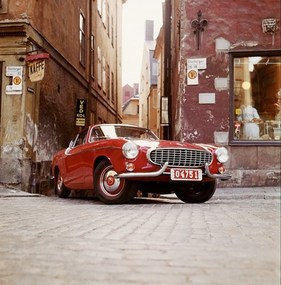
A Volvo as desirable as an Italian Gran Turismo and more charismatic than British cult sports cars, these characteristics made the Volvo P1800 the most spectacular Swedish sports coupé and a brand icon with an extraordinary career that only ended in the 1970s. Even the beginning of the history of Volvo's first large-series coupé was glamorous: the young Swedish designer Pelle Petterson created the Volvo P1800 from 1957 in the Italian design studios of Frua, with contemporary fins at the rear as a reference to the rocket age that was then beginning, but above all with the everlasting elegance of Italian Gran Turismo. The technical basis for the 2+2-seater sports coupé was provided by the solid Volvo Amazon P120 saloon, whose 66 kW (90 hp) 1.8-liter four-cylinder B18B in the Volvo P1800 enabled sporty driving performance.
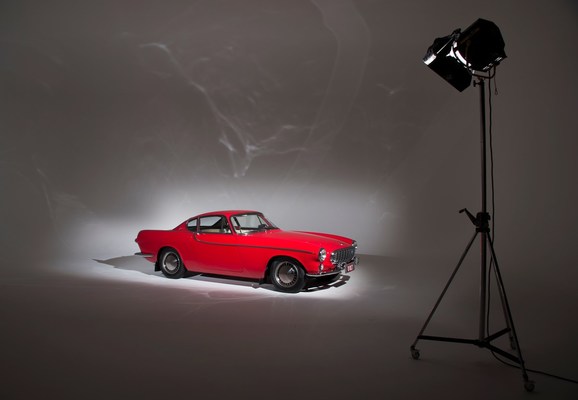
Iconic and safe sports coupé as a global Volvo brand ambassador
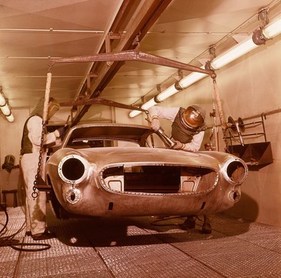
Volvo has been supplying chassis for exclusive coupé bodies to coachbuilders since the 1930s. The Volvo P1800 marked the beginning of a new chapter in the history of the Swedish premium manufacturer, as this sports coupé was intended to open up new markets, particularly in North America and Asia. Global ambitions that were matched by the Volvo P1800's initially international production processes. The Italian-designed coupé with proven Swedish technology and a body pressed in Scotland was assembled by the English sports car specialist Jensen Motors from 1961.
Nevertheless, it was a start with obstacles, as the English manufacturer produced the sportiest Volvo in such unsatisfactory quality that even the first 250 cars had to be sent to Gothenburg for reworking before delivery. This problem was only finally solved in 1963, when production of the Gran Turismo moved completely to the Swedish plant in Lundby.
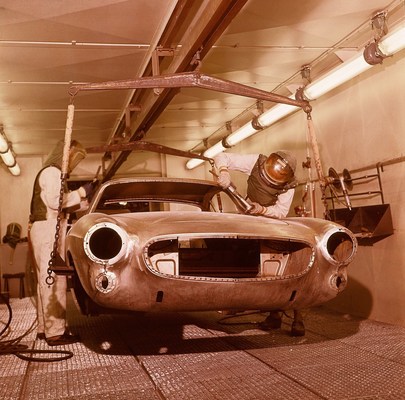
Now sales of the sports car, henceforth called the Volvo 1800 S - "S" for Sverige (Sweden) - and boosted to 71 kW (96 hp), really took off worldwide. The Swede completed the sprint from 0 to 100 km/h in just 12.1 seconds, a superior figure that was only achieved by sports cars and very powerful saloons.
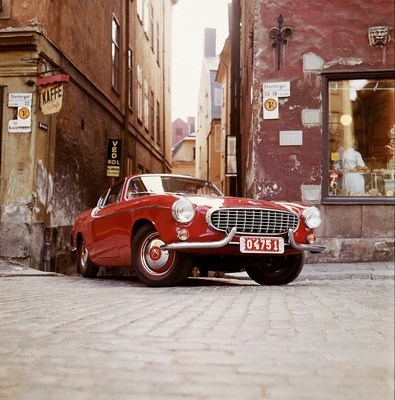
The safety concept of the fast Volvo was also visionary, as it was the first sports coupé in the world to have seat belts for all four passengers as standard. Volvo Germany demonstrated the stability of this restraint system as early as 1961 in a show in the port of Hamburg. There, a Volvo P1800, held solely by the three-point safety belts, hovered on a crane above the port facility. The sports car also played a pioneering role when it came to load securing, with leather belts integrated into the luggage compartment securing even heavy golf bags for the first time.
Reliable long-distance runner and automotive film star in the service of His Majesty
It was its epic shapes with an elongated hood and dynamic silhouette that made the racy Volvo look so racy. The producers of the British TV crime series "The Saint" chose a Volvo 1800 S as the official car of the title character Simon Templar, played by British actor Roger Moore.
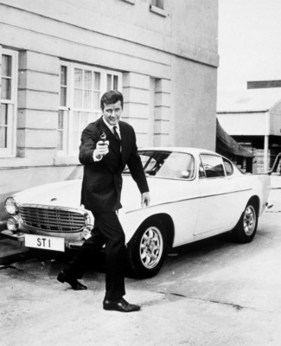
Moore, also known from James Bond films, was so convinced of the qualities of the sports coupé that he even drove a polar white Volvo 1800 S in his private life. Swedish King Carl XVI Gustaf also drove several vehicles of the sportiest coupé in succession from his 18th birthday onwards.
Another integral part of the history of the Swedish sports coupé is the red Volvo 1800 S, which the American Irv Gordon acquired in 1966 and in which he broke the three million mile mark (4,827,00 kilometers) in 2013. An all-time record that was entered into the Guinness Book of World Records.
Spectacular concept cars and iconic shooting brake
Regular minor model updates were enough to keep the Volvo P1800, which had already been designed in its basic form in 1957, visually fresh for decades. These included a smoothed bumper design in 1964, which replaced the original cow horn arches, as well as regularly updated radiator grilles. Coachbuilders such as Volvoville in the USA built coveted small convertible series and Italian star designers such as Fissore and Coggiola presented fastback studies.
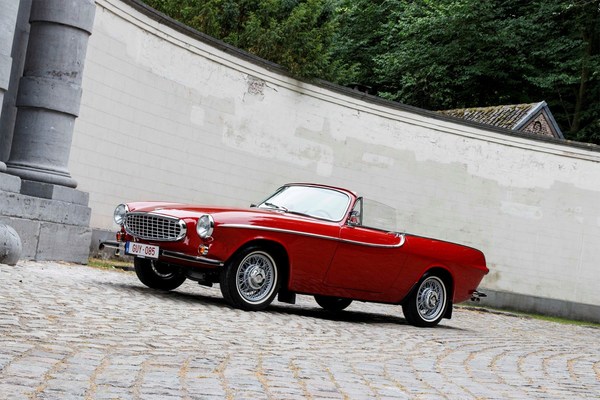
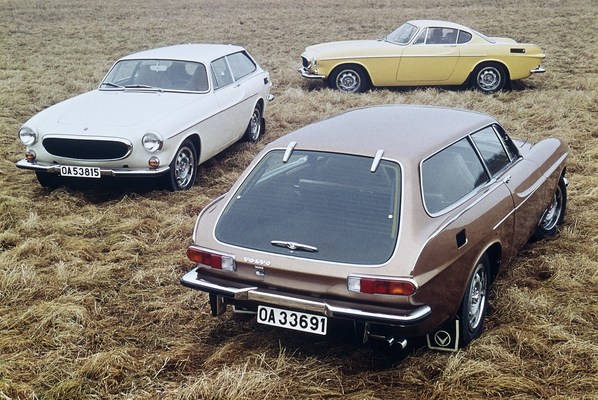
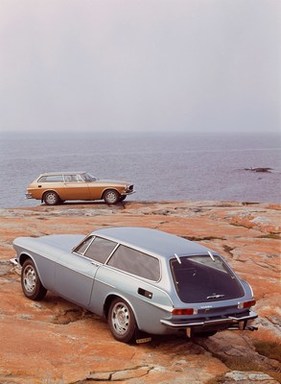
Volvo presented a sensational further development of the sports coupé in 1971: The Volvo 1800 ES as the forerunner of all modern shooting brakes.
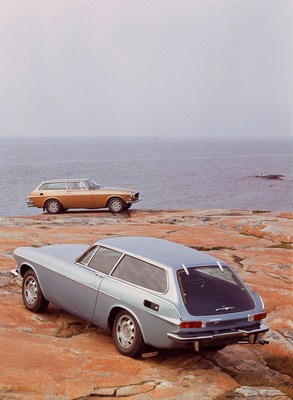
Thanks to its large glass tailgate, this sports estate with its breathtaking lines became famous in Germany under the name "Snow White's Coffin".
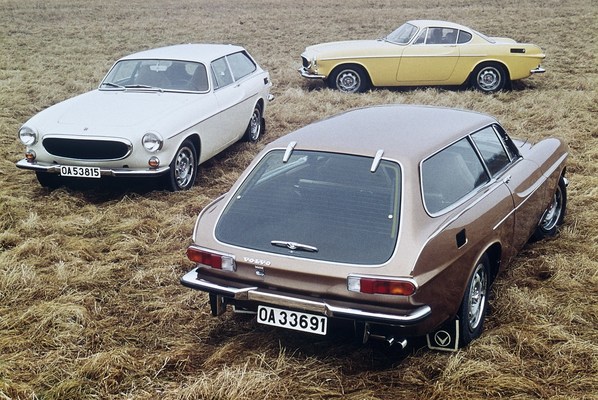
In 1972, the last coupé - a Volvo 1800 E - rolled off the production line and one year later the Volvo 1800 ES was discontinued. A total of 47,855 units of the sporty Swedes were built, of which 39,778 were coupés. Since then, the Volvo P1800 has demonstrated its immortality in the classic car scene and through its style-defining influence on self-confident newer-generation Volvos, such as the Volvo Concept Coupé from 2013.
