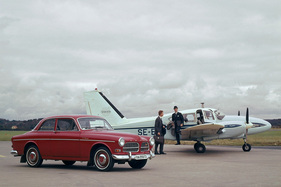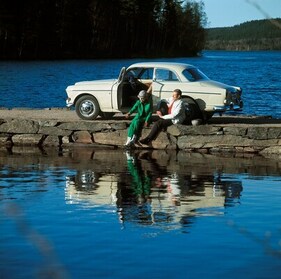
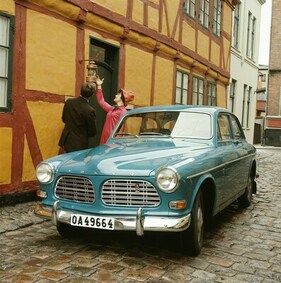
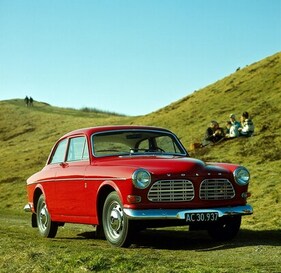
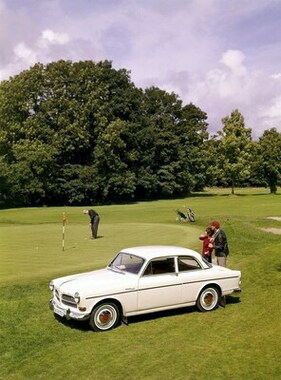
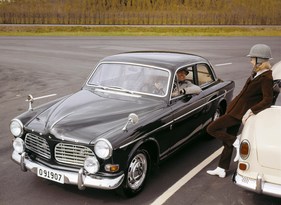
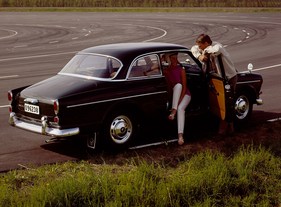
In October 1961, the four-door Volvo Amazon P120 received a new addition: the two-door Volvo Amazon P130 saloon with a sporty design and the B18 engine from the Volvo P1800 sports coupé expanded the portfolio of the bestseller. The lines of the Volvo Amazon P130 were drawn by chief designer Jan Wilsgaard, who was responsible for the style of many Volvo models for decades. As with the four-door Volvo Amazon, Wilsgaard combined fine elements from Italian design culture with the natural clarity and robustness of Scandinavian contours. As a result, the two-door saloon became the best-selling body variant of the Volvo Amazon - by July 1970, almost 360,000 two-door models had been sold worldwide, more than the four-door and estate models combined.
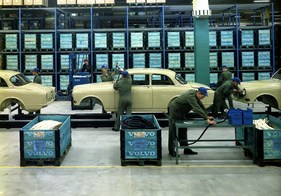
It was an unprecedented success story for a model with Scandinavian roots: around 60 percent of production of the Volvo Amazon launched in 1956 was sold on export markets. A result to which the two-door Volvo Amazon P130 introduced in 1961 was to contribute significantly, especially as it was the first Volvo to be built in the new plants in North America (Halifax, Canada) and in Ghent, Belgium. But the Volvo Amazon P130 also led the way when it came to safety innovations.
New safety technologies changed the automotive world forever
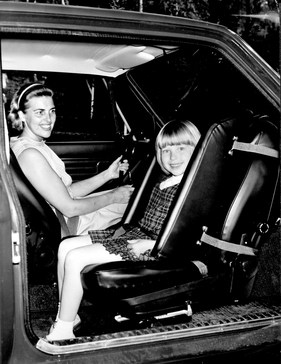
As early as 1959, the Volvo, named after warrior women in Greek mythology, impressed with a safety system that has saved the lives of more than a million people to date: The three-point safety belt patented by Volvo. In 1967, the world's first rear-facing child seat made its debut in the two-door Volvo Amazon P130. Volvo's safety engineers had developed a swivel passenger seat with a specially padded backrest that offered children the best possible protection.
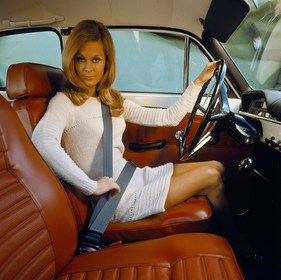
In addition, the Volvo Amazon was one of the first cars to be equipped with ergonomic seats as standard, which were developed in collaboration with medical experts. Headrests, disc brakes and dual-circuit braking systems also contributed to the Volvo Amazon's high level of safety.
Longevity right up to the present day
The comprehensive rust protection program was also exceptional in the fast-moving 1960s, which were characterized by rapid model changes. The corrosion protection guaranteed a stable and therefore safe body structure over many years, and thanks to this, the Volvo Amazon still makes its mark on everyday Scandinavian traffic today. Over 24,000 Volvo Amazon are still registered in Sweden alone, a record figure for classic cars at least 50 years old. According to estimates, every tenth Volvo Amazon is still in use worldwide.
Wide range of drive systems - from economical to sporty
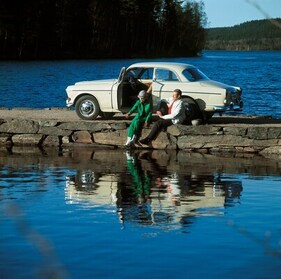
The engines for the Volvo Amazon P130 were both efficient and designed for exceptionally high mileage. This was helped by an overdrive gearbox that reduced revs and thus consumption, which was offered as an option for the 1.8-liter four-cylinder engine (B18) introduced in 1961 and for the 2.0-liter engine (B20) that followed in 1968. Those looking for maximum comfort could already order an innovative and efficient three-speed automatic transmission instead of the two-speed automatic that was still widespread at the time.
From 1966, the Volvo Amazon 123 GT enjoyed cult status among sports saloon fans. Powered by the 76 kW (103 hp) B18 engine from the legendary Volvo P1800 sports coupé, the two-door saloon caused a sensation with its two additional iodine headlights, which even included cornering lights in addition to wide beam and fog lights. And with an even more powerful B20 engine, the Volvo 123 GT was one of the title contenders in motorsport series.
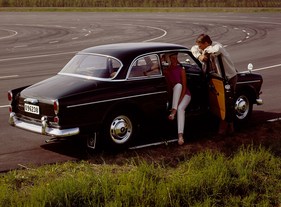
In contrast, the Volvo Amazon 121 Favorit, available from 1965, was geared entirely towards efficiency. With its economical equipment, three-speed gearbox and 55 kW (75 hp) engine output, this two-door model was the base model of the series in some markets.
From the factory to the Volvo Museum
However, only the upmarket equipment lines of the Volvo Amazon were popular worldwide, anchoring Volvo as a premium manufacturer globally. While the Volvo Amazon was replaced by the Volvo 140 as a four-door and estate car at the end of the 1960s, the last Volvo Amazon P130 did not roll off the production line until July 3, 1970 at the main plant in Torslanda, Sweden, a dark blue two-door sedan that drove straight into today's Volvo Museum next door.