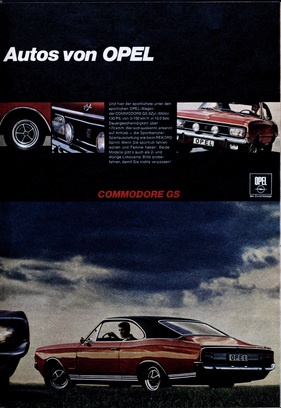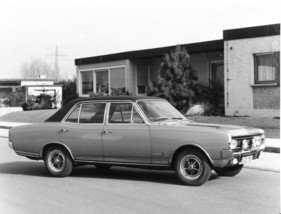

50 years ago, Opel entered the "more luxurious and more powerful middle class" with the Commodore. The Commodore, which was launched in the first quarter of 1967, was positioned between the Rekord L and the Kapitän.
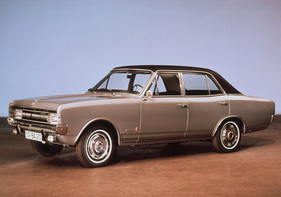
Automobil Revue presented the new model in detail in the run-up to the Geneva Motor Show, where the Commodore was shown to the general public:
"The Commodore already distances itself from the Rekord through the details of its exterior design. The main distinguishing features are the vertical bars in the radiator grille opening and a wide metal strip at the rear between the tail lights. The Commodore can also be recognized by the optional outer plastic cover on the roof, which is not available on the Rekord. It should also be noted that the Commodore is equipped with 14-inch wheels (compared to 13 inches on the Rekord) with deep-drawn sports rims.

What immediately catches the eye, however, are the neat details of the Commodore's interior, which - apart from the higher engine output - effectively set it apart from the Rekord. The first thing that catches the eye is the sports steering wheel with three spokes and a ring of imitation wood. For safety reasons, the hub is deeply recessed. The quilting of the seat upholstery is richer and more voluminous. A narrow compartment with a padded lid is inserted between the front individual seats (which are also present in the Rekord). The seat backrests are even more strongly molded. The rear seats are also shaped like a shell."

The Commodore, which was developed on the basis of the Rekord C, was available with a 2.2-liter engine and 95 hp, with 2.5 liters and 115 hp or 130 hp (as GS). Other engine versions were added later, in particular the 2.5-liter in the GS/E (electronic fuel injection) with 150 hp and the 2.8-liter in the GS/2.8 with 145 hp.

The Commodore A, as it was retrospectively called, was built until 1971, with a total of 156,467 units being produced. The coupé accounted for almost half of these!
The Commodore A was followed in March 1972 by the Commodore B, which was based on the Rekord D.