










As early as 1953, MOTAG took over the general import of BMW automobiles and components for Switzerland. Company founder Karl Hübner maintained good relations with BMW AG in Munich. The wealthy merchant family supported BMW with loans during the difficult post-war years. This connection gave Hübner the sole, lifelong import rights for Switzerland. A "handshake deal", as contemporary witnesses recall.
The company was initially based in Zurich before MOTAG built and moved into the "MOTAG Automobile Center in Dielsdorf near Zurich" in 1967 and 1968.
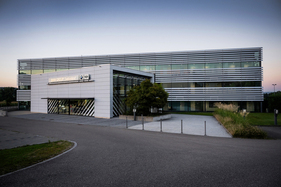
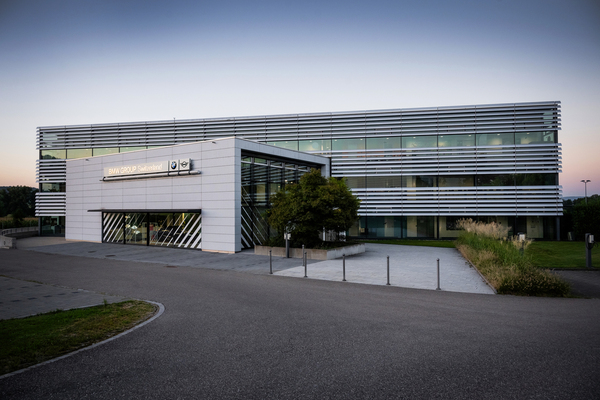
To this day, the location on Industriestrasse is the headquarters of BMW Schweiz AG. As early as 1970, more than 4000 BMW automobiles were sold in Switzerland.
In January 1973, MOTAG also took over the import of BMW Motorrad with the R 60/5. From 1975, after the death of Karl Hübner, BMW Holding AG gradually took over the share packages of the Hübner heirs.
The approximately 50 employees of MOTAG were taken over and the company, renamed BMW (Schweiz) AG in 1976, is now responsible for the distribution of the BMW brand in Switzerland. Alexander Schnurrenberger, who had already held this position at MOTAG, became Managing Director.
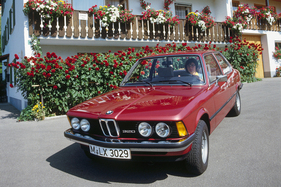
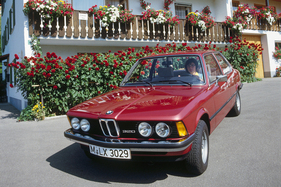
1. first expansion - the era of the BMW 3 Series (E21) (1975 to 1983)
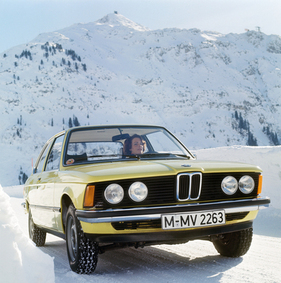
"In 1977, the new price for a 316i was 16,250 francs. The E21 is only available as a two-door sedan."
The new company structure was accompanied by rapid growth. The sales structure was reorganized and new positions were created. By 1975, the workforce had grown to more than 100 employees.
As a commitment to the Dielsdorf site and as part of long-term planning, a second office building for finance and administration and a central parts warehouse were built in 1977.
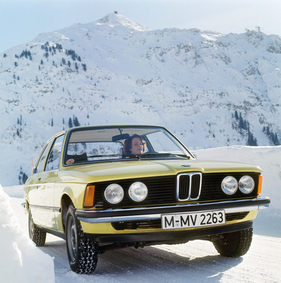
BMW broke the 10,000 car sales mark in Switzerland as early as 1978. The model portfolio consisted of the 5 Series (E12), the 6 Series Coupé (E24), the M1 (E26) and, of course, the 3 Series (E21).
The first generation of this still central model series in the BMW portfolio was the first model to be officially offered by BMW (Schweiz) AG right from the start.
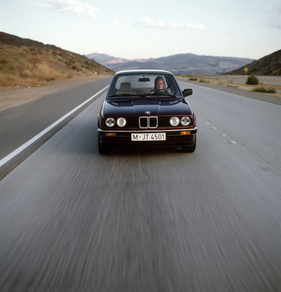
2. special requests and vision - the era of the BMW 3 Series (E30) (1982 to 1994)
"With the E30 series, the 3 Series was also available as a four-door saloon or Touring for the first time."
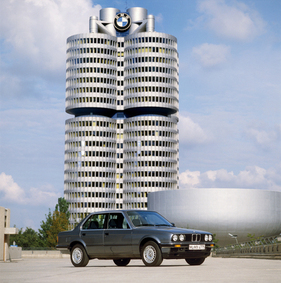
Although the market volume was low in a global context, Switzerland was considered important in Munich. Customers showed a high affinity for the brand and strong purchasing power, so that the vehicles sold in this country stood out with good equipment and powerful engines. The first BMW model with all-wheel drive, the 325 iX (1985), was developed not least due to numerous requests from Switzerland.
Andreas Schnurrenberger retired at the end of 1986 and handed over the general management to Rudolf Lüthi. At this time, BMW had a market share of around 4% in Switzerland.
As early as 1992, BMW (Schweiz) AG demonstrated foresight with regard to sustainability. In cooperation with a car recycler, a process was found to minimize residual materials that were still treated as hazardous waste at the time. These residual materials included glass, rubber, textiles and plastics. While the bodywork and other metal parts were shredded, the proportion of non-recyclable residual materials was reduced by up to 44%. The car recyclers were provided with detailed dismantling instructions by BMW (Schweiz) AG. Glass could be recycled, parts such as bumpers, alternators or catalytic converters could be sent to the BMW plant for reprocessing.
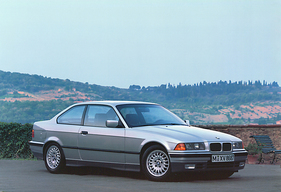
3. major investments - the era of the BMW 3 Series (E36) incl. 3 Series Compact (1990 to 2000)
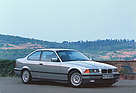
"As with the predecessor, a two-door coupé, a convertible and a Touring are also available in addition to the classic saloon."
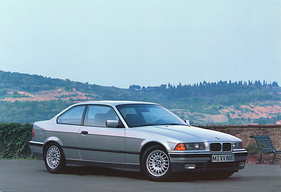
At the beginning of the new decade, BMW (Schweiz) AG was able to continue the upward trend of previous years: in 1990, BMW (Schweiz) AG sold more than 14,000 vehicles in Switzerland. Around 150 employees contributed to this success.
In August 1990, Ralph Weyler took over as General Manager. In 1990, BMW (Schweiz) AG also became a financial services provider for the first time with the "BMW Leasing" division. In 1994, the division was taken over by the newly founded BMW Finanzdienstleistungen (Schweiz) AG, an independent subsidiary. Since then, the two companies have operated as BMW Group Switzerland. This was part of a major plan, as BMW (Switzerland) AG was preparing for the future with a major investment phase up to 1994. Around 200 million Swiss francs were invested in new plants and conversions in accordance with corporate identity guidelines, new technologies and further training.
The head office in Dielsdorf was also extensively renovated and remodeled. The renovated building was finally opened in January 1995. And with it came a showroom and a used car center. This meant that BMW Group Switzerland now also had a sales and service base for customers in Dielsdorf for the first time.
Rudolf Huber was introduced as the new General Manager in January 1996. Due to difficult economic conditions, recession and the resulting decline in the overall market, sales fell to around 10,000 units in the 1995 financial year. But then growth was the order of the day again. 1999 was BMW Group Switzerland's best business year to date. Sales rose to 900 million Swiss francs, +8.6% compared to the previous year.
A total of 12,031 passenger cars and 1,517 motorcycles were delivered. The 3 Series (incl. Compact) was the bestseller with around 7200 units, while the 5 Series sold 3160 units. The BMW Z3 roadster was also well received in Switzerland: 950 units were registered in 1999. And even the luxurious 7 Series achieved 460 registrations, 64% of which were with an eight-cylinder engine.
With the "BMW Service Plus", BMW Group Switzerland introduced a package exclusively for Switzerland in 1999: 10 years or 100,000 kilometers of free service and a warranty for three years or 100,000 kilometers. This also underlines the importance of the Swiss market for BMW.
4th MINI delights Switzerland - The era of the BMW 3 Series (E46) incl. 3 Series Compact (1998 to 2007)
"With the E46, BMW once again offers the 3 Series with all-wheel drive. The E46 celebrates its world premiere at the 1998 Geneva Motor Show."
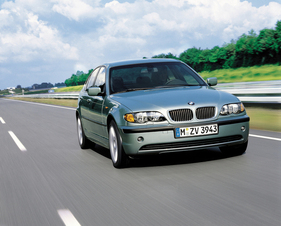
BMW Group Switzerland started the new millennium for the first time with sales of more than one billion Swiss francs in 2000; 183 people were employed in Dielsdorf at the time. With the introduction of the first BMW X5 in 2000, BMW further underpinned its all-wheel drive expertise and offered an SAV (Sports Activity Vehicle) for the first time - an important addition to the model portfolio in Switzerland.
BMW Group Switzerland also broke new ground in another respect in 2001: MINI was added to the range. MINI was well received in Switzerland right from the start. In the 2002 financial year, the brand already had a market share of 1.27%, in the segment it was even 6.5%. A European record.
2002 marked another milestone in the history of BMW Group Switzerland: the Swiss Army ordered 400 F-series motorcycles to replace its previous models. The purchase price was estimated at 4.8 million Swiss francs. Further motorcycles were gradually delivered. The Swiss Army still relies on BMW motorcycles today.
At the end of the 2002 financial year, sales amounted to 1.3 billion Swiss francs. 13,455 BMW vehicles were sold, as well as 3715 MINI and 1980 BMW motorcycles (excluding military). 236 employees worked for BMW Group Switzerland at that time. In addition, there were 95 dealerships, 65 of them with MINI, which took care of sales and service. BMW Motorrad was represented at 31 locations. In 2002, the parts and accessories warehouse in Dielsdorf was closed and spare parts were now supplied centrally from a warehouse in Strasbourg.
In 2003, a large showroom was added to the building in Dielsdorf in order to meet the increased space requirements.
Before Rudolf Huber retired at the end of 2003, the groundbreaking ceremony for the new BMW Group Switzerland headquarters at Industriestrasse 20 in Dielsdorf took place on December 16, 2003.
2004 was another record year for BMW Group Switzerland. 17,158 passenger cars were sold. BMW was thus able to increase its sales by 68.4% within 10 years - although the Swiss market actually declined slightly during this period (-0.2% compared to 1994).
Under Huber's successor Doelf Carl, the employees, who had previously been spread across three buildings, moved into the new office building in spring 2005. The building was officially inaugurated on May 20, 2005. Sales, Marketing, Finance and Human Resources, IT, MINI, Motorcycles and Financial Services are finally under one roof.
5. through the crisis - the era of the BMW 3 Series (E90) (2005 to 2013)
"With the X3 (from 2003), the 3 Series now has competition from within the company. However, the fifth edition, also available as a Touring and with xDrive, continues to enjoy great demand in Switzerland."
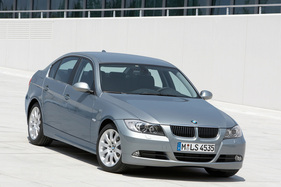
BMW soon left the competition behind in Switzerland. In 2007, sales of passenger cars passed the 20,000 mark for the first time. With 20,372 cars sold, BMW became number one in the premium segment. "In Switzerland, we were helped above all by our wide range of models and our xDrive all-wheel drive system," said Doelf Carl, Managing Director at the time, summing up the successful result in an interview with Blick. And: "The new MINI has achieved a similar cult status as its original."
The first BMW X6, another successful model, made its debut in Switzerland in 2008. BMW's Formula 1 involvement with BMW Sauber F1 from 2006 to 2009 is also likely to have played a part in the company's good image in Switzerland.
While the engines were manufactured in Munich, the Sauber team in Hinwil (ZH) employed around 400 people. Doelf Carl left BMW Group Switzerland at the end of 2008. His successor was Erich Papke - at a very difficult time: the global economic crisis was also felt in Switzerland and caused the car market to shrink. "In 2008/2009, we had the biggest crisis since the 1930s, and we came out of it with a result that was good for BMW (Schweiz) AG," he recalled in an interview with Automobil Revue in 2011. Papke, Managing Director of BMW (Schweiz) AG since 2009, and his team were able to consolidate the market share of BMW Group passenger cars (BMW and MINI) to 6.8% and continuously increase vehicle sales: 17,541 units in 2009, 19,722 units in 2010 and 22,113 units in 2011.
Sales figures for BMW Motorrad also developed very positively. In 2009, 2028 units were registered, corresponding to a market share of 11.7% (>500 cc) in Switzerland. In 2010 there were 2364 units and a market share of 14.3%, and in 2011 there were 2991 units and a market share of 15.5%.
6 New paths - The era of the BMW 3 Series (F30) (2011 to 2019)
"The F30 is also available as a Sedan and Touring, while the Coupé and Convertible are sold as the 4 Series with this model generation. Hybrid drives are also available for the first time."
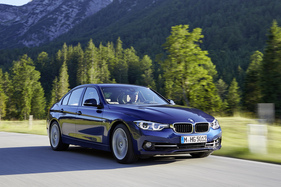
In February 2012, Philippe Dehennin was appointed as the new President & CEO of BMW (Switzerland) AG and was thus able to accompany the start of a new era: In November 2013, the BMW i3 was launched in Switzerland as the first all-electric model from BMW i at a price starting at 39,950 francs. The completely redesigned model celebrated its Swiss premiere at Auto Zurich. In its premiere year, the i3 was voted the greenest car of the year by the readers of "Schweizer Illustrierte" magazine, giving it a perfect start.
BMW Group Switzerland was also able to maintain the upward trend in 2013: A new record year with 25,029 cars and 3235 motorcycles sold. Despite the continued success, BMW Group Switzerland was always looking for new ways. As a "cross-brand presentation forum for premium mobility on two and four wheels", according to the press release at the time, the BMW Group Brand Experience Center was opened at the headquarters in Dielsdorf in March 2016. With a selection of around 100 demo vehicles, the center still offers support for dealers and the best conditions for experiencing BMW, MINI and BMW Motorrad models. It also offers space and infrastructure for events with up to 300 guests.
Kurt Egloff took over as President & CEO of BMW (Schweiz) AG on May 1, 2016. A motorsport record of a different kind was set in August 2016: the Formula Student team from ETH Zurich, supported by the BMW Group, accelerated its racing car from 0 to 100 km/h in just 1.5 seconds!
Finally, in October 2016, the BMW i3 was once again in the spotlight: as part of the "SBB Green Class" pilot project, a cooperation between Swiss Federal Railways SBB and BMW Group Switzerland, test customers received a general subscription, a BMW i3 with a wallbox at home and access to a car and bike sharing service as part of a subscription model.
A perfect example of an innovative and connected mobility solution. In 2017, BMW Group Switzerland broke the 30,000 car sales mark in Switzerland and Liechtenstein for the first time. BMW Motorrad also topped the sales statistics for motorcycles with more than 500 cubic centimetres with 4,774 units.
Just in time for the national holiday on August 1, 2018, Paul de Courtois took over as President & CEO of BMW (Switzerland) Ltd.
7. friend and helper - the present: the BMW 3 Series (G20) (from 2018)
"With the seventh generation of the 3 Series presented in 2018, BMW placed even more focus on a versatile drive portfolio - and once again met the spirit of the times."
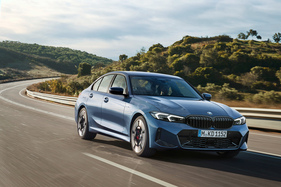
The Group remained successful in Switzerland and recorded a 10% market share in 2018. BMW has been supplying various Swiss authorities with vehicles since the 1950s. The 3 Series, 5 Series and X models have been popular companions for police forces for years and decades. In 2019, BMW Group Switzerland delivered the first all-electric police patrol vehicle to the Wädenswil (ZH) municipal police force.
The BMW Zurich-Dielsdorf branch, which opened in 1995 and was the only sales and service partner owned by BMW Group Switzerland, was sold in 2020 and has since been run by the Hedin Group.
Despite an extremely uncertain market situation due to the coronavirus pandemic, BMW Group Switzerland was able to report a market share of 11.1% in 2020 and thus continued to grow relative to the market environment. And, as in every year since 2016, the company also met the federal government's Co2 targets in 2020. The iX was launched in 2021 as a further member of the BMW i family. BMW Group Switzerland delivered the world's first iX as a police emergency vehicle in September 2022, continuing a tradition.
With 25,251 registrations in 2023, the BMW Group Switzerland almost reached the sales level of before the coronavirus pandemic. The Co2 targets were also exceeded in 2023. The best conditions for Sergio Solero, who took over as President & CEO of BMW (Switzerland) Ltd on March 1, 2024. As of December 31, 2024, BMW Group Switzerland employed 424 people, of which around 100 employees at BMW Financial Services are responsible for the credit financing and leasing of Group-brand cars and motorcycles for private and business customers. In the fleet business, the Financial Services segment operates under the brand name Alphabet. The dealer organization, consisting of 65 BMW dealers, 16 BMW service partners, 36 MINI dealers and 23 BMW Motorrad dealers, employs around 3,300 other people in Switzerland.
In addition, there are around 30 Swiss locations of supplier companies. They supply, for example, aluminum sheets and cast light metal vehicle parts, plastic molded parts for acoustic shielding or components for combustion engines. The components from these suppliers are installed in the BMW Group plants in Spartanburg (USA), Steyr (Austria) or in the German BMW Group plants in Munich, Dingolfing, Leipzig, Regensburg and Landshut, among others.
Swiss companies are also an important part of the BMW Group's global supplier network: around 30 Swiss companies supply the BMW Group's global production network from around 140 locations worldwide.
8 The future begins - New class
"A range of up to 300 kilometers can be recharged within ten minutes."
The anniversary year 2025 will be characterized by a major theme at BMW Group Switzerland: The "New Class".
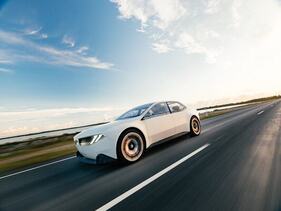
The new generation of battery-electric vehicles brings the legacy of the legendary "joy of driving" into the future. With innovative, integrated driving dynamics control, a completely new user experience and best-in-class efficiency, the New Class models combine sustainability with emotional driving pleasure.
The sixth generation of BMW eDrive technology makes a significant contribution to this. In addition to further improved electric drive units, it also includes new, now round lithium-ion battery cells. Compared to the previous prismatic cells, these have a volumetric energy density that is more than 20% higher. In combination with the switch to an 800-volt system, they accelerate the charging speed by up to 30%. In addition, the sixth generation of BMW eDrive provides up to 30% more range.
The first models based on the new technology platform will celebrate their world premiere in 2025 - a perfect gift for the 50th anniversary of BMW Group Switzerland.

