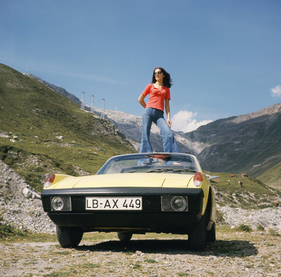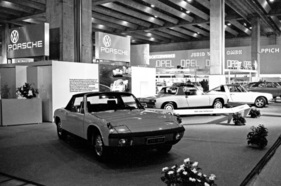
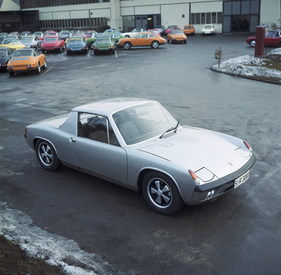
In 1969, Porsche was the first German manufacturer to launch a series-produced mid-engined sports car, the 914. The Porsche Museum is now marking this anniversary with a five-week special exhibition. It starts on June 2, 2019 with the "Typical Porsche Day", to which all fans of the legendary two-seater are invited. More than 120 owners of private 914 models, including members of the club scene, have already registered. Admission is free on "Typical Porsche Day".
In addition to a series of special events, there will also be expert talks on the 914 on this day: Former development and racing engineer Roland Kussmaul will look back on the history of the Porsche 914 together with former chassis developer and racing driver Hans Clausecker, engineer and racing driver Günter Steckkönig and author Jürgen Lewandowski. Anthony Hatter, Head of Design Quality Style Porsche, explores with former Porsche development engineer Jürgen Kapfer and product developer for racing cars Hermann-Josef Steinmetz the question of where the roots of the mid-engine concept lie at Porsche, what its future looks like and why the mid-engine, design, technology and lifestyle are typical of Porsche today.
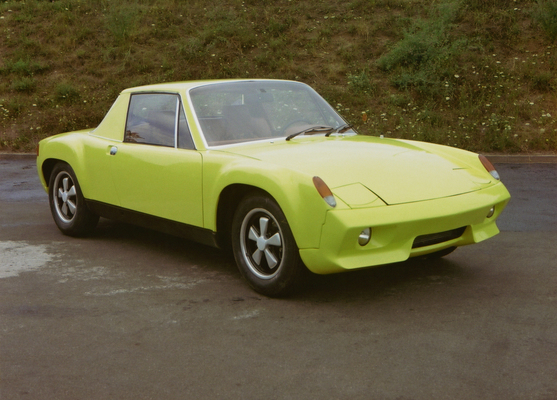
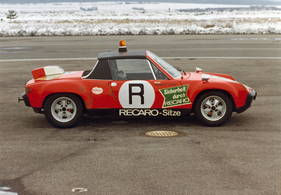
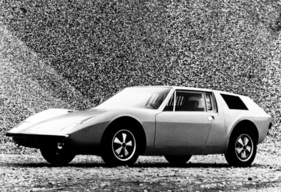
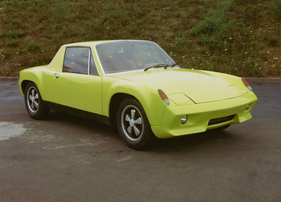
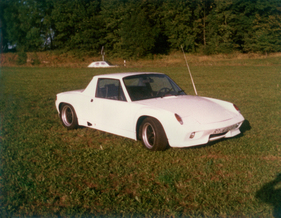
The twelve interesting exhibits in the special exhibition show just how diverse the 914 is and which creations it served as the basis for. Not only the production models 914/4 with VW four-cylinder engine and 914/6 with Porsche six-cylinder engine are on display. The first 914 ever built and one of the two Porsche prototypes with an eight-cylinder racing engine are also on display. The 914/6 GT will also be on display. The world's first safety car - equipped with new safety systems and a modern fire extinguishing system - was made available to the National Sports Authority (ONS) in 1972. A conversion project with a 350 hp V8 engine from a 928 GTS and a 916 come from private hands. The VW-Porsche also inspired the famous car designer Albrecht Graf von Goertz and the French coachbuilder Heuliez to create their own 914 sports car creations, which will also be on display in the special exhibition.
Second sports car series for young Porsche customers
In the mid-1960s, Porsche aimed to expand its market position with a sports car in the promising segment below the 911. However, such a project would not have been possible for the small company on its own. The Zuffenhausen-based company found a partner in Volkswagen, because at the same time VW was looking for a successor to its ageing Type 34 sports coupé, better known as the Karmann Ghia. In the mid-1960s, Ferry Porsche and VW director Heinrich Nordhoff agreed on a project distribution with a handshake. When Nordhoff died unexpectedly in 1968, the project was in danger of collapsing. Ferry Porsche worked out a solution with the new managing director of VW, Kurt Lotz: both companies founded the VW-Porsche Vertriebsgesellschaft. This company marketed the project on the European market as the VW-Porsche. It was available in two versions: as a 914 with a four-cylinder engine from Volkswagen and as a 914/6 with a six-cylinder engine from Porsche.
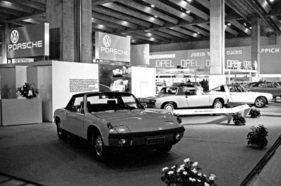
A triple victory in the 1970 Marathon de la Route at the Nürburgring was the 914 works car's greatest success. Many victories were also achieved in customer racing. The six-cylinder version competed successfully in various racing series in the USA and achieved several class victories. In Europe, a 914/6 GT from the Sonauto team won the GT class at Le Mans in 1970.
Pure sports car: high performance, low weight and mid-engine
The VW engine was a completely new development and the brand's first series production injection engine. From a displacement of 1.7 liters, the four-cylinder engine developed 80 hp at 4900 rpm. This enabled the 914 to sprint to 100 km/h in 13 seconds and reach 177 km/h. The Porsche six-cylinder engine, on the other hand, came from the 911 T and was designed as a sports engine with overhead camshafts, triple carburetors and high-performance condenser ignition. The two-liter boxer produced 110 hp at 5800 rpm and was therefore not only considerably more powerful, but also more rev-happy than the VW engine. With a dry weight of 900 kilograms and 940 kilograms for the six-cylinder model, the 914 had an extremely advantageous power-to-weight ratio.
Two one-off versions of the 914 S with eight-cylinder racing engine
Two legendary special editions contributed to the outstanding reputation of the two-seater: The 914 S with eight cylinders. The three-liter boxer engine from the Porsche 908 racing car, which dominated the race tracks in the 1970s, sat in front of the rear axle. The engine of the first car produced around 300 hp thanks to fuel injection and was given to the then Head of Development Ferdinand Piëch as a test vehicle. In the second vehicle, the eight-cylinder engine with carburetors produced 260 hp. It was a road-legal birthday present for Ferry Porsche's sixtieth birthday. Both 914 S cars reached top speeds of around 250 km/h. The two special editions provided the design basis for a small series of high-engined 914s in 1971. Eleven vehicles were equipped with six-cylinder engines from the most powerful current models at the time, the 911 S and Carrera 911 RS with 190 hp and 210 hp, and optimized for motorsport use. They bore the designation 916.
Successful on the market
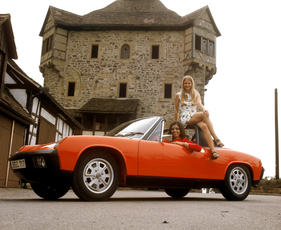
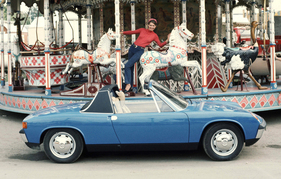
The unmistakable two-seater with the characteristic Targa roof was primarily intended for younger buyers. With an initial base price of DM 11,955, the Porsche 914 model series developed into a bestseller. Between 1969 and 1975, 115,631 units of the four-cylinder version of the 914 were built. Most of the vehicles were exported to the United States, where the 914 was marketed as a pure Porsche without the VW name affix. This makes it one of the best-selling sports cars in the world. In the USA, the 914 was voted "Import Car of the Year" in 1970. The 914/6, on the other hand, was more exclusive: produced 3338 times between 1969 and 1972, it can point to various racing victories.