





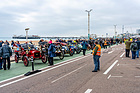


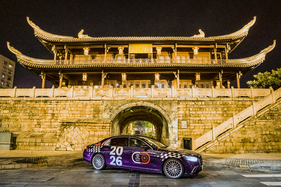

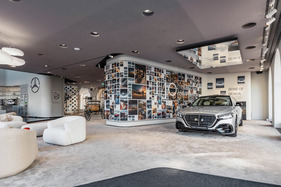
Mercedes-Benz Classic capped off its anniversary year with two vehicles from the brand’s early days at the RM Sotheby’s London to Brighton Veteran Car Run on November 1, 2026. The 1899 Benz Combinations delivery van and a 1902 Mercedes-Simplex 40 PS were on display at the Run and, the day before, at the RAC’s St. James’s Motoring Spectacle on Pall Mall.
The Simplex took part in Sunday’s race, which began after the traditional tearing of a red flag. A reconstruction of the 1886 Benz Patent Motor Car served as a bridge between the theme “Celebrating 140 Years of the Motorcar” and the Mercedes-Benz brand anniversary “140 Years of Innovation.”
“140 Years of Innovation” commemorates Carl Benz’s patent application for his motor car on January 29, 1886. Ten years later, in 1896, Benz built the first motorized van. Mercedes-Benz Vans celebrated these “130 Years of Van History” with special models and exhibitions.
3 PS and 100 Kilo payload
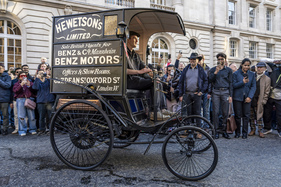
The Benz delivery van is one of the oldest roadworthy vans in the world. To mark the anniversary year, Mercedes-Benz Classic restored an original 1896 Benz Velociped from its own collection. The box body was rebuilt based on the “Ideal Van,” which Hewetson’s Ltd.—the official English Benz distributor—manufactured under license around 1899. It had about 3 PS and carried a payload of approximately 100 kilograms plus the driver.
In March 1902, the Simplex replaced the Mercedes 35 PS, the first modern automobile designed by Wilhelm Maybach. The name “Simplex” reflected its ease of handling at the time. With their elongated shape, a lightweight engine mounted low in the frame, and a honeycomb radiator integrated into the front, the early Mercedes models marked a definitive departure from the carriage-style design.
Daimler and Benz Become Daimler-Benz
The 140th anniversary of the automobile somewhat overshadows the other major anniversary in Stuttgart—100 years of Daimler-Benz and the Mercedes-Benz brand: On June 28 and 29, 1926, the company then known as Daimler-Benz AG was founded. A milestone was the registration of the trademark on August 21, 1926.
The Mercedes star of the Daimler-Motoren-Gesellschaft (DMG) is surrounded by the laurel wreath of Benz & Cie., with the word marks “Mercedes” and “Benz” embedded within it. Mercedes-Benz vehicles still bear this emblem today. It is one of the most internationally recognized and valuable logos.

Traditions from Mannheim and Stuttgart
The merger of the two companies took effect retroactively as of January 1, 1926. They had been preparing for this step since 1924, initially as a joint venture. The joint venture registered the Mercedes-Benz word mark with the Patent Office on April 25, 1925. In 1926, the heritage of the two automotive pioneers, Carl Benz and Gottlieb Daimler, came together in the new company.
Benz filed a patent for the automobile in 1886—a world first. Later that same year, Daimler designed his four-wheeled motor carriage. This marked the beginning of 140 years of innovation.
A New Star
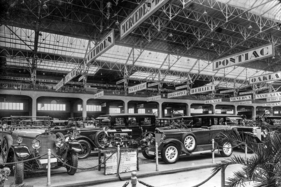
From the very beginning, the brand shone in the public eye with technical excellence, quality, reliability, and a strong culture of innovation. This was underscored by the model offensive in the very year of the company’s founding: Mercedes-Benz’s strong showing at the Berlin Motor Show from October 29 to November 7, 1926, thrilled the public.
The first joint Mercedes-Benz lineup included world premieres of passenger cars such as the Mercedes-Benz 8/38 PS (W 02) and the 12/55 PS (W 03). Rudolf Caracciola’s victory in the Eifel Race on June 19, 1927, at the newly opened Nürburgring established Daimler-Benz’s worldwide reputation as a manufacturer of fast race and sports cars.