Future meets past - digitization of a Ford Eifel


You have only
7 out of 11
images seen in high resolution
Summary
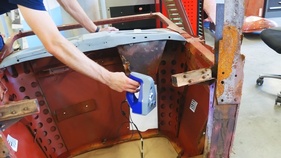
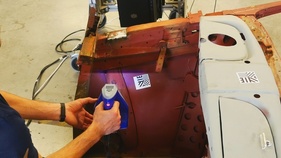
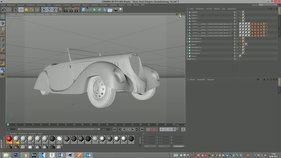
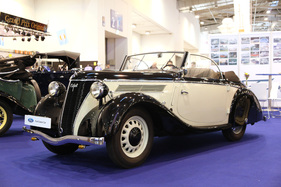
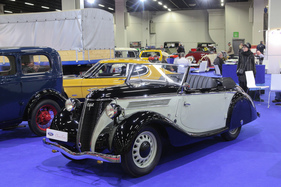
How can a very rare classic car be measured and recorded in order to document its current condition, preserve it for posterity and produce spare parts in the event of an accident or damage? One possibility is complete digitization using handheld scanners, a method that is significantly faster and cheaper than conventional approaches. This report provides an insight into a digitization project using the example of a Ford Eifel convertible.
This article contains the following chapters
- Use of 3D scanners on classic cars
- Innovative technology
- 3D scanners provide high-quality data down to the smallest detail
- Merging the scans
- The result: a digital classic car in 3D
Estimated reading time: 3min
Preview (beginning of the article)
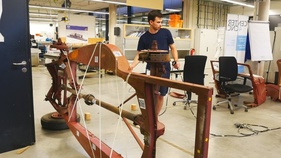
How can a very rare classic car be measured and recorded in order to document its current condition, preserve it for posterity and produce spare parts in the event of an accident or damage? The makers of Classic-Car.TV have often faced this mammoth task with their old cars. They are passionate about older vehicles. Until now, the oldies were created manually using template frames. In this traditional approach, a frame is guided around the vehicle and graphically removed slice by slice. The resulting cross-sections are then used to create wooden skeletons that reproduce its shape. The disadvantage of this method is that it is very expensive, time-consuming and often not particularly accurate.
Continue reading this article for free?
Images of this article