Tatra 1919-1998 - innovative and with air-cooled rear engine and streamlined shape


You have only
4 out of 22
images seen in high resolution



Summary
There were around 10,000 car brands and designers - most of them have disappeared. One of these vanished brands is Tatra. Tatra attracted attention early on with innovative technical solutions and developed into a supporter of rear-engine design. Thanks to its streamlined shape, the Type 87 presented in 1937 achieved a cs value of 0.31 and thus also a high top speed. In later years, progress fell by the wayside and party cadre limousines were built.
Estimated reading time: 3min
Preview (beginning of the article)
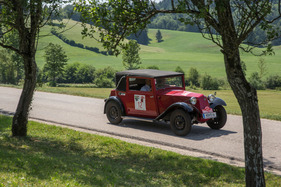
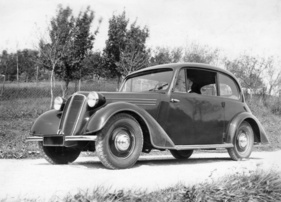
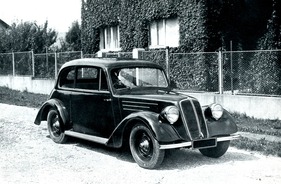
After the First World War, the Nesselsdorfer Wagenbau-Fabriks-Gesellschaft in Moravia became the Tatra (Carpathian Peak) brand in Koprivnice, Czechoslovakia, in 1919. It built railroad vehicles, trucks and passenger cars. In 1921, the renowned car designer Hans Ledwinka was brought back from Steyr. He created the Type 11 - a revolutionary small car with a central tubular chassis, swing axles and an air-cooled 1056 cc two-cylinder engine. The concept was retained for the following vehicle types (in addition to the six-cylinder series which continued to be built until 1925). A Tatra 11 won the class at the Targa Florio in 1925. From 1926, the large models also received the central tubular frame. In 1931 Ledwinka created the prototype of a Volkswagen with an air-cooled rear engine, but the following year the Type 57 with a front-mounted, air-cooled 1155 cc four-cylinder boxer went into production. The big Tatras culminated in 1931 in the T. 70 and 80 with 3.4-liter six-cylinder and 6-liter V12 engines respectively.
Continue reading this article for free?
Images of this article