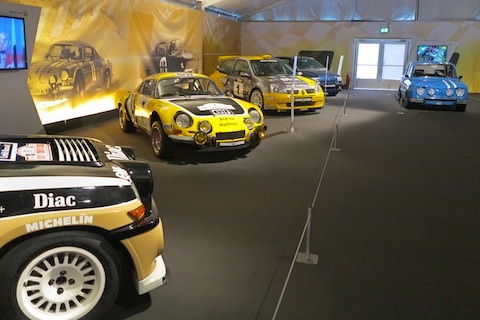
Should you visit a museum in the USA just to look at European cars? Yes, absolutely! At least if it's the Lane Motor Museum in Nashville, Tennessee. Especially as you not only get to see cars from Europe there, but also vehicles that are unique in the world and significant in terms of automotive history. But one thing at a time.

The Lane Motor Museum in Nashville opened its doors around 20 years ago. It is run as a non-profit organization; its eponymous director is Jeff Lane. As a car-loving teenager, he had already restored a 1955 MG TF and started collecting cars. His private collection then formed the basis for the museum, which currently has around 550 cars. It is housed in a former bakery factory. Daylight floods through the high ceiling into the exhibition hall, whose floor is made of maple wood and bricks. Around 150 cars are on permanent display in the main exhibition area of just over 3,700 square meters. A further 400 can be found in the museum collection, most of them in the basement of the building.

The exhibits are to be kept in running order; some cars are in "showroom condition", others show clear signs of their age. The aim of the museum is to document and preserve the history of mobility for future generations. To this end, Jeff Lane is always on the lookout for technically significant or unique objects. The exhibits are explained in English; the few replicas are labeled as such. One focus of the collection is on European vehicles. The collection also includes many, often bizarre microcars. Otherwise, extremely rare, sometimes even unique cars are shown here.
Small, light and Italian - the special exhibitions
Enough preamble. Let's take a tour, leaving aircraft and two-wheelers out of the equation. In addition to the permanent collection, there are constantly changing smaller special exhibitions on display. At the time of our visit, there were six of them. The special exhibition "Fantastic Fiat 500" is probably curious for American visitors accustomed to other dimensions, but less unusual for our readership. Starting with various "Topolini", the show includes a wide range of modifications and derivatives of the Nuova Cinquecento (Abarth, Autobianchi), the Ferves Ranger 4 x 4 and the Fiat 126.

Rather unexpected in America is another special show called "Light.Fast.Fun." and is dedicated to the lightweight models of the British brand Lotus. The spectrum of sports cars on display ranges from the Super 7 to the Elise, Elite and Europa models to the 2013 Evora S.

The Tatra vehicles are always remarkable. In addition to the almost obligatory, aerodynamically shaped large streamlined limousines with rear fins, the Lane Museum also exhibits pre-war models from the Czechoslovakian brand, such as a replica of a T12 that was used in the 1925 Targa Florio. The range extends from the air-cooled front-engined T-57 (1935) and T-57 B (1938) models and the large rear-engined T-603 through to the modern models, ending with the rather hapless Tatra T-700 from 1996, Tatra's last passenger car.

Right next to it, Japanese "Kei-Cars" greet the visitors under the onomatopoeic title "Oh Kei! Japan's Micro Movers" greet the visitors. It is commendable to see a presentation of these Japanese micro-car specialties. The focus of the small but instructive exhibition of cars built between 1970 and 2015 is on the Honda and Subaru brands. It illustrates just how diverse this vehicle class is. There are estate cars and platform trucks as well as roadsters and saloons. The Autozam AZ-1, a small coupé with gullwing doors, is particularly striking.
Put the door up - or down, or forwards, or backwards
Another undoubtedly original idea is to take a special look at how cars can be entered. The Lane Museum did this with the special exhibition "open and shut". Of course, we are familiar with the Isetta-style "refrigerator door" (demonstrated here using the Trojan cabin scooter, a Heinkel licensed design) in this country - even as a double version on the Zündapp Janus - as well as the side-opening "cheese bell" on the Messerschmitt cabin scooter. On the tiny Peel Trident, on the other hand, the cheese bell folds away to the front, and we have already seen the gullwing doors on the Kei Cars. But vertical sliding doors (Surlesmobile from 1945) or a front door that folds back upwards, as on the electric three-wheeler TVE Citadine from France, have hardly ever been seen before.

In general, France seems to have been extremely creative when it came to access. The parallel-opening sliding doors of the Hobbycar Passport and the Renault Avantime with its "dogleg" hinges - equipped with a special mechanism that allows the unusually long portals to be opened even in tight parking spaces - are evidence of this. Of course, there are also scissor doors, as seen here on the Norster 600 R, an open small car with clear stylistic references to the frog-eyed Sprite and with registration as a quad bike in Europe. All in all, it's amazing how many ways there are to board a car.

When we enter the special show "One of One: Custom-made Curiosities", we finally enter the realm of previously unimagined peculiarities and rarities. While the prototype of a Citroën Méhari 4x4, the Hewson Rocket from 1946 or the Gregory Roadster from 1954 are still one-of-a-kind vehicles, the Grataloup (1955) or the Lidove Vozitko are quite different. The possibilities are also fully exploited when it comes to the drive concept of the one-offs: the spectrum ranges from pedal drive to propeller. The Martin Aeroplane Factory is represented with a triumvirate: the streamlined Aerodynamic Car (1928), the three-wheeled Martinette with front door (1932) and the "Woody" Stationette (1950), also with three wheels. There is a lot to tell about each of these vehicles, but what they all have in common is that none of them made it into series production.

Perhaps the most spectacular car in the museum, however, is the Gyro-X from 1967. Behind this name lies a gyro-stabilized two-wheeler, whose drastically reduced width was intended to have a relaxing effect on traffic density, according to its builder. But even this "humming top" never made it past the prototype stage. Our readers are probably familiar with the vehicle from its appearance at the Concorso d'Eleganza Villa d'Este 2019.
The permanent exhibition - an oddball collection
So much for the Lane Motor Museum's special exhibitions. Let us now turn our attention to the permanent collection, although in view of its diversity, it is not possible to go into all the vehicles. Let's start with the confrontation between the oldest car in the collection (Renault Type AG from 1909) and the youngest exhibit, a Volkswagen XL 1 from 2015. Speaking of the youngest: there are play opportunities for very young visitors in the hall. The slightly older ones can take their inevitable selfies in a Citroën 2 CV provided especially for this purpose. Of course, the aforementioned MG TF, which sparked the museum director's passion for collecting, is not missing. The counterpoint to this is provided by an MG Metro 6R4 from 1985.

Another special piece is the 1947 Davis Divan "Baby", a coupé with two doors, three wheels and four seats. The vehicle was once repainted twice to give the impression of series production. However, the company boss, who was described as charismatic, soon got into trouble with the public prosecutor's office due to financial irregularities and was ultimately sentenced to prison. After just 13 copies of the Divan, the end came. The McQuay-Norris Streamliner (1934), of which only six were built, is also striking. The oval aluminum body stretches over a wooden frame; the curved windshield is made of Plexiglas. The prototype "Fascination" (1969) leaves the viewer somewhat speechless, a vehicle with a Volkswagen Type 3 engine that was originally conceived as an aircraft but was ultimately realized on earth.

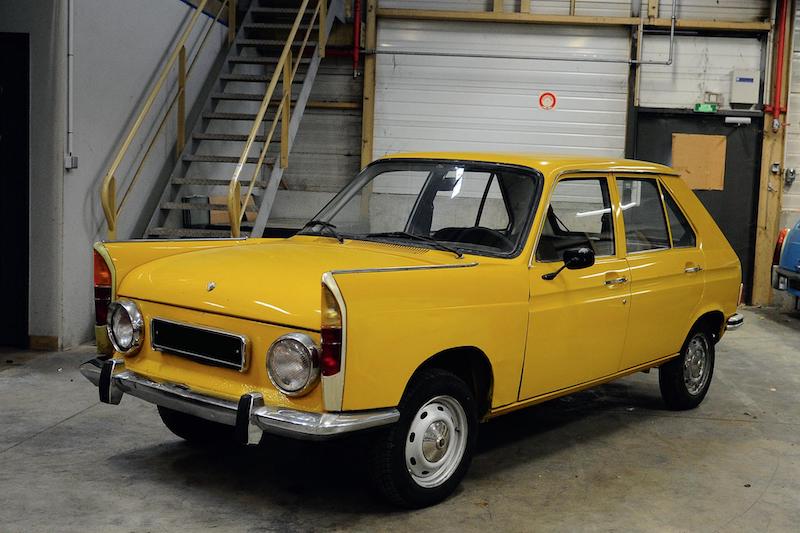
Now we come to the section with French automobiles. In addition to the Helicron propeller-driven vehicle from 1932, there are a number of small and micro-mobiles such as the Inter 175 A, the Seab Flipper I, the Acoma Super Comtesse and the Ligier JS4. The Spanish licensed Autonacional Biscuter 100 also belongs here, as it was launched by Gabriel Voisin as a Biscooter in France. Undoubtedly original is a heavily shortened Mini Moke, which was sold as the Schmitty A2. Also noteworthy are the René Bonnet CRB 1 from 1964, a forerunner of the Djet, and the prototype of the Simca Aronde Week-end convertible created ten years earlier. A Citroën 11 CV from 1938 equipped with a wood carburetor is a reminder of bad times.

Also from the past is the "Thermador Car Cooler" mounted on a VW Beetle, an evaporative cooler and predecessor of air conditioning systems, which leads over to the German makes. The Adler Trumpf Junior and the streamlined Hanomag 1.3 liter for the pre-war cars should be mentioned here. For the post-war period, the BAG Spatz and the Australian Goggomobil derivative called Dart should be singled out. The Weidner Condor (1958) also deserves special mention. This car, designed by Hans Trippel, has certain stylistic parallels with Porsche models of the time, but is powered by a two-stroke engine with a cylinder capacity of 667 cc. Only two examples of the Condor are said to exist worldwide. In keeping with the aim of showing European cars to the American public, the Lane Motor Museum also features the DAF, Saab and Volvo brands.
Secrets from the cellar
Even before the reporter can stop at the beautifully designed Fiat 1100 Balilla 508 C Cabriolet (1939), Rebecca Evans, the marketing director of the Lane Museum, approaches. She fulfills the author's wish to take a look into the museum's cellar out of turn. It is only open at weekends and for registered groups. Unfortunately, there is not much time available for this. In the cellar, cars are packed tightly together and even stacked on shelves, seemingly waiting for their turn in the exhibition area. Representative of France are the George Irat 11 CV, the Mochet CM-125Y, a Citroën GS Birotor and a Citroën Bijou. Finally, the mighty Panhard & Levassor 6 CS Panoramique cannot be overlooked.

From German production, an Adler Type 10 2.5 liter, the "Leukoplastbomber" as a Lloyd LS 300 station wagon and the then hapless rear-engined Mercedes-Benz 130 H can be discovered. On this occasion, Mrs. Evans lets it slip that she personally particularly likes the "baroque angel" BMW 3200 S from 1962. Of course, we also pass British cars, such as a TVR S 2 from 1990 and an Austin Mini from 1969, but wait! Why does it say that this car was produced in Chile? The explanation is that at the end of the 1960s, the British Leyland Motor Corporation allowed itself the luxury of developing a version of the Mini for the South American market together with the British company Peel, known for its microcars, with a body made of GRP. In the picture, this body can be recognized by the fact that the usual "seam" on the front fenders is missing. Somewhere in the semi-darkness you can also spot the "siblings" Nissan Pao and S-Cargo (both 1989) together with their predecessor Nissan Be-1.

The author would have liked to spend a few more hours here in the cellar, but at some point the visit to this automotive treasure trove unfortunately comes to an end. Conclusion: An all-round impressive museum!
w ww.lane motormuseum.org