The French Grand Prix of 1914 - an epoch-making racing event


You have only
2 out of 14
images seen in high resolution


Summary
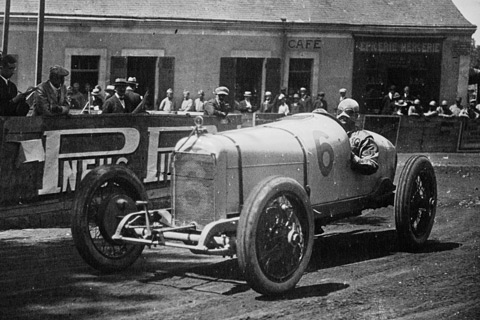
Almost a century ago, on July 4, 1914, an automobile race took place near Lyon that was to be the last for many years. Measured by the physical commitment of the drivers, the danger of the race track and, above all, the technical progress, it was a milestone in the history of the automobile. This report looks back, describes the events and technical trends in detail and shows plenty of historical footage.
This article contains the following chapters
- Four cylinders and a long stroke
- Four-speed gearbox and four-wheel brakes
- Sequential starting procedure
- Sailer on a daring drive
- Four-wheel brakes are the trump card
- Final sprint
- Gone with the wind
- Contrasts between then and the sixties
Estimated reading time: 7min
Preview (beginning of the article)
Exactly half a century ago (1964!), on July 4, 1914, an automobile race took place near Lyon that was to be the last for many years. Measured by the physical commitment of the drivers, the danger of the race track and, above all, the technical progress, it became a milestone in the history of the automobile. By describing this race, hobby magazine celebrated an anniversary from the early days of the automobile. Why we consider the 1914 Grand Prix in particular to be so significant can be seen from the list of formulas for the various Grand Prix from 1906 to 1913: In 1914, the formula was determined by displacement for the first time; it eliminated cars with displacements of 12 to 13 liters that produced 120 to 130 hp. Although racing engines with 6 cylinders were already known at that time, the 4.5-liter formula allowed all contenders to compete with four-cylinder engines and rated speeds between 2800 and 3200 rpm.
Continue reading this article for free?
Images of this article