
Williams F1 with Variomatic - no more shifting and changing gears


You have only
1 out of 11
images seen in high resolution
Summary
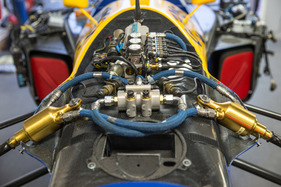
In 1992 and 1993, the Williams team dominated Formula 1 at will. Constructor Patrick Head wanted to increase the technical lead even further by using a continuously variable transmission, but the FIA intervened before even one kilometer of racing had been driven. This article looks back at an interesting design that had the potential to change Formula 1 racing.
This article contains the following chapters
- Stepless shifting
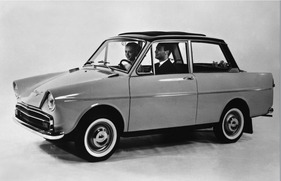
- Cooperation with DAF
- Slow breakthrough of the CVT
- No racing use
- Acoustic culture shock prevented
Estimated reading time: 4min
Preview (beginning of the article)
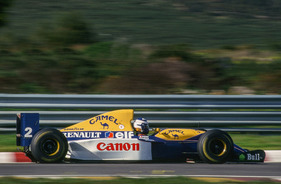
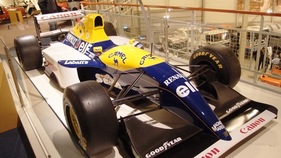
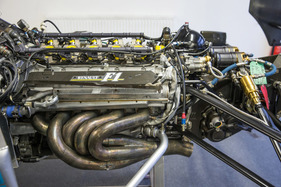
In 1992 and 1993, the Williams team dominated Formula 1 at will. This was not only due to its stars Nigel Mansell and Alain Prost. Technical director Patrick Head also played a major role in the team's success. Thanks to Head's help, for example, the previously abandoned active suspension project was revived. The technical gimmick, which guaranteed perfect use of aerodynamics, made the Williams racing cars unbeatable until it was banned in 1994. In 1993, the racing team had another innovation up its sleeve. A so-called Continuously Variable Transmission, or CVT for short, was installed in the FW15C model. The engine was electronically connected to sensors in the transmission. This meant that the engine speed always remained in the range in which the engine generated optimum power.
Continue reading this article for free?
Images of this article

Brand Pages
More about this topic








Auctioned cars
- Williams F1 - ‘Red 5’ FW14 Display Car (1992), Sold
- Williams-Renault FW14B Formula 1 Racing Single-Seater (1992), Sold
- Williams-Renault FW15 Monoplace d'exposition (1993), Sold
- Williams Supertec Renault FW21 F1 (1999), Sold
- Williams-Supertec Renault FW21 Formula 1 Racing Single-Seater (1999), Sold
- Search more...