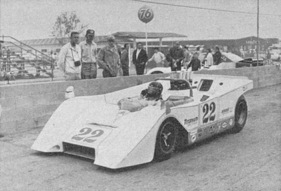
Technology in race cars (29): Autocoast Ti 22 - The Titan


You have only
1 out of 6
images seen in high resolution
Summary
At the beginning of the 1970 Can-Am season, "Powerslide" described it as the only serious competitor for the overpowering McLaren. And with its ultra-light, super-stiff titanium chassis, the Autocoast Ti 22 really would have had what it took to upset the papaya-colored top dogs - had it not been for a financial ceiling that was far too thin and a momentous stall. This article from the series "Technology in a racing car" sheds light on the short but fierce career of the Can-Am racer made of metal that is as light as it is expensive.
This article contains the following chapters
- Space material and ground effect
- Stall with serious consequences
Estimated reading time: 3min
Preview (beginning of the article)
The years 1958-1978 were the two most creative decades in the history of racing technology. This series portrays the most innovative, pioneering and exotic designs of Formula 1, Indy cars, sports cars and Can-Am, and at the same time traces the major lines of development that still have an impact today. The series started with Lotus, one of the most important innovation drivers of these two decades. And the series will also finish with Lotus. This time, we present a racing car that would have been competitive thanks to its unusual chassis material, but whose team was unfortunately chronically underfunded.
Continue reading this article for free?
Images of this article