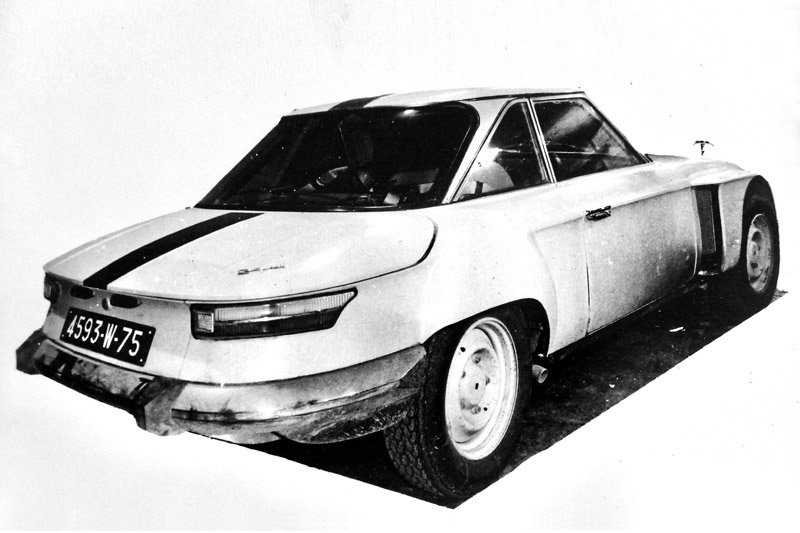
Technology in race cars (14): CD Panhard LM64 - winged flounder with a backbone


You have only
1 out of 16
images seen in high resolution




Summary
In 1964, two sports cars competed at Le Mans that were far ahead of their time in terms of aerodynamics. Despite having less than 100 hp, the CD Panhard LM64 ran at over 220 km/h on the Hunaudières straight. However, the greatest progress was hidden on the underside of the car. This episode of the series "Technology in racing cars" looks at the special features of this plastic-bodied racing car.
This article contains the following chapters
- Central tube design
- Aerodynamic miracle
- With diffuser
- Failed because of the drive technology
Estimated reading time: 3min
Preview (beginning of the article)
The years 1958-1978 were the two most creative decades in the history of racing technology. This series portrays the most innovative, pioneering and exotic designs of Formula 1, Indy cars, sports cars and CanAm, and at the same time traces the major lines of development that still have an impact today. The series started with Lotus, one of the most important innovation drivers of these two decades. And the series will also finish with Lotus: With the first ground-effect Formula 1 to win a world championship in 1978; the Type 79. More than 220 km/h on the Hunaudières straight at Le Mans with a two-cylinder engine with 78 hp? Not impossible with a featherweight of 560 kg and, above all, when the drag coefficient (cw) is only an incredible 0.12 (contemporary passenger cars at the time came in at around 0.4).
Continue reading this article for free?
Images of this article