

A light mist in the form of a burnt two-stroke mixture lay over the Lagh Doss and stimulated the nose and eyes. An absolutely perfect day in a very idyllic area was taking its course. A sudden rumble lit up the dead silence. One, two and three-cylinder engines began their work, pushing the snowmobiles and their drivers across the snow around the small lake.
The oldest vehicles were built in the early 1960s and had just four horsepower. But they had no trouble at all with the snow and drove purposefully wherever the driver steered them with the two skis. In the early days, they were still fitted with leaf springs, but it was only much later that shock absorbers were used. The right thumb still accelerates today and the brakes are still used as on a bicycle.

Gilles Villeneuve, the great hunted
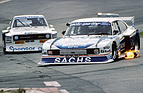
Since time immemorial, races have been held with everything that moves, including snowmobiles. In the 70's there was a little Canadian who drove everything and everyone into the ground. He brought home world championship titles like another bread from the bakery. He later became world famous and his fan base continues to this day. At the same time, he started a second career as a car racing driver and, like a thunderbolt, very quickly entered Formula 1 and joined Ferrari after just one race at McLaren. His name was Gilles Villeneuve, fearless and incredibly fast with anything that moved. Together with his brother Jacques (not to be confused with his son of the same name, who brought the F1 World Championship title to Canada in 1997), the cars were prepared, modified and also revolutionized. The sled built by the Alouette company with Sachs mid-mounted engines looked more like a formula racing car than a snowmobile. In America and Canada, the races were held in an oval according to the ko system, as was customary there. Various other F1 drivers also took a liking to the speedy vehicles on snow from time to time, above all of course the Finns who grew up with them, but even the Colombian Juan Pablo Montoya and the Brazilian Rubens Barrichello hardly wanted to get off their sleds and the immortal Jo Siffert was even an importer of Yamaha snowmobiles.

Snowmobile races in Switzerland
The history of European snowmobile racing began in Switzerland in 1969 on the San Bernardino. Peter Schmidlin, a hotelier in San Bernardino (Hotel Bellevue), organized the first race in Europe to bridge the January gap in his region. The drivers came from all over Europe, mainly with "Ski-doo" snowmobiles. Just three weeks later, this idea was copied in Austria, in St. Ulrichen am Pillersee, and races were held regularly in Austria, Italy, France and Germany with private and company drivers from all over Europe. It was only gradually that "Skiroule", "Polaris", "Kawasaki", "Skicondor" and other brands followed suit and wanted to prove who built the best sled in the sport, giving winter a completely new racing scene.
The race duration in Europe at the time was 20 minutes plus one lap. With the exception of hill climbs, the competitors raced against each other. If there were too many participants for a mass start, the training time decided who started.

The San Bernardino Snowmobile Club was founded in 1970 and this forgotten world inspired the Alpenknattern organization so much that they organized a revival at the same location in 2017.
The Ford-T as a forerunner
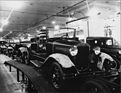
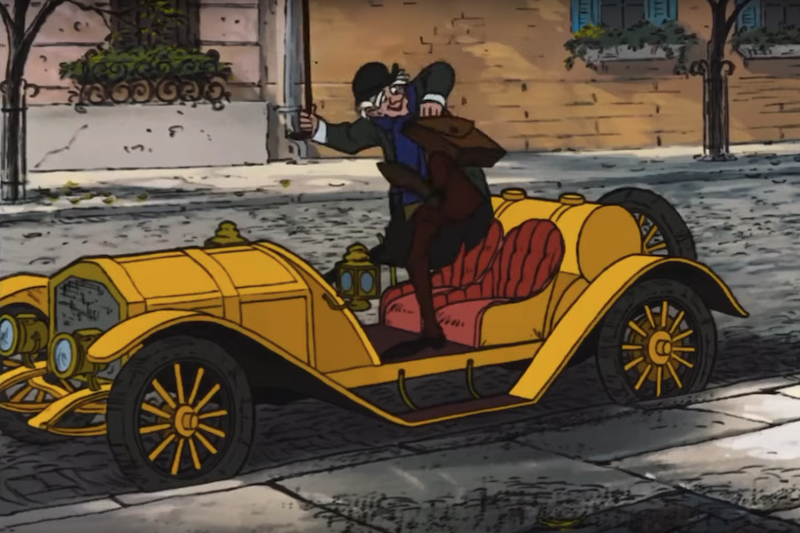
Back in 1920, the Ford-T was converted into a snowmobile in winter. For this purpose, skids were mounted on the steerable front axle instead of wheels. The drive wheels were fitted with chains to maximize traction. The fact that it could actually be driven in the snow was proven at Lagh Doss; only on inclines was human muscle power urgently needed to support the somewhat weak engine power.
How it all began
The effective start of the snowmobile began in 1959 when the Canadian inventor and entrepreneur Joseph-Armand Bombardier, the founder of the world-famous Bombardier Inc. group, presented the first Ski-Doo to the world press. The Ski-Doo snowmobile was originally called the "Ski-Dog" because Bombardier presented it as a practical vehicle for hunters and trappers as a replacement for dog sleds. A misinterpretation by a graphic designer who painted the name "Ski-Doo" on the first prototype gave the vehicle its current name. The public soon discovered that fast vehicles that could fly over the snow were great fun. Suddenly, a new winter sport was born in Quebec. Bombardier sold 225 vehicles of the little Ski-Doo 900-dollar machine in the first year; and just four years later, 8,210 units. But Armand was reluctant to focus primarily on the Ski-Doo, taking resources away from his off-road vehicles.

The sad loss of his son led to the snowmobile
His interest in snowmobiles was no accident. Joseph-Armand's son Yvon died of peritonitis in the winter of 1934 at the age of just two, as the family was unable to get him to hospital in time for treatment in the driving snow. Joseph-Armand was encouraged by the pain of his loss to develop a vehicle that could "float on snow". He experimented with a rubber-covered cogwheel to pull the track. The drive was provided by two rubber belts connected by steel cross links. This revolutionary sprocket and track system was finally the solution for snow travel. In 1936, he patented his invention, with a car-like vehicle with skids at the front and a sprocket wheel at the rear, and just one year later he designed and produced his first snowmobile in a small repair workshop in Valcourt (Quebec).

On July 10, 1942, he founded the company L'Auto-Neige Bombardier Limitée, which sold its land vehicles primarily to the Canadian armed forces. Between 1945 and 1951, L'Auto-Neige Bombardier sold 2596 vehicles. Its large C18 snowmobile model with 25 seats achieved good sales. Series production of the Ski-dog model began in 1959.
In the forties and fifties, snowmobiles were used as commercial vehicles. Country doctors, cab and bus operators were the first customers. In the harsh Canadian winters of that time, the snowmobile was the only means of transportation to move people and, above all, to bring sick people to hospitals. Today, driving a Ski-Doo snowmobile has become an attractive winter leisure activity in Canada and Finland.

The first Ski-Doo
Armand and his eldest son Germain developed several prototypes of the light snowmobile and finally the first small Bombardier snowmobile went on sale in 1959.
When he was looking for an air-cooled 2-stroke engine to power the lightweight Ski-Doo snowmobiles in 1963, he found what he was looking for in Austria. With the Rotax Type 165 engine, the speed of the Bombardier snowmobiles could be spontaneously increased by 30%. In 1970, Bombardier acquired Rotax Werke, thus ensuring the supply of the best possible engine. Rotax still produces world-class 2- and 4-stroke engines today.
Joseph-Armand vividly recalled his earlier business setbacks that forced him to diversify. Armand slowed the promotion of the Ski-Doo line to prevent it from dominating the company's other products. Nevertheless, he remained the absolute leader of the snowmobile industry. The snowmobiles produced were of exceptional quality and performance and were given a better reputation than the later competition of the Polaris (1956), Arctic Cat (1962), Lynx (1967) and Yamaha (1968) brands.

On February 18, 1964, Joseph-Armand Bombardier died of cancer at the age of just 56. He left behind a thriving business, but also one that was centered on one person. Armand dominated his company and oversaw all areas of the business. He controlled the small research department and did all the drawings himself. At the time of his death, the company's turnover had reached 160 million. The younger generation took over, led by Armand's sons and sons-in-law. In the same year as the IPO of Bombardier Limited in 1969, the first showmobile race took place in San Bernardino below the Hotel Bellevue, and a year later, as at this year's revival, the beautiful Lagh Doss was already being raced.

The revival
How did the San Bernardino revival come about almost 50 years later? As is so often the case, a chain of different circumstances led to the old snowmobiles racing again at Lagh Doss. The organizer's father, Mike Zweifel, was an antique dealer and therefore often visited car graveyards that were still intact at the time to organize spare parts for his customers. There were often various half-rusted snowmobiles lying around, the sight of which usually reminded the then 5-year-old of bumper cars. As father Zweifel saw no use for them, they remained in son Mike's memory for years. The first attempt to organize an event for historic snowmobiles under the name Alpenknattern began in Films. Mike Zweifel also organized a special exhibition at the Swiss Museum of Transport, where the snow theme had not been present at all until then. In February 2015, the time had finally come and the first historic snowmobile event was held in Films. As the first official race in Switzerland took place on the San Bernardino in 1969, it was an obvious choice to return to this location. The first event was held in 2017 and the second followed in 2018.
Mike Zweifel's life has changed to the extent that he has now built up what is probably the largest snowmobile collection in Europe and not only drives them as part of the "Scuderia Alpenknattern" team, but also repairs and restores them and runs a buying and selling business.
Further information can be found on the website.