

Many decades ago, resourceful people in Switzerland realized that classic car owners are better off if they help each other and swap parts. With the classic car and parts market, Theo Rais institutionalized a meeting designed for this purpose in Burgdorf in 1976, which has since secured a permanent place in the annual agenda of many Swiss classic car fans. The event eventually made its way via Bern to Fribourg, where it has opened its doors every March for many years, including again on the weekend of March 24 and 25, 2018.

Spring weather at the start of the trade fair
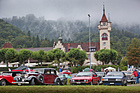
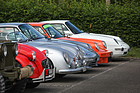
The OTM organizers were really lucky with the weather. The spring temperatures on Saturday were perfect for arriving in classic cars, although Fribourg does not provide any privileged parking spaces for them, which is certainly a damper for some classic car fans. In addition, many visitors were annoyed by the very cumbersome parking and bus transportation concept.
More cars than in other years
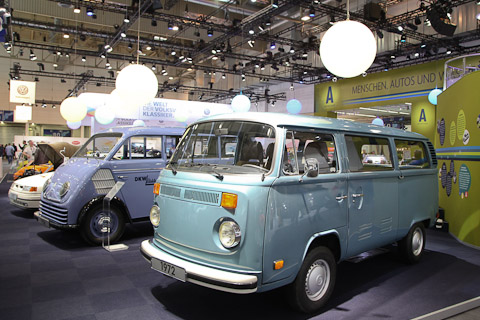
Once visitors had made their way to the halls, they came across an impressive range of vehicles, characterized by the 70-year Volkswagen-in-Switzerland theme and the extensive vehicle presentation of the "Veteran Car Club Romand".

The dealers also presented attractive vehicles on their stands. For example, a magnificent white Porsche 911 Cabriolet was on display at attractive conditions at Touring Garage, a racing Alfa Romeo Giulia Sprint GT Veloce at Stalder & Moser, a Jaguar XJS at Dönni Classic Cars and racy English cars at British Inter Cars.

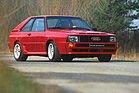
Autowelt Bachmann showed a beautiful VW Karmann Ghia Coupé of type 34 and an Audi Quattro, Tanner of course a Porsche 356, the Pantheon two Minis.

Some of the prices observed seemed attractive, others very self-confident. But this is probably also a reflection of the current market.
When cars were still being assembled in Switzerland
The Club Show on the upper floor was largely uncommercial. Once again, the presentation of the Swiss Car Register, which was dedicated to the GM Group's Montage Suisse in 2018, was of course the main attraction. Four Opels, from the pre-war Cadet to the Manta, were on display. Those who took their time could even exchange a few words with the proud owner of the white Manta 1.6 S and learn that this car has remained in the family to this day.

Between 1936 and 1975, 265,893 Opel, 29,805 Vauxhall, 26,858 Chevrolet, 2796 Buick, 1644 Oldsmobile, 1556 Ranger (a Swiss specialty), 1152 Pontiac and 60 La Salle were built in Biel. Local production also made it possible to meet typical Swiss requirements (powerful engines, high-end equipment versions) and many a car was produced in Biel that was only available in Switzerland.
At the SMVC stand, visitors could find out all this and much more, and it was well worth a visit.
Racing in the land of the circuit ban
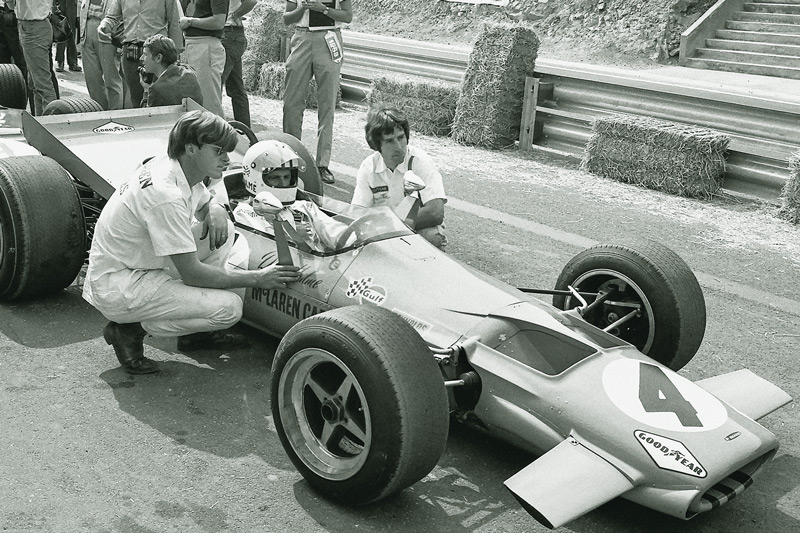
As is well known, circuit racing has been banned in Switzerland since the tragic Le Mans accident in 1955. This did not prevent local racing drivers from being successful in motorsport or building up entire collections of racing cars.

Three Formula 1 cars were on display in the entrance area of the exhibition, while a Formula Vee and an Aston Martin DB4 GT Zagato were advertising the upcoming Grand Prix Suisse in Bern.

There were other single-seaters on various stands, including at Horag, and a Ferrari 512 M could be admired in the Ferrari presentation at the club show.
Colorful club presentations
Once again, the clubs in Fribourg went to great lengths to present their beloved vehicles in a worthy setting.

Elaborate wooden backdrops were nailed together and an entire bar was set up using VW bus and Beetle parts.

The Volvo Amazon was placed in the appropriate garage, and a Plätteli floor was provided for the Renault 4CV. The clubs were certainly not lacking in imagination, although it was primarily clubs from French-speaking Switzerland that showed up in Fribourg, while the clubs dominated by German-speaking Switzerland were probably waiting for Lucerne.
More local now?
Anyone who spoke to traders and stand owners heard similar comments time and again. The fair seems to have lost its appeal in German-speaking Switzerland, the proportion of French-speaking visitors seemed to have grown disproportionately, despite the fact that visitor numbers are probably declining.

Some exhibitors were somewhat disappointed by the limited interest in their products. For the German-speaking Swiss in particular, the effort involved in coming to Fribourg for three days and transporting their goods there is considerable. At the end of the day, of course, this has to pay off. Some of the people we usually see every year were no longer there in 2018, and some of those who were approached are not sure whether they will repeat this year's "effort" in the same way next year.

However, the visitors (probably around 12 to 15,000) were certainly well entertained, as the exhibitors went to great lengths to explain and market their products.
If you would like to enjoy a humorous review of all three trade fairs that took place on the same weekend, please refer to the picture story .