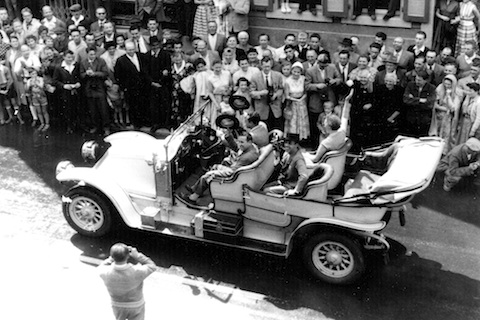
On Sunday, November 4, 2018, the time had come again. Almost 400 cars from the very beginning gathered at Hyde Park in London at the crack of dawn. They had come for the Veteran Car Run, which started at first light.
One of the oldest classic car events in the world
The event is an old one, almost as old as the automobile itself. In 1896, the first run was held to celebrate a decree that made it possible for locomotives to drive on roads. Sounds silly? Sure, but as we all know, modern cars evolved from the carriages and locomotives of the time. Before this regulation, "locomotives" were only allowed to drive 4 miles per hour on the roads and a man had to run alongside the vehicle and draw attention to himself with a red flag.
For this reason, the event symbolically starts each year with the waving of the red flag, this year held by supermodel and car enthusiast Yasmin Le Bon and F1 team boss Christian Horner.

The rattling begins
At 6:59 a.m., with the first ray of sunshine, the first vehicle left its starting position with a rattle and drove off into the amazingly warm fall morning. It was the oldest of the Victorian automobiles represented, built before 1905, like all the others. It drove its way through sleepy London, past famous landmarks such as Buckingham Palace and Parliament Square. At this point, the route of the "race" split into two for the first time since its inception. This was mainly out of consideration for the famous London traffic.

Split route
Half of the participants rode over Westminster Bridge and then followed the traditional A23 route towards Kennington, Brixton and Streatham, while the others left the city via Millbank over Lambeth Bridge and continued via Vauxhall. The two routes eventually rejoined north of Croydon on the A236, and everything worked out perfectly.
The happily reunited troupe jogged on in unison to Crawley High Street, which was heavily frequented by onlookers, where they simultaneously covered the middle of the route. They continued along the South Down and finally to the Madeira Seafront in Brighton, their final destination.

Experienced participants and "greenhorns"
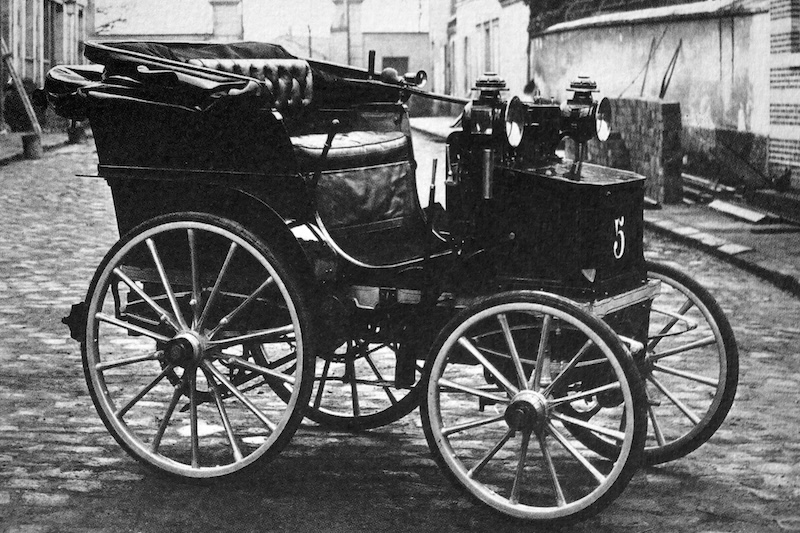
At the start of the race, an 1893 Peugeot Type 3 was in the lead. Borrowed from the Turin Motor Museum, the legend is that it was the first automobile on Italian roads. Another "early starter" was a Salvesen steam vehicle from 1896, actually a steam locomotive for the road, complete with furnace and steam whistle. Choo, choo!
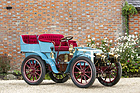
This was followed by a colorful bunch of antique automobiles from a bygone era of innovation and experimentation, still free of restrictive regulations. Some were powered by petrol, others by steam and others by electricity. There was also no consensus on the steering mechanisms at the time and different techniques were used. There were steering wheels, but also tiller wheels and other devices.
A truly unique sight today, with no parallels anywhere else on earth. This is how history truly comes to life, and it's still going! No wonder the participants come from all over the world and attract many onlookers! This year, vehicles from far-flung countries such as Argentina, Australia, Hong Kong and South Africa were represented. Alone 21 of the vehicles came from across the pond. Many brands were represented, some like Peugeot or Renault still exist today, but most have sunk into the dust of history, only their cars keep the memory alive.
One of the fallen angels was at the event for the first time, a Vabis. The former Scandinavian company, which has descendants in today's car manufacturer Scania, was represented with a car. Fortunately, it finished the race without any complications.
The participants Le Bon and Horner were also newcomers. They competed with a 1901 Wolseley and a 1904 Panhard-Levassor respectively and were obviously in a positive mood. Horner announced enthusiastically: "It is an absolutely magical event and wonderful to see so many enthusiasts and car clubs coming out to support all those on the road. It was great fun - I'll definitely be back for more!" In other words, he found the event absolutely magical and wonderful to see so many car enthusiasts and car clubs coming out to support all those on the road. He will definitely be back.

Almost everyone made it to the finish line on time
Ninety percent of those who started made it to Brighton before the closing time of half past four in the evening to receive a finisher's medal. Only 44 failed to do so.
The first to cross the finish line was an Oldsmobile built in 1901 by Andreas Melkus, an Austrian. It was followed by Tom Loder, who drove a 1900 Stephens.
Even though the "Run" is not an actual race, it also has competitive elements to offer. More than 320 participants took part in the attempt to maintain a strict speed over the entire course, each of which was set individually before the race. The winner was Paul Kelling with his Oldsmobile. He completed the run with an average speed of 12.05 miles per hour, incredibly close to his target of 12mpH.
Positive conclusion
Ben Cusson, chairman of the Royal Automobile Club, said after the successful run that the two-part route in London had responded excellently to past traffic problems and that it had been another exemplary execution for the unique event.
The weather had also been good this year, which made a big difference for these older cars. He had seen many happy faces among the participants.
Cusson added that he would like to thank all the people who had come together especially for the event and made it possible in the first place. It was a family event and it was great to see people of all ages enjoying it.