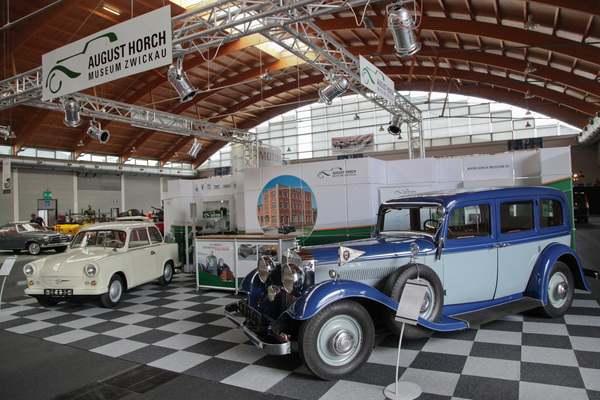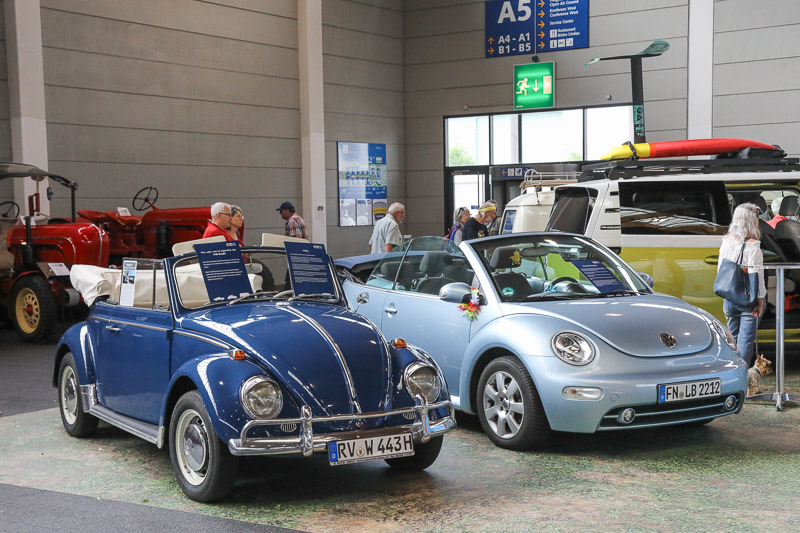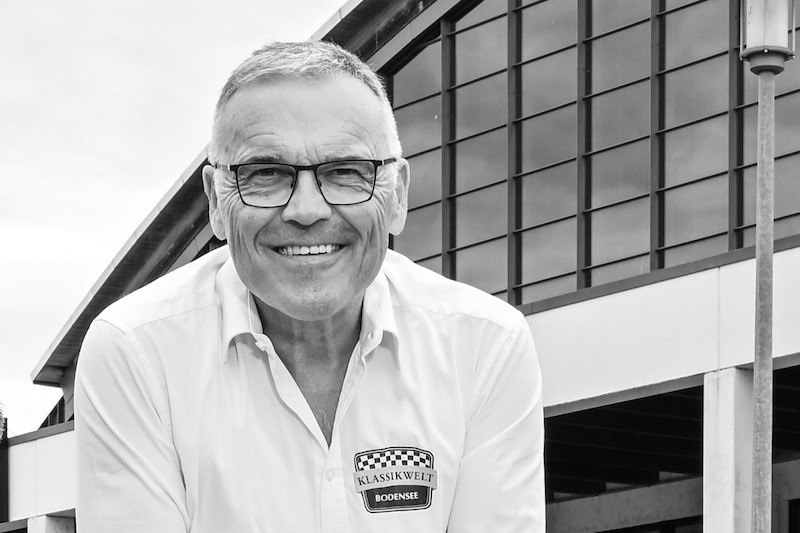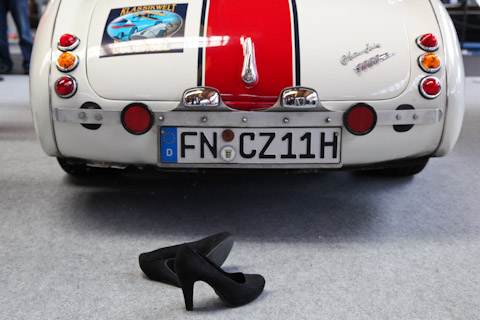
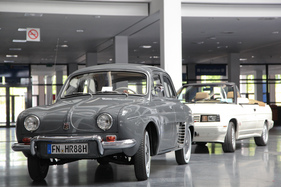
Is Klassikwelt Bodensee now the biggest of the small classic car fairs or the smallest of the big ones? With 85,000 square meters of exhibition space and 800 exhibitors, it is certainly not to be overlooked. But above all it is different! It aims to entertain and is geared not only to trade visitors but also to families.
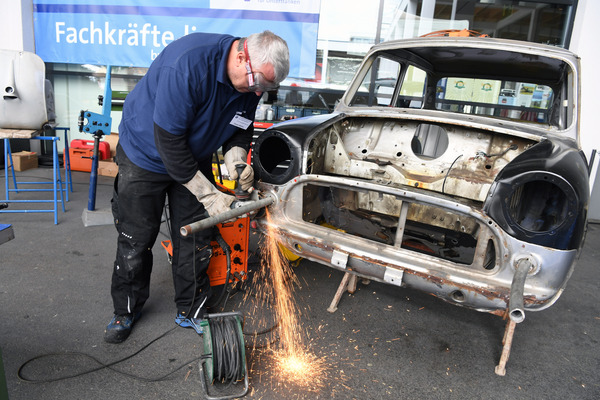
And it obviously does this so well that from June 3 to 5, 2016, a new visitor record was once again set with 38,700 admissions.
Experience classic cars on the move
Unlike at similar events, spectators who also want to hear, smell and see a classic car being driven will not miss out. In the so-called "ZF Motodrom", more or less racing cars do their laps, let the tires squeal and the engines roar.
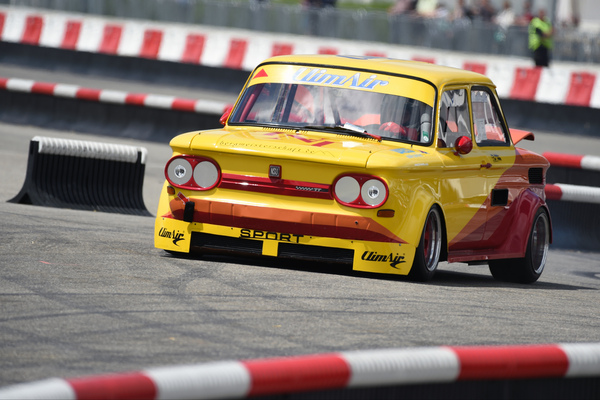
Because this is not possible without noise emissions, the space allocation has been reorganized for the ninth edition of Klassikwelt Bodensee. Dealers and specialists were now housed in the B halls away from the circuit, while the clubs and of course the paddock moved to the A halls around the Motodrom.
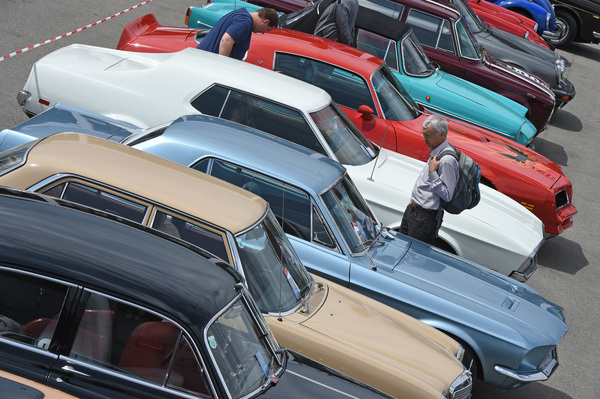
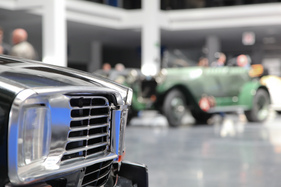
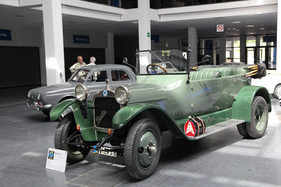
But the classic cars were not only on the circuit, the free parking lot for classic cars integrated into the trade fair concept also showed the variety of the rustiest hobby in the world in a constant change despite the not always optimal weather conditions.
Plenty of space
While other trade fairs are almost bursting at the seams, the large area of Klassikwelt Bodensee allows an almost generous use of the square meters. This benefits both exhibitors and visitors. And, in addition to the admission prices that do not get out of hand, it is certainly also a reason for the public's success, even though the competition never sleeps.
100 years of BMW
For its centenary, the BMW brand naturally had to be duly celebrated. Around a dozen vehicles, including a BMW 503, an M3 E30, a 3.0 CSL (with wing) and an M1 (with Procar wing), along with a few motorcycles, demonstrated the breadth of the Bavarian brand's creativity.
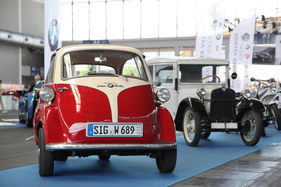
There was even a BMW Dixi and on the neighboring Glass Club stand, the beautiful Frua Glass Coupé could be seen in restored and unrestored condition.
Vive la France
Another special show was dedicated to France as an automobile nation.
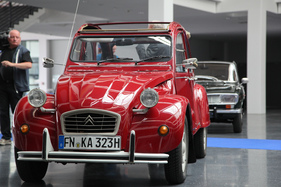
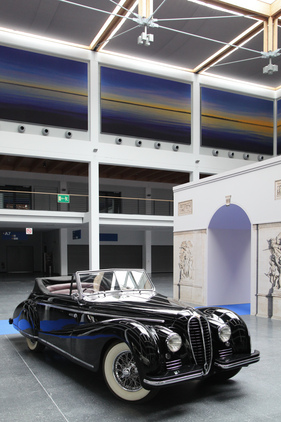
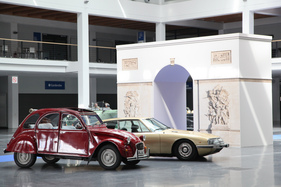
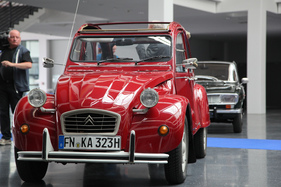
And instead of prohibitively expensive gems from Bugatti or Facel, popular French bread-and-butter cars such as a Citroën 2 CV, a Renault 4 CV (Crèmeschnittchen), a Renault 16 or a Citroën SM were also on display. Of course, special rarities were not missing, such as a magnificent Delahaye posing in front of the miniature triumphal arch.
The K1 from Kling
A special highlight of Klassikwelt 2016 was certainly the Kling K1, a typical post-war racing car. Karl Kling built the car in 1947 according to plans by Veritas founder Ernst Loof with the help of Richard Bez in a workshop in Stuttgart. The basis was a pre-war BMW 328, the elegant light metal body was designed by Adolf Figger.
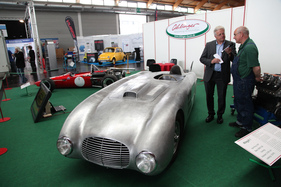
The first outing at the Hamburg City Park Race in 1947 ended in an accident, but the car was restored and won the Hockenheimring in 1948 with a lap lead. Kling sold the car to Karl Bossong, who raced it at the Grendlandring, Hockenheim and the Nürburgring, among others, before selling it on to Fritz Riess, who became German champion in the two-liter sports car class in 1952.
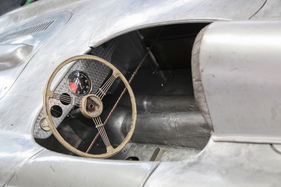
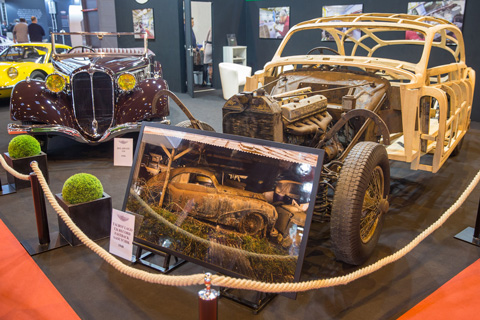
The aluminum racer changed hands several more times and was used in racing for some time until it was finally forgotten, until Helmut Leicht was able to reassemble the car in parts in the 1980s. What was no longer there had to be reconstructed using photos. The carriage is now largely complete and finished again, and the result of the three-year restoration could be admired in Friedrichshafen.
Ready to talk
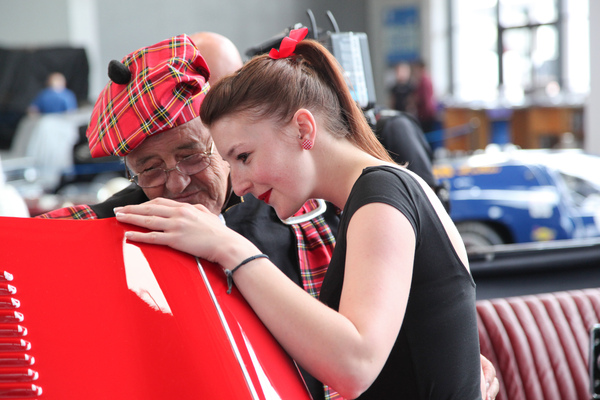
The atmosphere at Klassikwelt Bodensee was also very relaxed in 2016, and it was always possible to have a chat with club representatives, dealers or specialists, as well as the "racing drivers". Nobody was bored and there were plenty of food and drink stands.
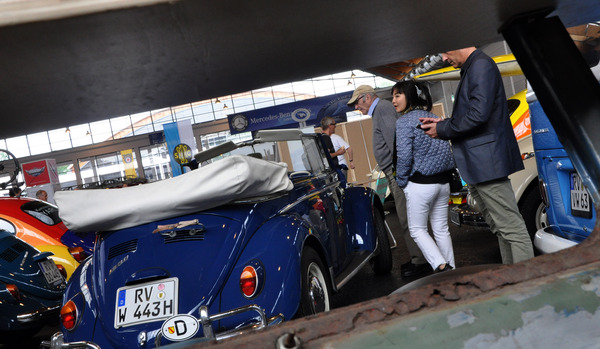
And of course you could also buy cars and apparently business was not bad. As was to be expected given the location, the range of cars on offer was, of course, heavily geared towards German car brands and, with Porsche and Mercedes-Benz, Stuttgart also made up a significant proportion in Friedrichshafen to the south, but other rarities such as Simca 1000s, Fiat 600s and Jaguar E-Types could also be found.
And, and, and ...
Of course, there was much more to see, for example beautiful wooden boats, racing cars from the former East Germany, 1/8-mile races, motorcycles, parts dealers, classic car events, museum exhibits, etc., etc.