A 1.87 km long unidirectional race track through a castle park is not exactly what fans of historic racing dream of. Nevertheless, Lord March manages to attract a prominent field of drivers and a superlative line-up of vehicles to Goodwood every year. The 2012 edition was no exception, especially as it was also the 20th edition, as the history of the Festival of Speed began in 1993. Anyone who is or wants to be part of something will not turn down the bustling lord when he is invited to the lively hustle and bustle in the castle park.
English climate invites you to picnic
It's like it always is in the English summer: a fresh wind sweeps across the countryside, black clouds pile up, a downpour softens the meadows and paths and, with a bit of luck, the sun shines minutes later. Time for a picnic in the countryside, and as always, the biggest one takes place on the last weekend in June in West Sussex, at Goodwood House, around 100 kilometers southwest of London.
Living automotive history
But there is no trace of tranquillity and well-tempered conversations. That's not why the 100,000 or so spectators (on all three days combined) have come, but for the "racing action" provided by over 300 vehicles that embody more than 100 years of automobile and motorcycle history.
Crossroads between GP Monaco and Royal Ascot for the 20th time
The Goodwood Festival of Speed is now the most important motorsport event of its kind - this year it is being held for the 20th time. The event was founded in 1993 by Charles Gordon-Lennox, Earl of March and Kinrara, or Lord March for short.
His grandfather had already held a hill climb on the asphalt road of the family's latifundia in the 1930s, and Lord March took up this tradition. With the Festival of Speed, the enterprising Lord founded an event that is "a cross between the Monaco Grand Prix and Royal Ascot", as the Sunday Times put it.
On the one hand, the festival pays homage to motorsport with a race between stone walls and straw bales on a track that, according to Formula 1 driver Juan Pablo Montoya, is the "narrowest and bumpiest track with the least grip" - and which he nevertheless, or precisely because of this, loves. Since Nick Heidfeld's record-breaking run of 41.6 seconds in 1999, the times for modern Formula 1 cars - this year six teams competed at Goodwood in the week leading up to the Silverstone Grand Prix - are no longer officially recorded in order to avoid provoking even higher speeds and thus safety risks.
There is no dawdling
Despite this, the boys are still pushing hard, both in the demo class (without timekeeping) and in the racing class, which is measured according to the latest standards. Former British Touring Car Champion Anthony Reid drives his Chevron GT3 racing car up the hill in 46.46 seconds in the "Shoot Out", with top speeds of up to 131 miles per hour, i.e. over 200 km/h. Anyone who has ever seen the twisty and bumpy course will hardly cease to be amazed. Gary Ward is only just behind with a time of 46.80 seconds in the Leyton House Judd CG901B Grand Prix racing car. The "fastest" man of the day, however, is Justin Law in the Group C Jaguar XJR8/9, which thunders across the finish line at 142 miles per hour.
Rod Millen in the Pikes Peak Toyota experienced an unpleasant moment when he ran out of road at "Molecomb". But even this incident goes off without a hitch and the Australian can even manage a smile, despite the bent front suspension and bodywork damage.
Proximity to vehicles and idols
For the fans, Goodwood is a festival you can touch. Where else can you simply march into the pits and watch the mechanics take a final look at the engines, replace parts and bring the machines up to temperature? Where else can you meet racing legends like Jackie Ickx - who signed his new autobiography for fans - and where else can whole groups of fans stick giant chopsticks to their cheeks like Emerson Fittipaldi's fan club, who himself is now clean-shaven but still wears sunglasses that would make even Flavio Briatore jealous thanks to their size.
Investments by the manufacturers
Goodwood is not just a festival of the past, the manufacturers are putting a lot of effort into polishing their brand history and presenting it in the best possible light.
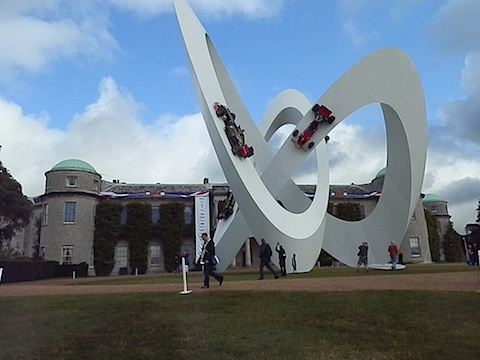
In addition to the current model range for the British market, the main focus is on maintaining tradition. "We are at the start with five vehicles from our historic collection," says Achim Stejskal, Head of the Porsche Museum. Mercedes-Benz celebrated the 60th anniversary of the SL at Goodwood and brought along a Mercedes-Benz 600 Pullman Landaulet for a special exhibition to mark the Diamond Jubilee of Queen Elizabeth II. Lotus reportedly spent half a million pounds to furnish the sculpture in front of the Earl's seat with successful models from racing history.
A select field from over 100 years of automotive history
Ben Collings' Mercedes 60 HP dates back to 1903 and is the oldest vehicle at the start of Class 1 "Pioneering Giants", in which a Fiat S74 Grand Prix from 1911, a Sunbeam Coupe d l'Auto from 1912 and a Sunbeam "Indianapolis" from 1914 will also be competing. They will all start in "Batch 1", which also includes "Pre War Grand Prix Cars", "Post War Grand Prix Cars", "Endurance Racers" and "International Sports Cars".
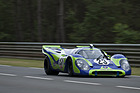
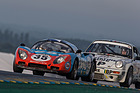
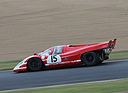
The 41 vehicles in this first batch alone would probably be enough to give fans of historic racing complete satisfaction, as they include a Porsche 804 from 1962, a BRM V16 P15 Mk1 from 1950, a Mercedes W125 from 1937, a Lagonda M45R from 1935, a Jaguar C-Type from 1952, a Ferrari 250 MM from 1953, a Mercedes-Benz 300 SLR from 1955, (of course) a Ferrari 250 GTO from 1962, a Morgan Plus 4 from 1962, a Porsche 917K from 1970 or an Alpine-Renault A443 from 1978, to name just a few examples.
But Batch 2 with American racing cars, touring car legends or an ultimate collection of rally cars is also a highlight.
And at the latest when Batch 3 roars up the hill, many fans can no longer contain their excitement, because then the Formula 1 cars of the Cosworth era thunder past and the sports cars and CanAm vehicles from 1968 to 1973 show off their powerful engines and voluminous wings. The highlight will be 10 years of Group C with vehicles such as the Lancia LC1, the Porsche 956 and the Jaguar XJR12.
Variety and special themes as spice
Unlike at other events, each vehicle type is practically only seen once, which means that despite the overall manageable size of the field, there is a unique variety.
Every year, certain brands are particularly honored, with Lotus taking center stage in 2012. 21 monoposti from Chapman's history, a further seven from the era after his death - you have hardly ever seen more different Lotus formula cars in one place. They are complemented by Lotus sports and GT vehicles, from the 1949 Mark II to the Exige R-GT.
Extraordinary also on the rally circuit
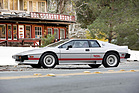
In addition to the "mountain course", spectators can also enjoy a 2.7 km rally circuit and discover vehicles that are hardly part of the standard arsenal of today's rally sport, such as a Lotus Esprit, Group B vehicles like the MG Metro 6R4 or Steve Hopewell's Mazda RX-7.
A cozy finale
At the end of the day, it was not only the technology of the more than 300 old and new cars and motorcycles that held up, but also the weather. In the mild light of the setting sun, visitors enjoy themselves in the park in front of Manor House between Land Rover Defender, Vauxhall Cresta and Daimler V12 Shooting Brake, all owned by the Queen. The deckchairs are set up, there is live jazz and champagne from a paper cup, and as a free bonus, a sunburn.
It will be forgotten next year. And most of them will be back.