Between 1928 and 1955, the "Beauty Competition for Automobiles" was held several times in Lucerne, awarding prizes to the most beautiful and elegant cars of the time. In 2015, the old tradition was resumed and the "Concours d'Excellence" was launched.
2020 and 2021 had to be paused due to corona, but on September 9 and 10, 2022, the popular Concours was held again, albeit with extensive adjustments.
Driving and standing
Somehow, the 2022 Concours d'Excellence Lucerne was a little reminiscent of its famous role model Pebble Beach, where the most internationally acclaimed beauty contest is held every year. As in California, the weather in Lucerne only partially cooperated and, as in Pebble Beach, the cars could be observed not only standing but also on a small "Tour d'Elégance".

In Lucerne, this short tour was called a "parcours" and it first took the participants to the Dietschiberg, where the cars could be presented for the first time on the beautifully situated golf course. This was also a parallel to Pebble Beach.
The journey then continued to Löwenplatz, followed by Schwanenplatz, Pfistergasse and finally back to Alpenquai and the Museum of Transport.

The cars were shown and explained to the public at the various stations, with the exception of Dietschiberg due to a lack of visitors.
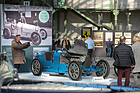
At the Swiss Museum of Transport in Lucerne, the almost four dozen cars were lined up in the arena in front of the motor vehicle hall and shown to the public. This was followed by the judging and the award ceremony later on Saturday afternoon.
The participants, who clearly enjoyed the event, were also entertained with a supporting program.
Light and shade
While the weather did not stay completely dry during the round trip, the weather was kind on Saturday afternoon when the cars were judged at the Museum of Transport.

Visitors waiting along the route for the Concours vehicles were able to admire a good half of the cars in motion and with an authentic soundscape. Unfortunately, not all the cars took part in the short tour, which therefore took less time than expected and also because the traffic in Lucerne was less dense than expected.
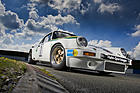
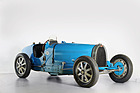
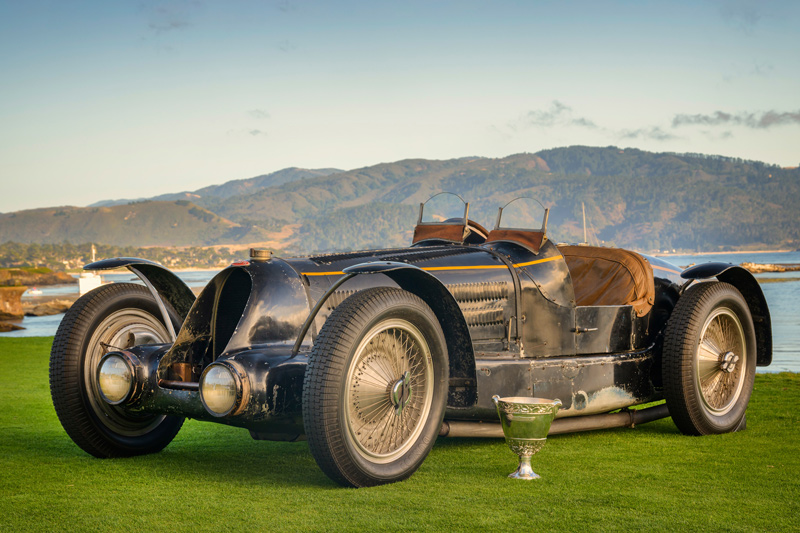
But we would have been only too happy to wait a little longer at the five stops if we had been able to see and hear the oldest surviving production Porsche 356 (built by Beutler in Thun) or the magnificent Bugatti Type 50 Roadster.

Unfortunately, these vehicles in particular were somewhat unfavorably positioned in the Museum of Transport, so that some of the highlights of the Concours were almost lost from the public's point of view.

In addition, the award winners could not be presented during the rather short and less festive award ceremony and some of the spectators were probably unable to get a clear idea of who had received the awards.
Secret stars
While some of the expensive and well-known classics were mentioned during the award ceremony, other cars tended to remain in the background, even though they were certainly interesting vehicles.

One example is the Ranger 2500 from 1972. The Ranger was a real modular car, with the body structure coming from the Opel Rekord C, the six-cylinder engine from the Opel Commodore, the radiator grille from Vauxhall and the seats from the Opel Admiral.

This basis was completed in Biel as part of the Montage Suisse with other parts from the General Motors parts shelf and assembled into a very respectable car. Hardly anyone knows the Ranger today.

Of the two Jaguar E-Types on display in Lucerne, the earlier one was a particularly interesting example. It was one of the 26 first hand-assembled E-Types that had once been delivered to Briggs Cummingham. And because the car had remained largely unrestored throughout its life, it no longer has a perfect paintwork, but it does have a lot of patina.

No fewer than three Monteverdi Coupés faced the jury in Lucerne, and each of them would have deserved a prize. The early yellow coupé in particular was one of the particularly rare Monteverdi still built by Frua.

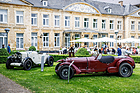
Another attraction were the two open Bentleys, which had not made it into the program, but were all the more impressive during the short tour.

And the La Salle Opera Coupé with its Art Deco design and the Hotchkiss AM 680 with Graber bodywork should not go unmentioned.
Award-winning classics
Class prizes, a public prize, a participant prize, a jury prize and the "Best of Show" were awarded in Lucerne.
- Class victory category A: Open cars 1920-1945
Bugatti Type 50 Roadster from 1931 - Class victory Category B: Open-top cars 1946-1965
Porsche 356 Beutler Cabriolet from 1949 - Class victory Category C: Open cars from 1966
Alvis TF 21 Graber Cabriolet from 1968 - Class victory Category D: Closed cars 1920-1945
Fiat 1500B Touring from 1938 - Class win category E: Closed cars 1946-1965
Alvis TD 21 Graber Coupé from 1961 - Class win category F: Closed cars from 1966
Monteverdi 375 High Speed Fissore from 1978 - Class win category G: ACS sports and racing cars 1920-1945
Salmson AL Grand Sport GSS Wenger from 1924 - Class win category H: ACS sports and racing cars 1946-1972
Abarth 750 GT Corsa Zagato from 1957 - Class win category I: ACS sports and racing cars from 1973
Bugatti Chiron Sport 110 ans from 2019 - Class win category J: ASTAG Reisecars
Twin Coach Herkules 38-S-DT from 1948

The public "Excellence Award Lucerne 2022" went to the Rolls-Royce 40/50 HP Silver Ghost Picadilly Roadster from 1922, the oldest car on the tour.

The participants chose the Monteverdi 375 High Speed from 1978 as the winner of the "Entrans Trophy".

Finally, the jury chose the Bugatti Type 50 Roadster from 1931 as the winner of the "Best of Show" or "Grand Prix d'Excellence Lucerne 2022".
As always with prize awards, you may or may not agree with the choice, but it can certainly be said that the medals went to very interesting and historic cars.
Overall, one would wish for a somewhat more balanced vehicle program for the next Concours and a more advantageous line-up for the public. In any case, the winning cars should be driven up to the award ceremony or at least be presented centrally.
Everyone has to decide for themselves whether they like the ambience of the Verkehrshaus for a ceremonial Concours. But one or two spectators and participants certainly shed a tear or two for the National Quai.