When around two dozen Moskvitch vehicles meet in Switzerland, it is not an everyday event. In fact, there is probably only one registered Moskvitch in Switzerland.
Little-known brand
In general, the Russian brand Moskvitch (translated: Muscovite) is hardly known in the West. The different spellings, including Moskvich, Moskvich and Moskvitch, don't make it any easier.

The impressive Moscow automobile assembly plant "KIM" had already been founded before the war. Initially, a Ford was built under license, but the German invasion of the Soviet Union put a stop to this plan.
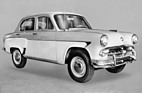
After the war, the Soviet Union received some of the plans and tools for the pre-war Opel Kadett K38. However, because some had disappeared in the chaos of war, the model first had to be developed further. German and Russian engineers were available for this purpose. The result was the Type 400, which was produced from 1947. An improved version of the Type 400 was introduced in 1954. The 1.1-liter engine was increased from 23 to 36 hp.

The 400 and 401 models were even exported; the sales markets were Finland, Sweden, Belgium and Norway, as well as the Netherlands and eastern countries, but the export figures were modest; a total of 247,439 Type 400 and 401 cars were built.

An in-house design followed in 1956, which was built over the next few years as the 402, 403 and 407 with a pontoon body. The millionth Moskvitch was celebrated in 1967.

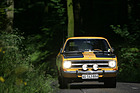
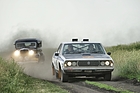
In 1964, the Moskvitch 408 appeared with significantly more modern lines but with the technology of its predecessor. A completely new engine was then introduced in 1967 with the Type 412, which was similar to the BMW M10 and had a very modern design. Many long-distance rally successes could be attributed to it.

In 1975, the Type 2138 and 2140 came onto the market, inheriting the predecessors 408 and 412.

The type 2141 finally followed in 1986.
Although there was hardly any competition in the first few decades, the number of units produced fell drastically after reunification and the opening of the market to the West. Production came to an end in 2003.
First meeting in Switzerland
The fact that the Moskvitch friends met in Switzerland from 4 to 6 August 2023 was due to the rule that the owner of the prize-winning last meeting must organize the next event. And in 2021, the Walter family won this coveted trophy with the 1954 Moskvitch 401-420.
So the Swiss Moskvitch fans organized a meeting close to the border with Germany, but actually expected hardly more than a handful of vehicles.

However, the enthusiasm of the Moskvitch community was much greater than expected, with 23 vehicles turning up, almost 20 of which were purebred Moskvitches. It was to be expected that almost all the cars had German license plates and some still had GDR stickers. The fact that almost all the cars were traveling on the road was less so.
The overnight stay was in Bad Säckingen, on Saturday the small town of Laufenburg could be visited and in the afternoon there was a visit to the military museum in Full.

A visit to the open-air museum in Kandern-Egerten was scheduled for Sunday and then the journey home.
Pure enthusiasm
You don't buy and restore a Moskvitch because its design or technology was groundbreaking, nor because you can make a fortune from it. Moskvitch love is based on genuine enthusiasm.

The Walter family, for example, brought a Moskvitch 401-420 from St. Petersburg to Switzerland in 2015 because their ancestors had already owned such a car. A six-year restoration followed, during which no compromises were made. In 2021, the finished car could then be driven to the meeting, where it was honored with the main prize.
In general, the Moskvitch friends invest a lot of energy and love in their cars. The spare parts situation can sometimes be quite complicated, although Moskvitch cars were also assembled under license in Belgium in the 1960s.
Great stories
There are often family stories when a Moskvitch is in the garage.
One of the owners of a Type 403, for example, told us that his grandfather had bought it new (for DM 15,400). In 1967, he rode it in the International Peace Ride. This was a cycling race that took place from May 10 to 25, 1967 and led from Warsaw via East Berlin to Prague. It was won by the Belgian Marcel Maes, while the Moskvitch 403 transported the reporters.

Today, the grandson of the original owner is the proud owner of the car, whose traces were once lost after the father sold it. Eventually, however, the car was found and bought again.
Petrol talk
Politics was hardly a topic of the many discussions at the international meeting; it was much more about a technical exchange and experiences with these exotic cars.

Of course, it was no coincidence that dialects from eastern Germany were frequently heard. After all, the Moskvitch was one of the most popular cars in the GDR.
The next meeting is scheduled to take place in Leipzig in 2024.