On Sunday, June 10, 2018, the engines howled once again in Gernsbach at the AC Eberstein regularity test on the Schloßberg.

Culinary delights from the kitchen and combustion chambers
Anyone driving from Gernsbach or Baden-Baden to Schloss Eberstein today to spend the night in the hotel and indulge in culinary delights will have no idea of the wild days on the winding roads. Heavenly peace and fresh forest air invite you to linger. Only the trees in the bend whisper softly, dreaming year after year of the day when their branches will tremble and they will be allowed to vibrate with the roaring machines. Then the smells of cooked Superplus and tire rubber fill the forest and overlay the odeur of the gourmet creations from the castle kitchen.
Four decades of tradition on the mountain
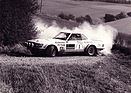
From 1970 to 1989, AC Eberstein called the hill climb from the Murg Valley up the Schloßberg. Except for 1985, when the title of the German hill climb trophy beckoned, the drivers fought for regional championship points.

Then the hammer fell in 1989. The growing reluctance of the licensing authorities to allow hill climb races also affected the Eberstein team.

However, the enterprising automobile club managed to continue the tradition in 2004 and breathe new life into the Schlossberg with regularity tests on the occasion of the Schlossberg Historic. It is to be hoped that the head driver Johann Steinberger and his team will continue to make the Schlossberg shake in the future.
Participants from regional to international
The continuity of the event over the past 15 years attracts more and more mountain enthusiasts to the Murg Valley every year, so that the starting places are regularly filled long before the closing date for entries. No wonder, the flair in the paddock on the Murginsel, the 3.5-kilometre-long mountain course peppered with bends and the professional yet informal organization can only inspire.

Based on the history of regional racing events, the majority of participants come from south-west Germany. On the other hand, riders from further afield are also among the repeated competitors.
Year after year, Alsatian, Dutch and Swiss-German sounds mingle with the predominantly Baden and Swabian voices in the paddock on the Murginsel.
A colorful mix of old and youngtimers
A few numbers for an overview: The vehicles were divided into the first seven classes of classic and vintage cars built up to 1993. Class 8 was created for younger sports cars and Class 9 was occupied by historic formula racing cars, a total starting field of almost 120 hillclimbers. The majority of these were from the 70s and 80s. Only two pre-war classics were on the grid, both of which were rare Lagonda Rapiers.

The one- and two-seater open-top racing cars used to be among the crowd favorites, and this is still the case today. Three formula racers screeched into the Murg Valley and five two-seaters joined in, including two Lotus Eleven Le Mans.

David meets Goliath and great-grandfathers meet grandchildren. The starting field offered a wide range of cars. What a difference there was between the cute little Fiat 126 A and the Bollermann Ford GT 40 or the Lagonda from 1936 and the Caterham Super Seven from 2002. Despite the age difference of 82 years, the latter two have striking similarities, free-standing wheels, airy open, no driving aids and no filters.

But wait, the Caterham hardly represents the automotive zeitgeist of the turn of the millennium. We'd rather take the Mitsubishi Lancer Evo 7 with its contemporary technical aids as the youngest representative of the grandchildren.
Battle for honor and trophies
The regularity test equalizes all differences in class. Whether 30 or 300 hp, 500 or 1500 kg fighting weight, the only thing that counts is precision: Steyr Puch and Alpine A110 are therefore absolutely equal in terms of chances.

But no matter, the spectators relived the good old hill climb days and felt transported back decades. Track announcer Hannes Martin, supported this time by young Ralf Kuhlmann, commented on every hill climb with lexical car knowledge.
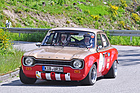
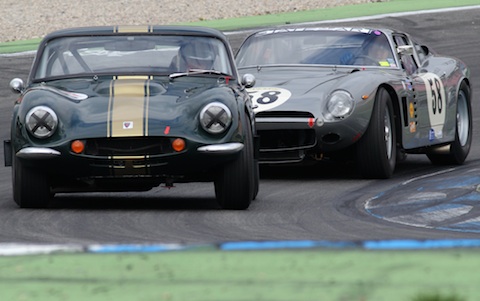
In glorious weather, a sense of the imminent full throttle hung in the billowing exhaust air at the start. Minute by minute, cars were unleashed and stormed forward vehemently along the winding asphalt track. The Lagondas roared, the Ford V8s roared, the Lotus, Porsche, TTS and Beetle screeched. Each racer added its voice to the impressive engine concert, a truly metallic culinary experience.
At the finish line, the anxious thoughts: was I on time, was I too slow or too fast? Almost like back then.

After the runs, the riders hung in clusters at the time sheets with happy or embarrassed faces. The spicy sausages and delicious cakes from the marquee buffet provided comfort.
At the end of the day, some drove home satisfied with a trophy, others with the good feeling of having had a great day among car enthusiasts.

The trees at the Schloßkurve again rustled softly in the wind and the aroma from the castle kitchen slowly regained the upper hand.
The start list and results can be found on the organizer's website .