
Toyota 700 - Paprika at a radish price


You have only
1 out of 17
images seen in high resolution
Summary
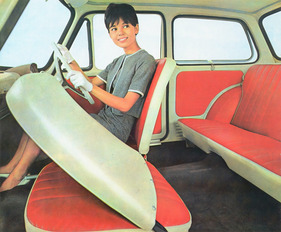
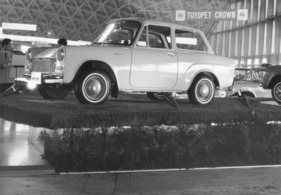
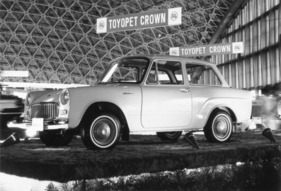
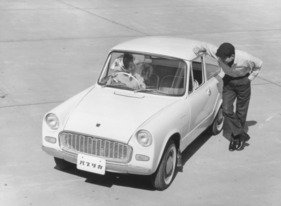
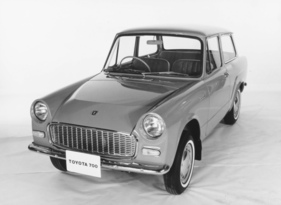
The plan of affordable people's cars for the masses did not seem to work out at first. Although the Toyopet Publica or Toyota 700 followed European models, it was too rudimentary for most Japanese. It was a luxury version of all things that brought the desired success. This article tells the story of Toyota's first step on the road to becoming the world's largest car manufacturer.
This article contains the following chapters
- European role models
- Better pushed than pulled
- Raw equipment
- More choice, more power
Estimated reading time: 6min
Preview (beginning of the article)
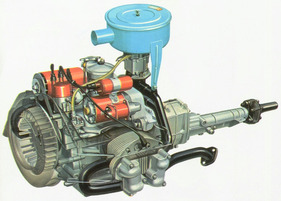
Germany had the VW, France the Renault 4 CV, England the Morris Minor, Italy the Fiat 500, and Japan? Uh... In May 1954, Eiji Toyoda realized that almost nine years after the end of the war, his home country still lacked an affordable car to motorize the masses. The smallest model that his factory had in its range at that time was the Toyopet RH with a 1.5-liter four-cylinder engine, which was mainly used as a cab. However, as cab drivers made up by far the largest proportion of Japan's motorists, the RH successor Master initially took priority. In April 1955, the development of Project UP10 finally began under chief engineer Tozo Yabuta. In May 1955, the Ministry of Trade and Industry announced a competition for the construction of a people's car with an engine capacity of 350 to 500 cubic centimetres, which was to travel at least 100 km/h and consume no more than 3.3 liters of fuel per 100 km/h, without anyone knowing about the other's plans. In addition, the vehicle must not weigh more than 400 kg and cost 250,000 yen (3000 CHF, 2895 DM) and must last at least 100,000 kilometers.
Continue reading this article for free?
Images of this article



_RM.jpg)