Citroën M35 - Hotrod with sugar water wankel engine


You have only
1 out of 42
images seen in high resolution


Summary
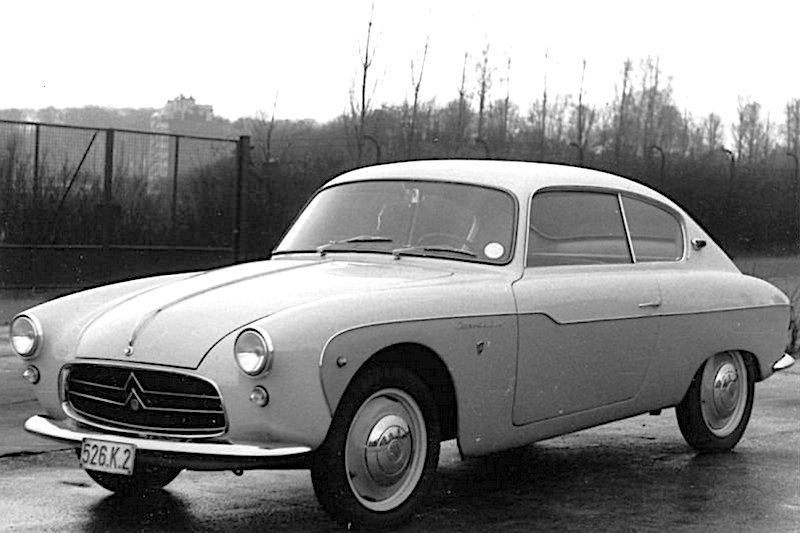
At the end of the sixties, Citroën believed in the future of the Wankel engine and invested generously in corresponding models. The first commercially available Citroën Wankel vehicle was the M35, which was loosely based on the Ami 6/8 but priced several classes higher. Citroën wanted to gain experience with this car and sold a limited number of them to "test drivers". It was not a success, although the silky engine still impresses today. This report describes the history of the Citroën Wankel vehicles and provides driving impressions on board the M35, illustrated with current and historical pictures.
This article contains the following chapters
- Perfect concentricity
- Farm horse instead of racehorse
- Expensive development
- NSU-Citroën cooperation
- Based on the Ami 6/8
- With single-disc Wankel engine
- Made by hand
- Over one million test kilometers in customer hands
- At the wheel of the M35
- Silky but whining running
- Not a consumption artist
- Further information
Estimated reading time: 8min
Preview (beginning of the article)
Rotary piston machines already existed in the 16th century. The principle that moving parts only move around a center of gravity was already used back then in the construction of water pumps. However, it was to take a few centuries before the first engines worked. In 1932, the name Felix Wankel (1902-1988) came to the fore. Wankel was an autodidact and non-mathematician, and because of his extreme short-sightedness he was never allowed to drive a car. But he had an ingenious spatial imagination - and after initial experiments with conventional combustion engines, he soon turned his attention to rotary piston engines. In 1933, he was granted a patent for the first rotary piston engine.
Continue reading this article for free?
Images of this article