Burney Streamline - Not only Maybach built a Zeppelin


You have only
1 out of 21
images seen in high resolution
Summary
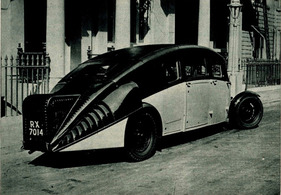
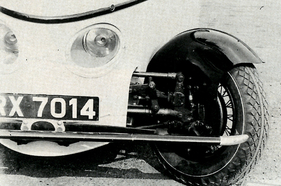
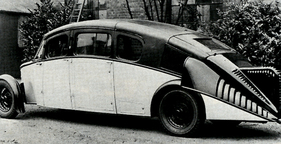
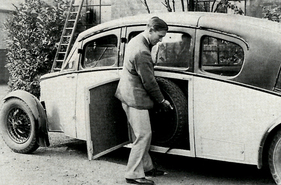
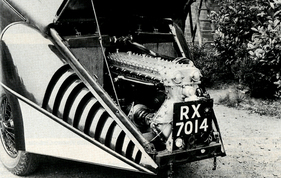
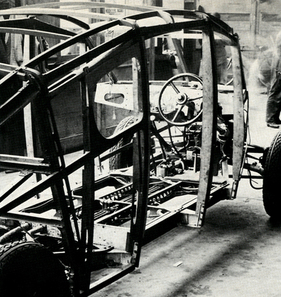
From time to time, not only the wheel has to be reinvented, but also the entire automobile. So in the early 1930s, the English airship designer Dennistoun Burney set about building the first completely newly developed car since the invention of the motor car - with a self-supporting streamlined body, rear engine and space for seven passengers. But the big breakthrough did not come. Only twelve examples of the Burney Streamline were built by 1933. This article tells the story of the first English streamlined car and shows it in historical photographs.
This article contains the following chapters
- Aerodynamics in mind
- Series production of the Streamline
- Safety and economy
- Enthusiastic testers
- The three six-cylinder
- Streamline Evo II
- Half the price, twice the success
Estimated reading time: 8min
Preview (beginning of the article)
A number of self-proclaimed automotive visionaries have had to learn the hard way that "different" does not necessarily mean "better". The most famous of these was probably Preston Tucker, whose spectacular crash landing in 1948 was later even made into a movie. Eighteen years earlier, the Englishman Charles Dennistoun Burney had already pursued a far more consistent approach of building the fastest, most economical, most practical, most comfortable, most stable and safest - in short, the best - automobile for the masses. Burney had made his fortune during the First World War by developing the "Otter" - a device for clearing anchor mines from the sea - and selling it to the Vickers armaments company, which commissioned him to build a civilian airship after the war. The result was called the R-100, was 210 meters long, had almost 4000 hp and a speed of around 130 km/h.
Continue reading this article for free?
Images of this article