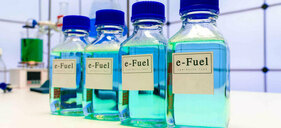


Synthetic fuels have been under discussion for some time as climate-neutral alternatives to petrol or diesel. Although there are hardly any production facilities to date, this is set to change in the near future. However, the ADAC has recently investigated whether eFuels can actually serve as a substitute. The results are promising: the club's laboratory tests have shown that the synthetic fuels work without any problems, provided the models are approved for the respective fuel. The measurements confirmed that pollutant emissions do not deteriorate as a result of the alternative fuels.
Karsten Schulze, ADAC Technology President: "Our results show that further optimized eFuels have the potential not only to improve the CO2 balance of the existing vehicle fleet, but also to reduce pollutant emissions. This would not require waiting for the entire fleet to be replaced." CO2-neutral fuels would therefore be a good addition to the market ramp-up of electromobility, as they can make a parallel contribution to environmental protection.
There is still room for improvement with eFuel
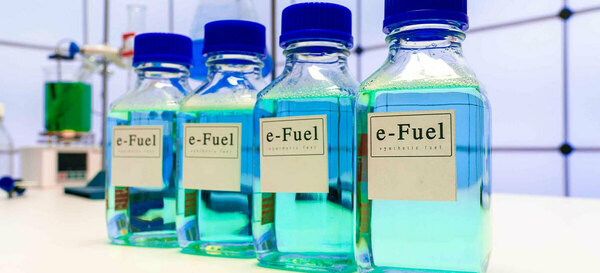
Only prototype eFuels were available for the current study, which are of good quality but do not yet exploit the full potential of artificially produced fuels. Planned new production plants will produce more optimized fuels in the future. The measurements show that there is still potential for optimization in the composition of the artificial fuels. For example, an ideally designed eFuel could ultimately even have a positive effect on air pollution control, as a reduced aromatics content in the fuel can ensure lower particulate emissions.
Generally speaking, the production of electricity-based eFuels requires a lot of energy, so it makes sense to produce them using surplus green electricity. Sunny or windy regions are particularly suitable for this.
As it is also possible to mix mineral and synthetic fuels, the proportion of eFuels can be continuously increased depending on availability. From the ADAC's point of view, the argument that the total demand for eFuels cannot currently be met anyway and that they should therefore be rejected does not count. "The opportunity should now be seized to continuously reduce the fossil share by blending in eFuels and thus already make an important contribution to environmental protection," says Schulze. "In order to achieve this goal, it is important that politicians create incentives for manufacturers and provide prospects. After all, the high investments and development costs require planning security."
What does the approval say?
In the opinion of the ADAC, approval should finally be granted in Germany for the regular sale of paraffinic diesel fuels in accordance with EN 15940 (e.g. HVO) as a diesel substitute. These fuels are already available in other EU countries.
The alternatives for petrol fuels with the EN 228 standard can be used in any petrol engine without any problems. Paraffinic diesel fuels such as HVO, on the other hand, are not fully compatible with the EN 590 diesel standard, which is why a diesel engine must be explicitly approved for this. Some car manufacturers are still very reluctant to approve their diesel models for paraffinic fuels such as HVO. Scandinavian countries have already gone further in this respect. The ADAC is therefore calling for the same approvals for models in Germany.
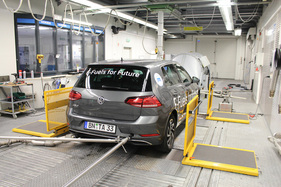
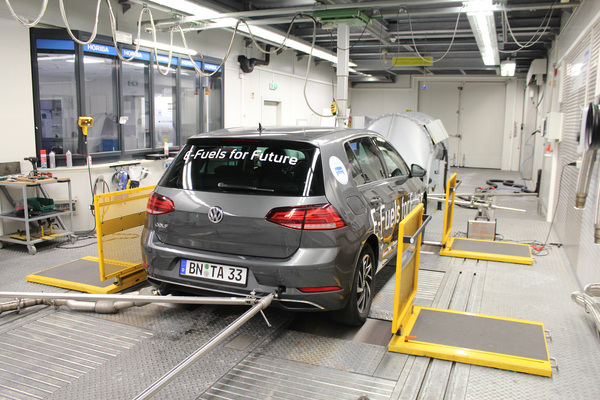
The different fuels were tested in the ADAC test in five vehicle models on the test bench. Exhaust emissions and fuel consumption were precisely determined and compared in over 100 measurements.
Detailed information on the test procedure and comprehensive results can be found at adac.de.