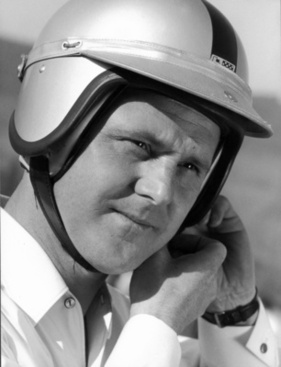
Siegfried Spiess, Günther Irmscher and Wilhelm "Willi" Bergmeister - famous names for fans of the traditional NSU brand. In the 1960s and 1970s, the Neckarsulm-based company offered the right equipment for everyday life and sport with small but powerful cars.
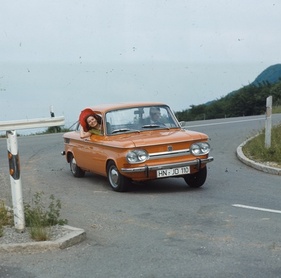
The NSU Prinz 1000 kicks things off, followed by the NSU TT and NSU TTS. In this eighth installment of the NSU anniversary series, Audi Tradition takes a journey through this extremely sporty chapter in NSU history.
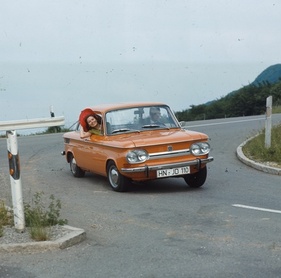
NSU is represented at the IAA 1963 with several new models. In addition to the chic NSU/Wankel Spider, the NSU Prinz 1000 also celebrates its premiere. And it is also well received by the media and the public, as the small and spirited car offers a level of handling previously unknown in its class. With this model and the modern four-cylinder engines, NSU also broke new ground by entering the mid-size class. The demand for NSU cars, especially for the new "Tausender", grows - and with it the Neckarsulm plant: NSU builds a new hall on an area of 10,000 square meters, providing space for six production lines. The first Princes roll off the production line at the beginning of April 1964. And by the end of April, NSU dealers from all over Germany come to Neckarsulm and take 1,150 NSU Prinz 1000s with them. From 1964 to 1972, the Neckarsulm-based company produced a total of around 195,000 Prinz 1000 L and S and NSU 1000 C versions, with a further 11,500 of the NSU Prinz 1000 TT.
Sporty NSU Prinz 1000 ensures winning streak for Siegfried Spiess
The NSU Prinz 1000 is equipped with a 40 or 43 hp engine as standard, depending on the model variant. Subsequent modifications such as an optimized camshaft, Weber carburettor, racing exhaust and a lowered chassis made the car, which weighed only around 650 kilograms, as fast as 150 kilometers per hour, making it competitive on the race track and in the popular hill climbs of the time.
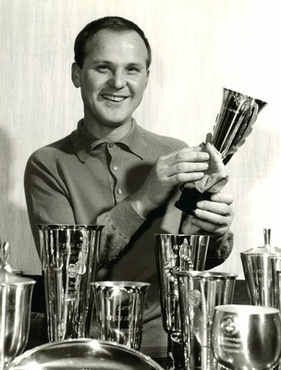
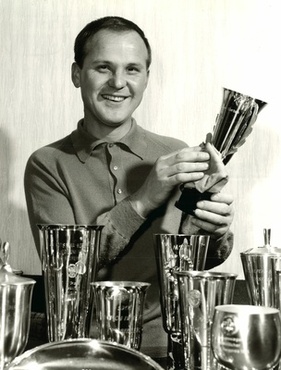
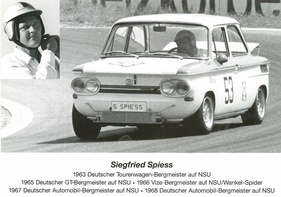
In such a Prinz 1000, Siegfried Spiess, who was just making a name for himself as an engine specialist and tuner at the time, became German GT hill climb champion in all classes in 1965. Spiess won eight of the eleven races and came second three times. Further successes that year include class victory in the Tour d'Europe and overall victory in the Corsica Rally, known as the Rally of 10,000 bends. If his father had had his way, Spiess should have become a businessman. But the junior never started his apprenticeship as a businessman, instead donning overalls and working in the workshop of his parents' NSU dealership in Stuttgart.

Spiess' winning streak is remarkable: after four championship titles on the mountain, the engine technician switched to the circuit in an NSU TT he had tuned himself. He ended his driving career in 1971, but continued to provide valuable racing expertise for the series and for further sporting successes for the NSU brand.
NSU TT: most successful German car in national hill climbs
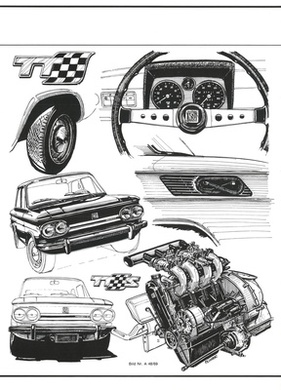
In 1967, NSU added two sports variants to its portfolio - the NSU Prinz TT and the even more powerful NSU Prinz TTS. The NSU TT was built between 1967 and 1972, with 65 hp as standard.

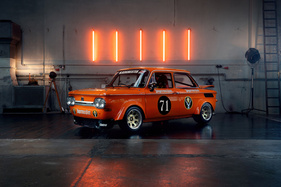
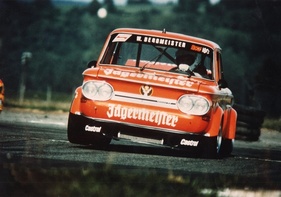
In both NSU sports saloons, the TT and TTS, the air-cooled four-cylinder engine is located in the rear, both have an extremely good power-to-weight ratio and are therefore also guarantors of success in motorsport: Günther Irmscher was the overall winner of the 1967 Tour d'Europe in an NSU TT in the TT's premiere year, and Bill Allen became American champion of the South Pacific region the following year. On the TTS, NSU set the camber of the wheels to slightly negative to neutral and also installed sports shock absorbers. If that wasn't sporty enough for you, you could order a so-called "speed set" - although this was only permitted on the racetrack. The Neckarsulm-based company produced the standard TTS with a 1,000 cubic centimeter engine and 70 hp from 1967 to 1971 - around 2,400 of them. A total of around 50,000 NSU TTs rolled off the production line. One particularly powerful representative is now part of AUDI AG's historic vehicle collection, the "NSU TT Jägermeister": increased displacement, 1.300 Weber carburetor with intake manifold, dual ignition, enlarged intake and exhaust ports make the car suitable for private motorsport. Such measures make this car up to 190 kilometers per hour fast and allow it to produce 130 hp at 7,800 rpm.
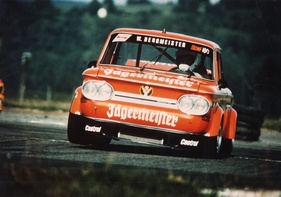
Nomen est Omen applies to Wilhelm "Willi" Bergmeister. The Langenfeld-born owner of an NSU and later Audi branch has been active in motorsport since 1968 and has been an integral part of the German racing scene since the 1970s. He wrote a piece of hillclimb history in the NSU TT and won the German Hillclimb Cup in 1974 in the "NSU TT Jägermeister": "Bergmeister becomes German Hillclimb Champion", was the slogan at the time. He later shifted his focus to circuit racing and from 1978 concentrated entirely on the European Touring Car Championship, in which he took second place in 1979 and won the European Championship in 1980 in an Audi 80 GLE.
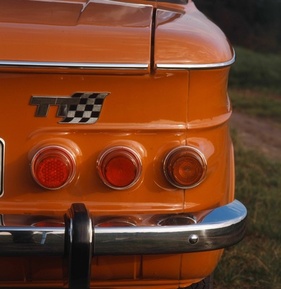
The NSU TT is the most successful German automobile in national hill climb races until the mid-1970s. As a racing car, it won a total of 29 national championships in Europe and North America. These successes in motorsport make for good advertising: The Neckarsulm-based company advertised the NSU TT as a "thoroughbred sports car, inch by inch", while the NSU TTS was marketed as a "constant guest at rallies" and a "notorious class winner".